Skip to content
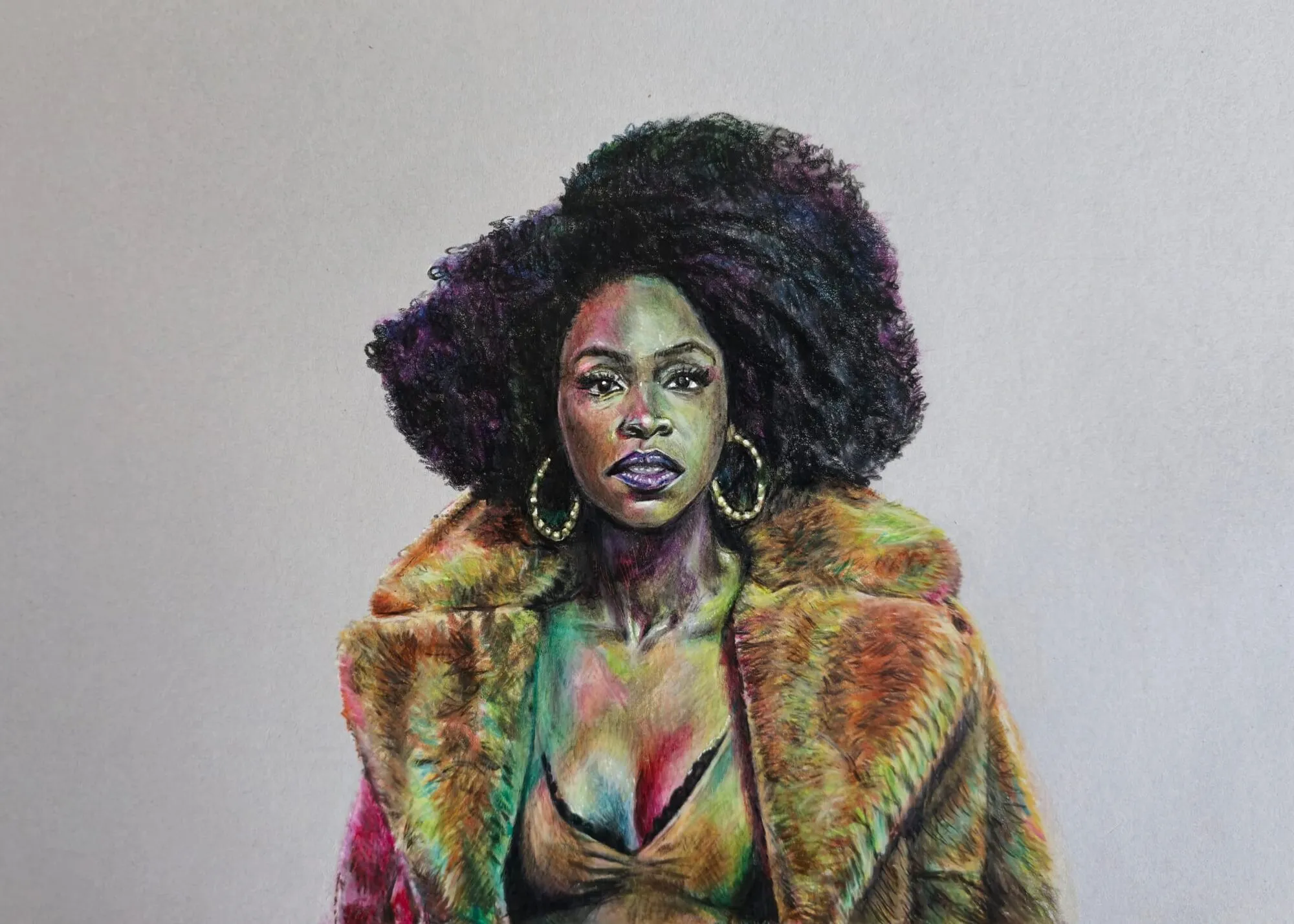
A portrait of a woman in a multicoloured fur coat drawn in coloured pencil

Topic hub

How to Draw: Step-by-Step Lessons for Beginners

Learn how to draw with pencil: a clear learning order, the basic kit, and step-by-step lessons for graphite and coloured (colored) pencil, from eyes to landscapes.

40 in-depth guides Updated 30 September 2026

In this topic

All how to draw guides

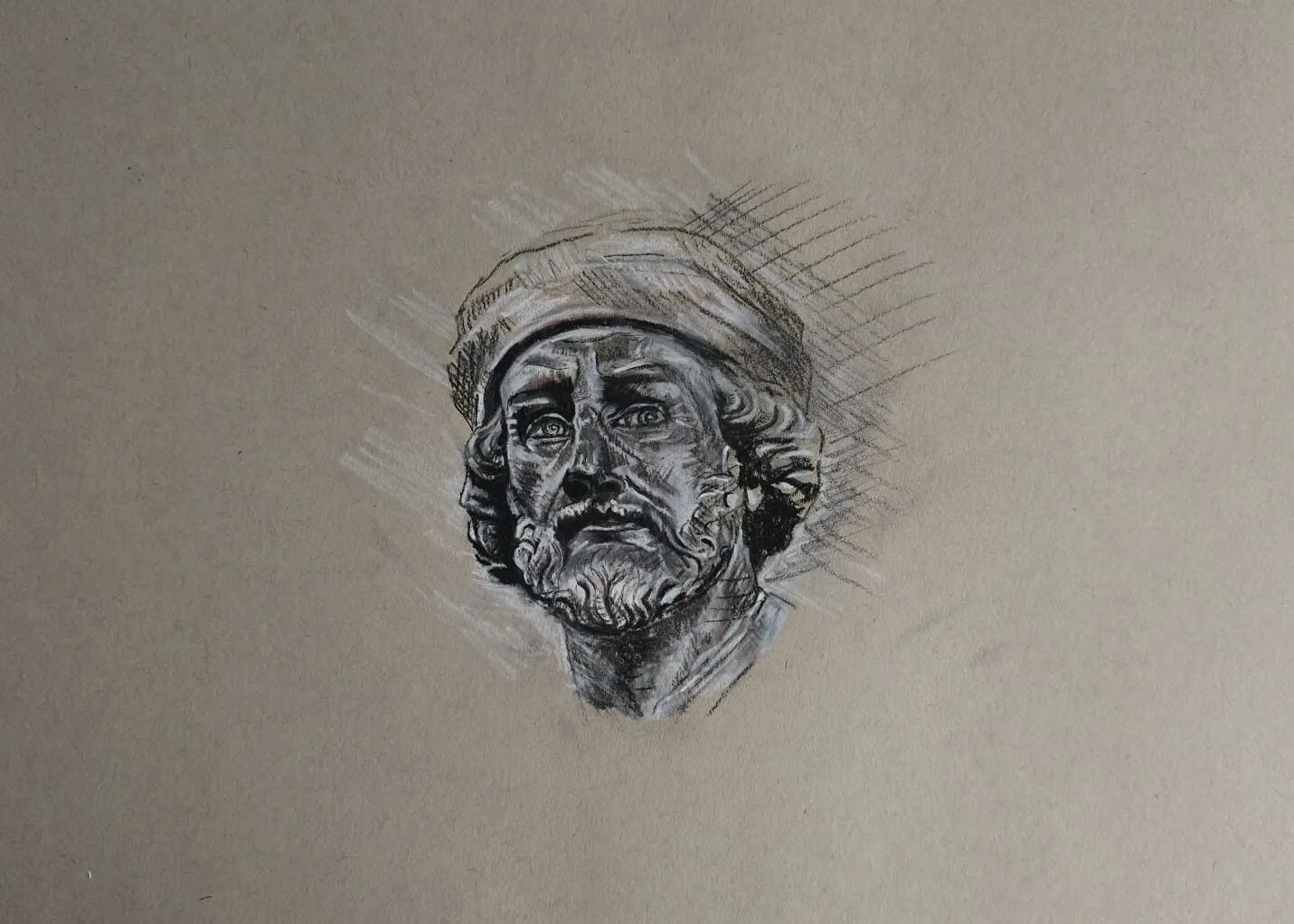
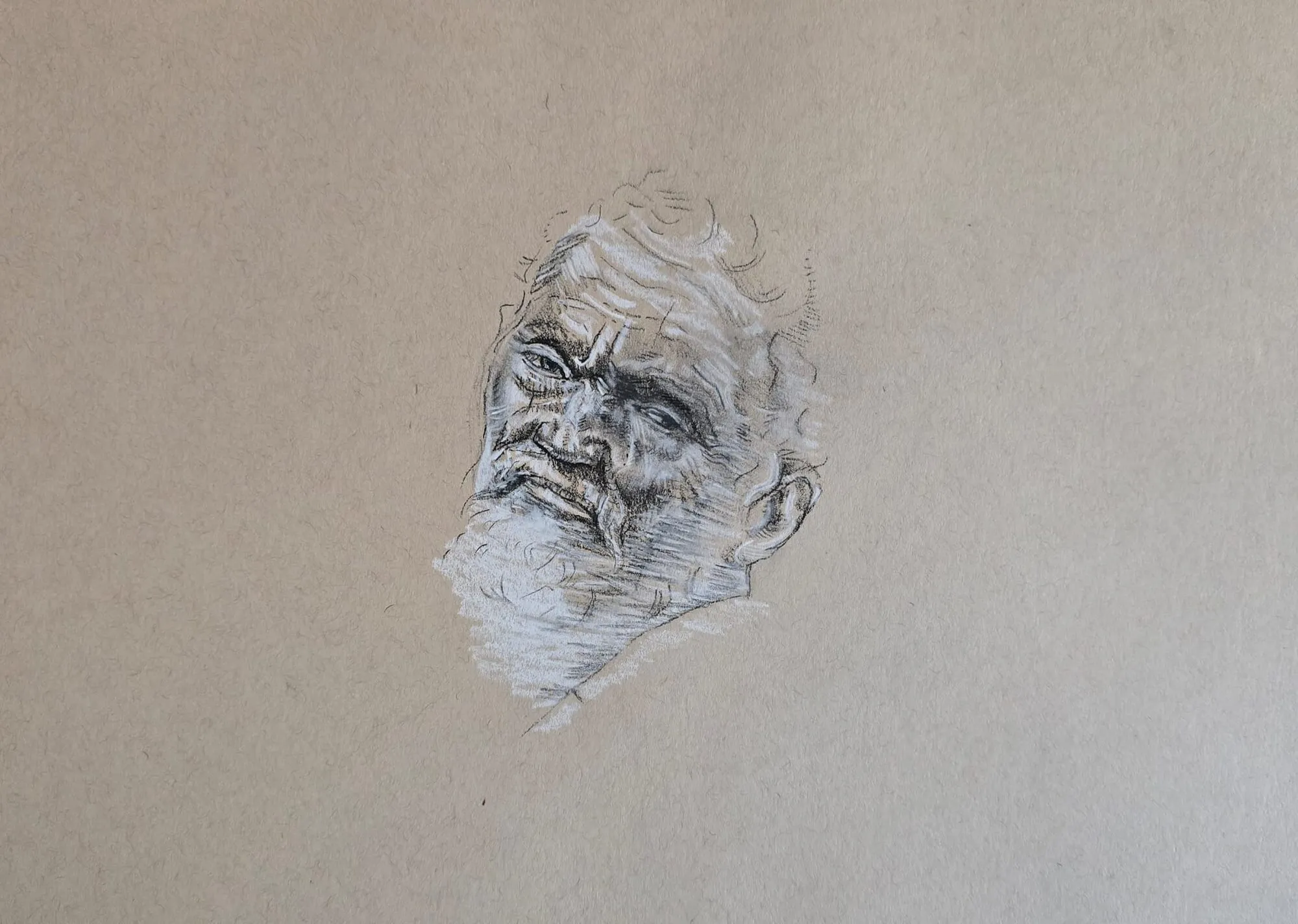
A head study of a bearded man wearing a cap in dark and white pencil on toned paper

How to Draw

How to Draw Realistic Eyes

Draw realistic eyes step by step in graphite, then add colour with coloured (colored) pencils. Anatomy, construction, value structure and common mistakes.

9 min read

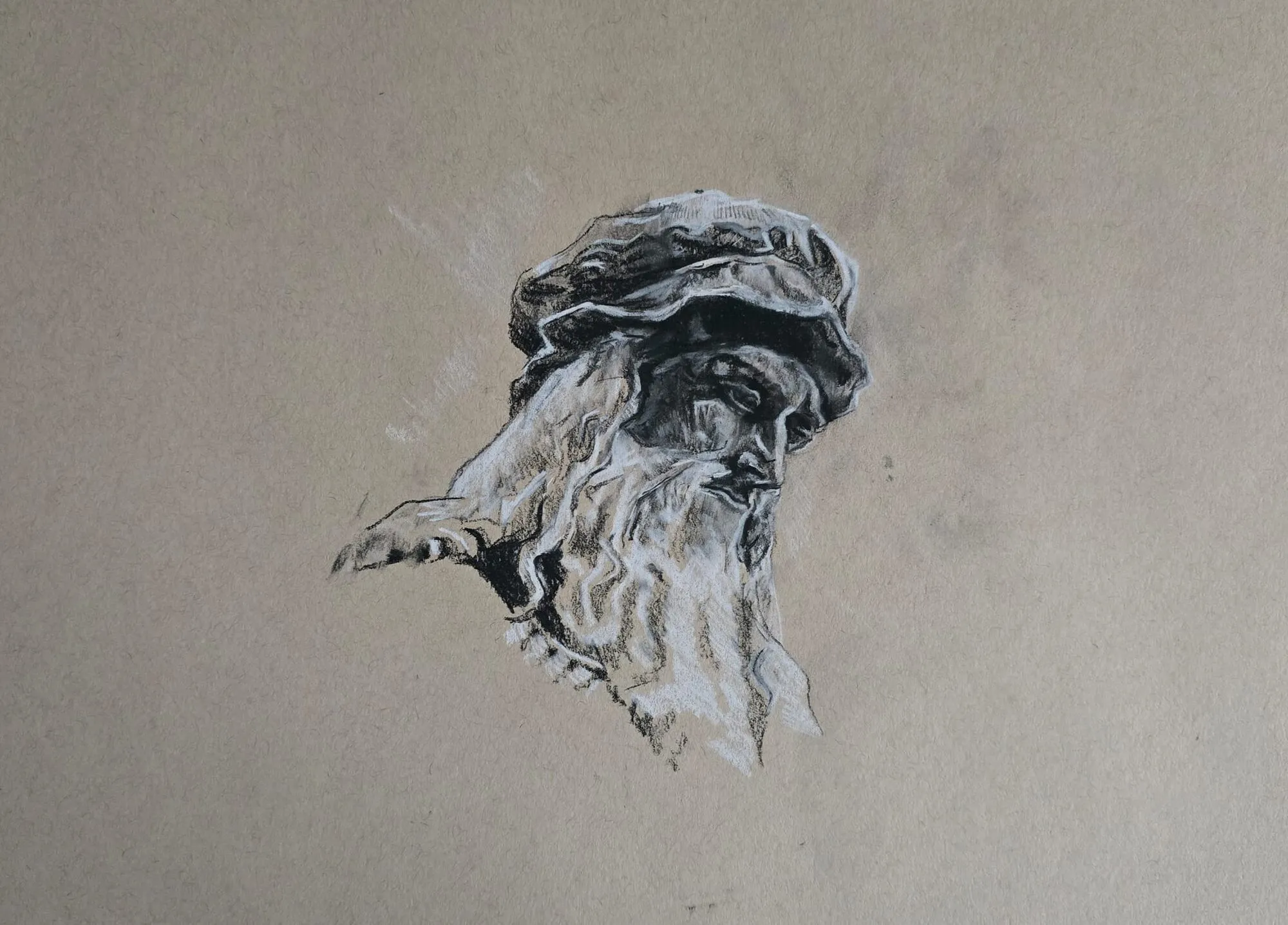
A study of a bearded man in a cap in dark and white pencil on toned paper

How to Draw

How to Draw a Face: Proportions Step by Step

Learn how to draw a face with reliable proportion guides: head shape, midline, feature placement, three-quarter view, and how age and variation change the rules.

7 min read

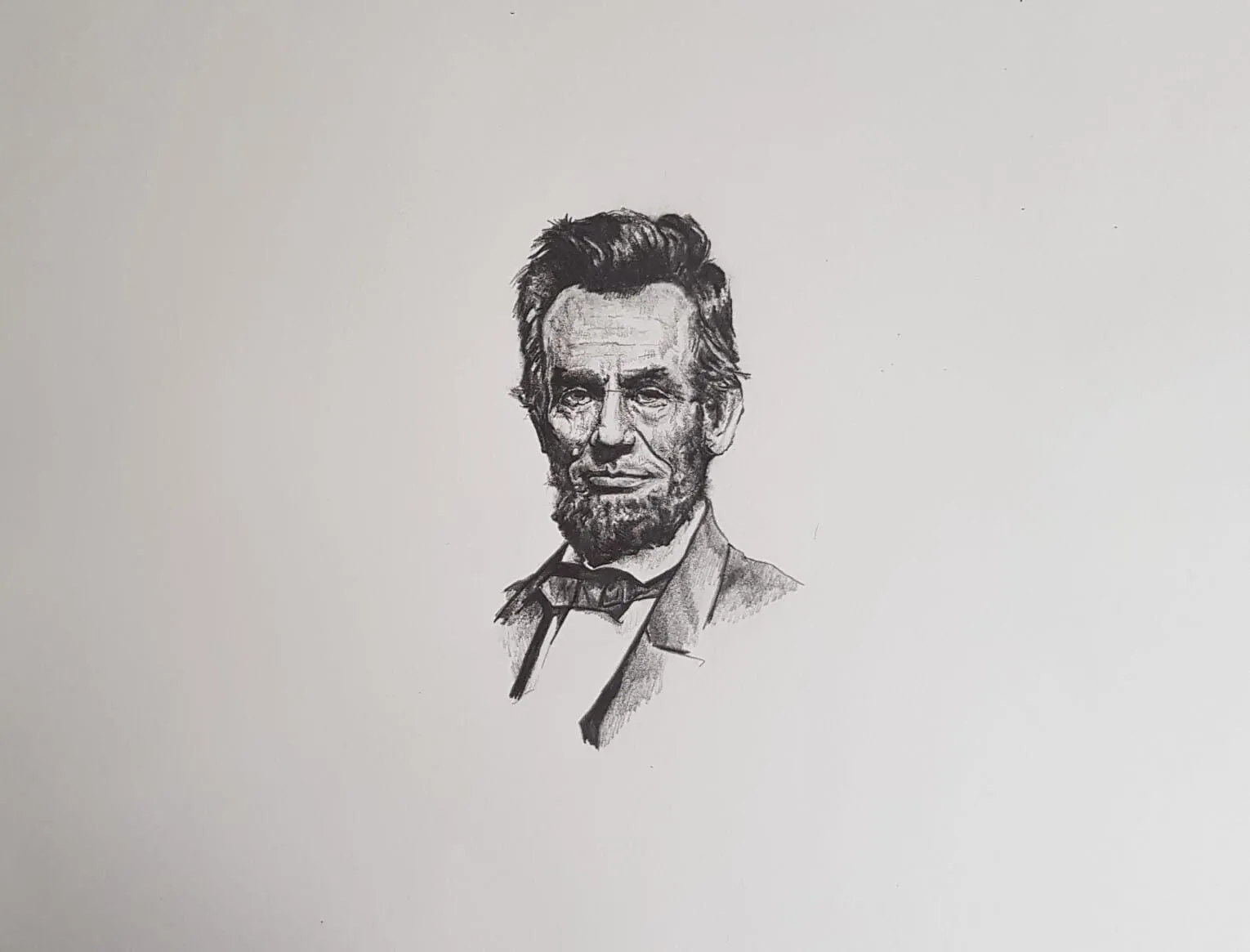
A graphite portrait of Abraham Lincoln

How to Draw

How to Draw a Nose: Planes, Shadows and Shading

Learn how to draw a realistic nose in pencil: the planes, shadow shapes, nostrils and bridge, plus front, side and three-quarter views and a shading progression.

7 min read

A head study of a bearded man in dark and white pencil on toned paper

How to Draw

How to Draw Lips: Shape, Shading and Colour

Learn how to draw realistic lips in graphite or coloured (colored) pencil: shape, upper and lower lip structure, corners, value, highlights and common mistakes.

7 min read

A graphite portrait of Abraham Lincoln

How to Draw

How to Draw Hair: Masses, Flow and Highlights

Learn how to draw realistic hair in pencil: masses first, flow, highlights and value, for straight, curly and grey hair in graphite or coloured (colored) pencil.

7 min read

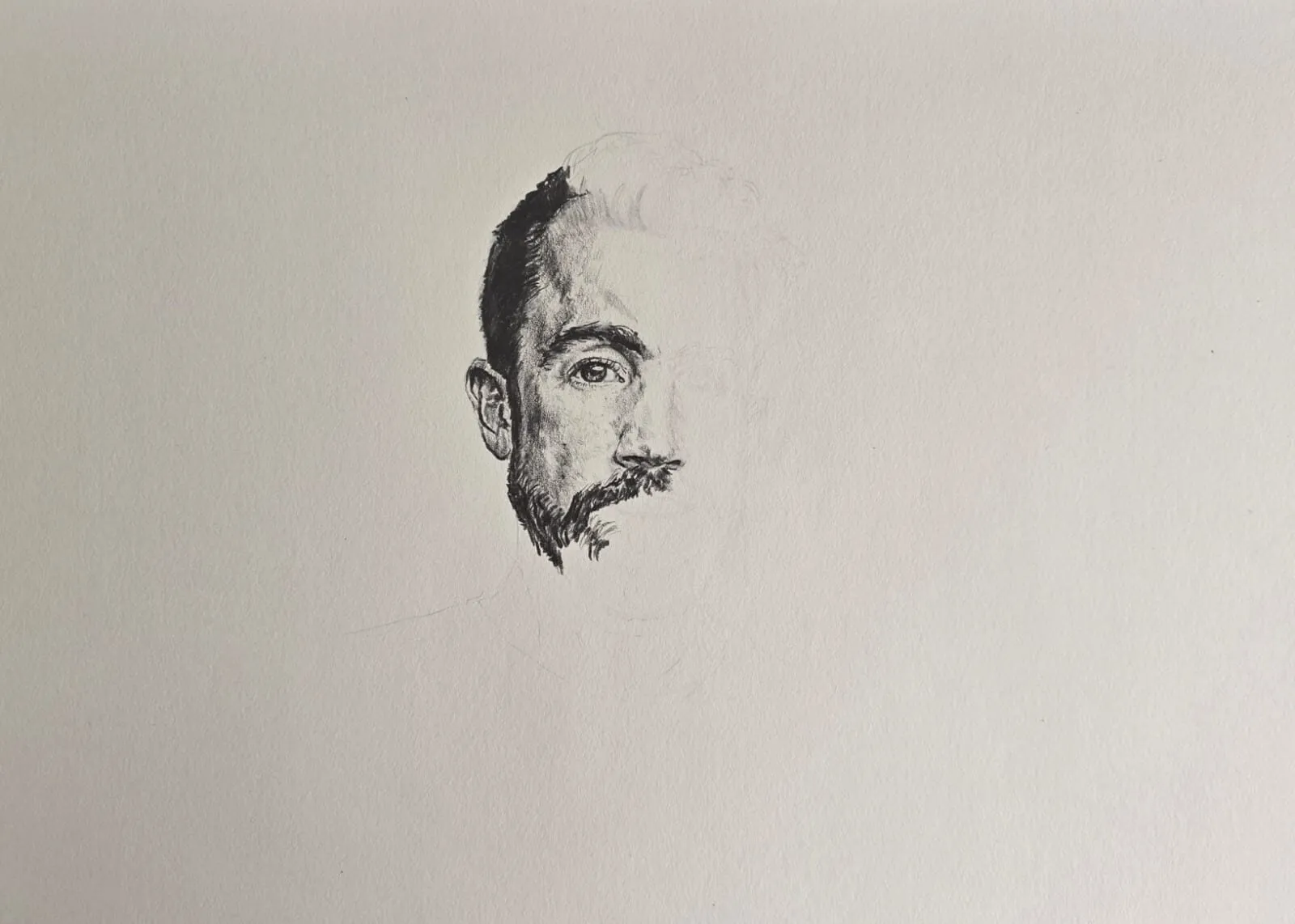
A half-finished graphite portrait study of a man's face

How to Draw

How to Draw Hands

Learn how to draw hands by building them from simple forms: a palm block, finger segments and a thumb. Proportions, common mistakes and practice exercises.

7 min read

A half-finished graphite portrait study of a man's face

How to Draw

How to Draw a Portrait from a Photo

A complete workflow for drawing a portrait from a photo: choose a reference, crop, measure or grid, plan values, block in, refine and finish in graphite or color.

7 min read

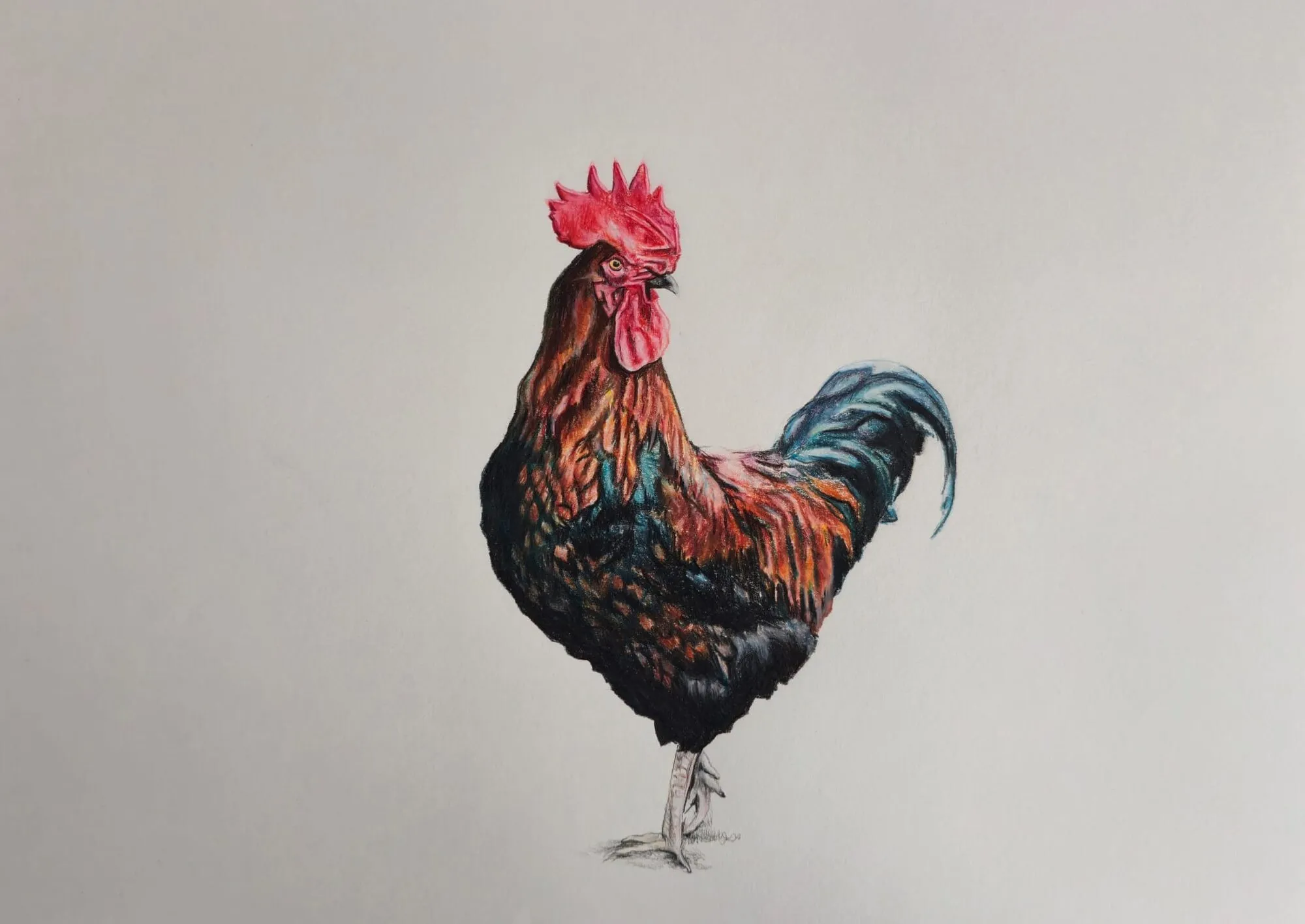
A rooster drawn in coloured pencil

How to Draw

How to Draw a Rose

Draw a rose step by step: the spiral centre, layered petals, shading, leaves and a coloured (colored) pencil version with deep, warm and cool reds.

7 min read

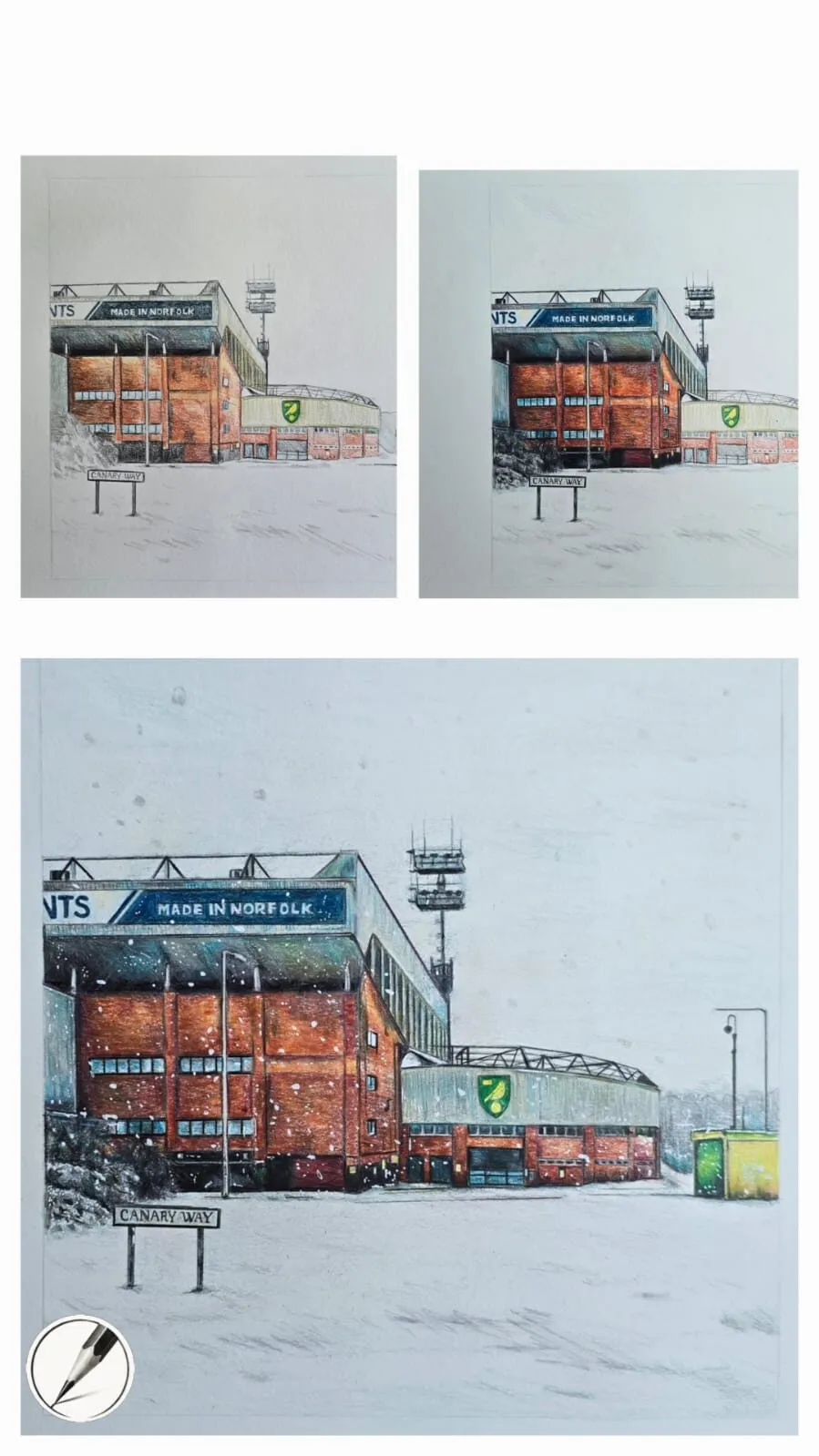
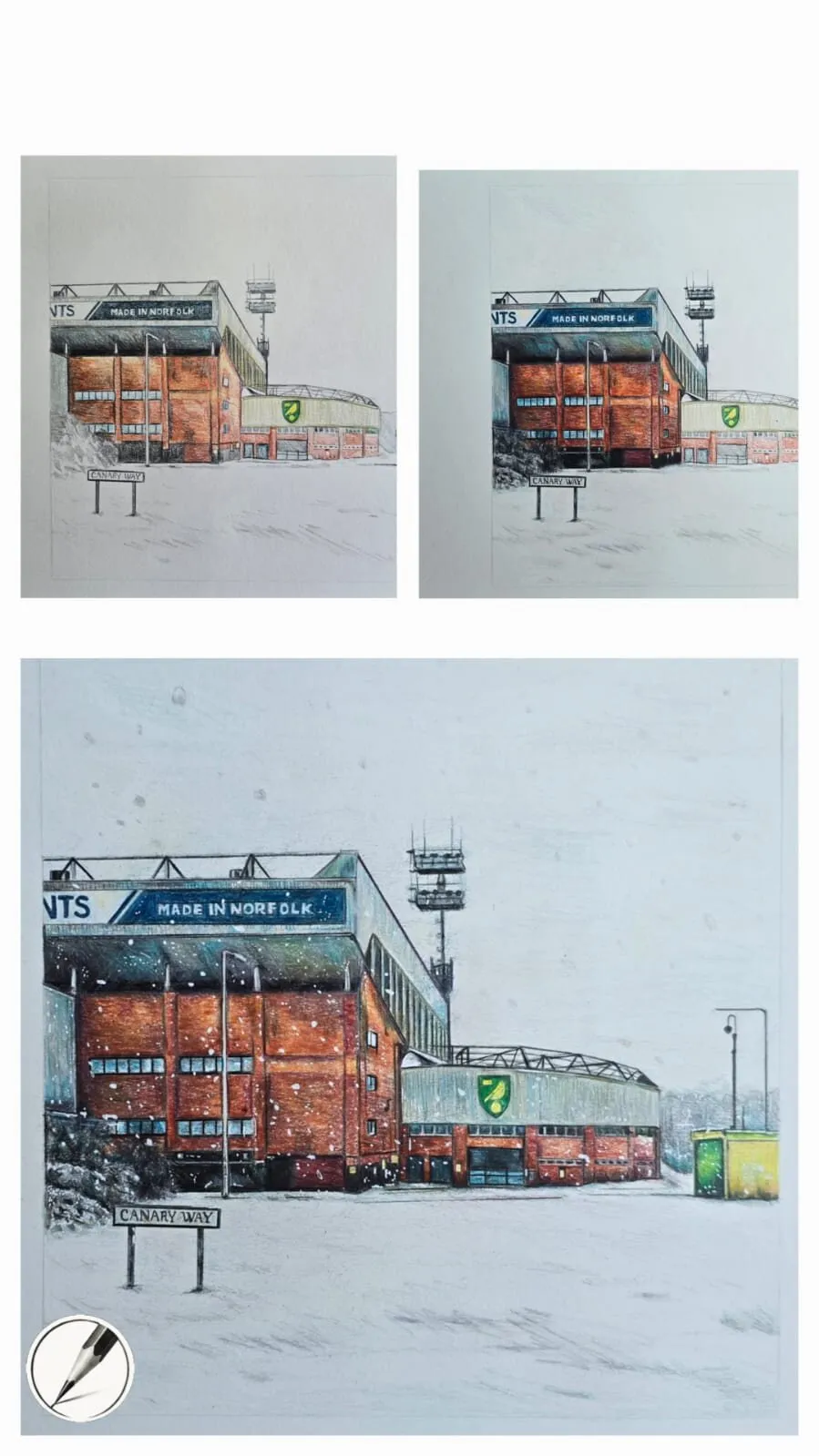
A football stadium in snow drawn in coloured pencil, shown in three stages

How to Draw

How to Draw a Tree

Draw convincing trees in graphite or coloured (colored) pencil: trunk and branch structure, foliage as masses, bark texture, values and how to avoid lollipop trees.

6 min read

A football stadium in snow drawn in coloured pencil, shown in three stages

How to Draw

How to Draw Clouds and Skies

Learn how to draw clouds and skies in graphite or coloured (colored) pencil: cloud forms, soft edges, value planning, layered blues, warm light and perspective.

6 min read

A rooster drawn in coloured pencil

How to Draw

How to Draw a Dog

Draw a realistic dog step by step: proportions and structure, head, eyes and nose, fur direction, shading, and a coloured (colored) pencil fur method.

7 min read

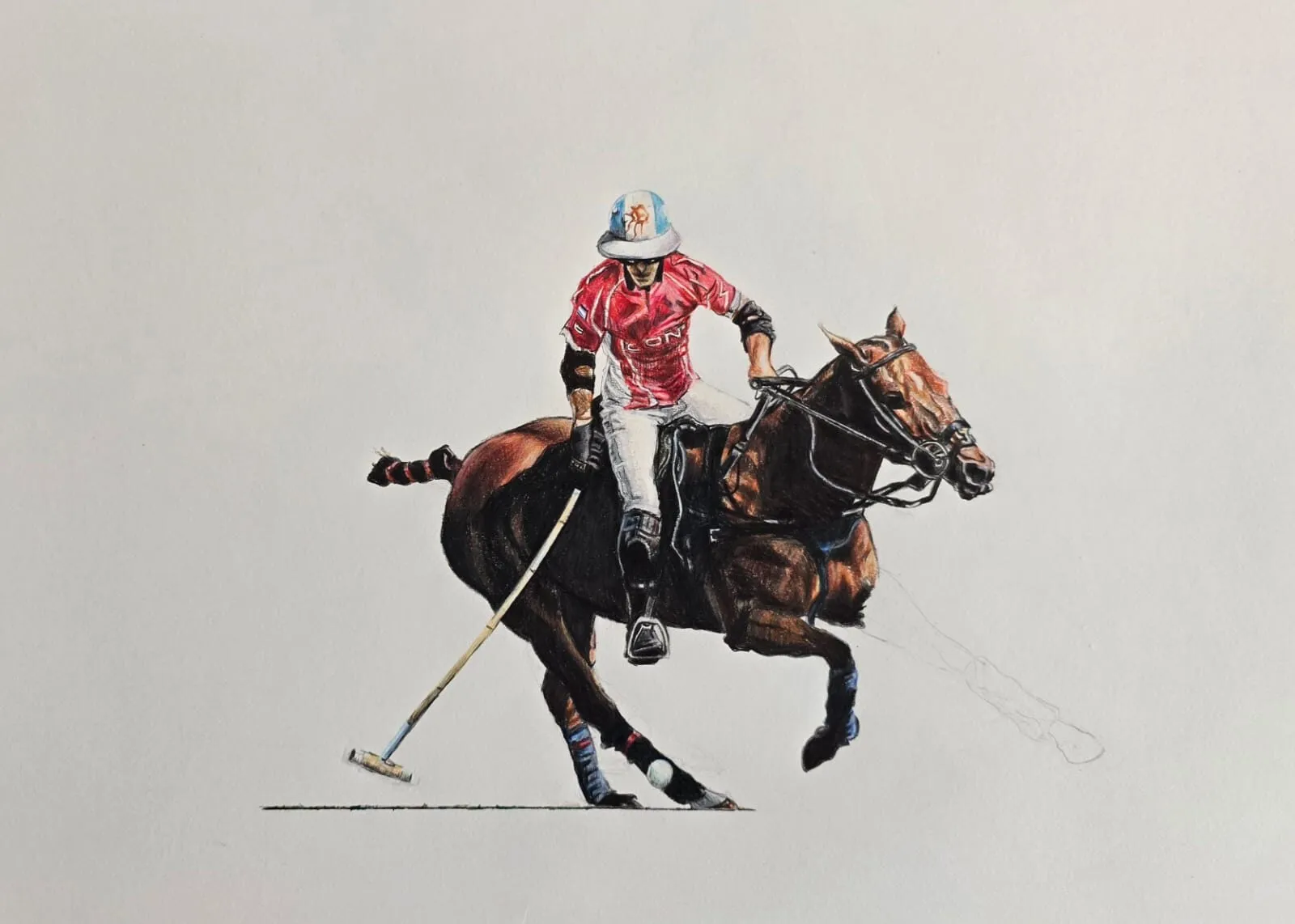
A polo player on a galloping horse drawn in coloured pencil

How to Draw

How to Draw a Horse: Proportions, Head and Coat

Draw a horse with convincing proportions: block in the body, place the legs and joints, build the head, then add coat colour and shine in graphite or colored pencil.

8 min read

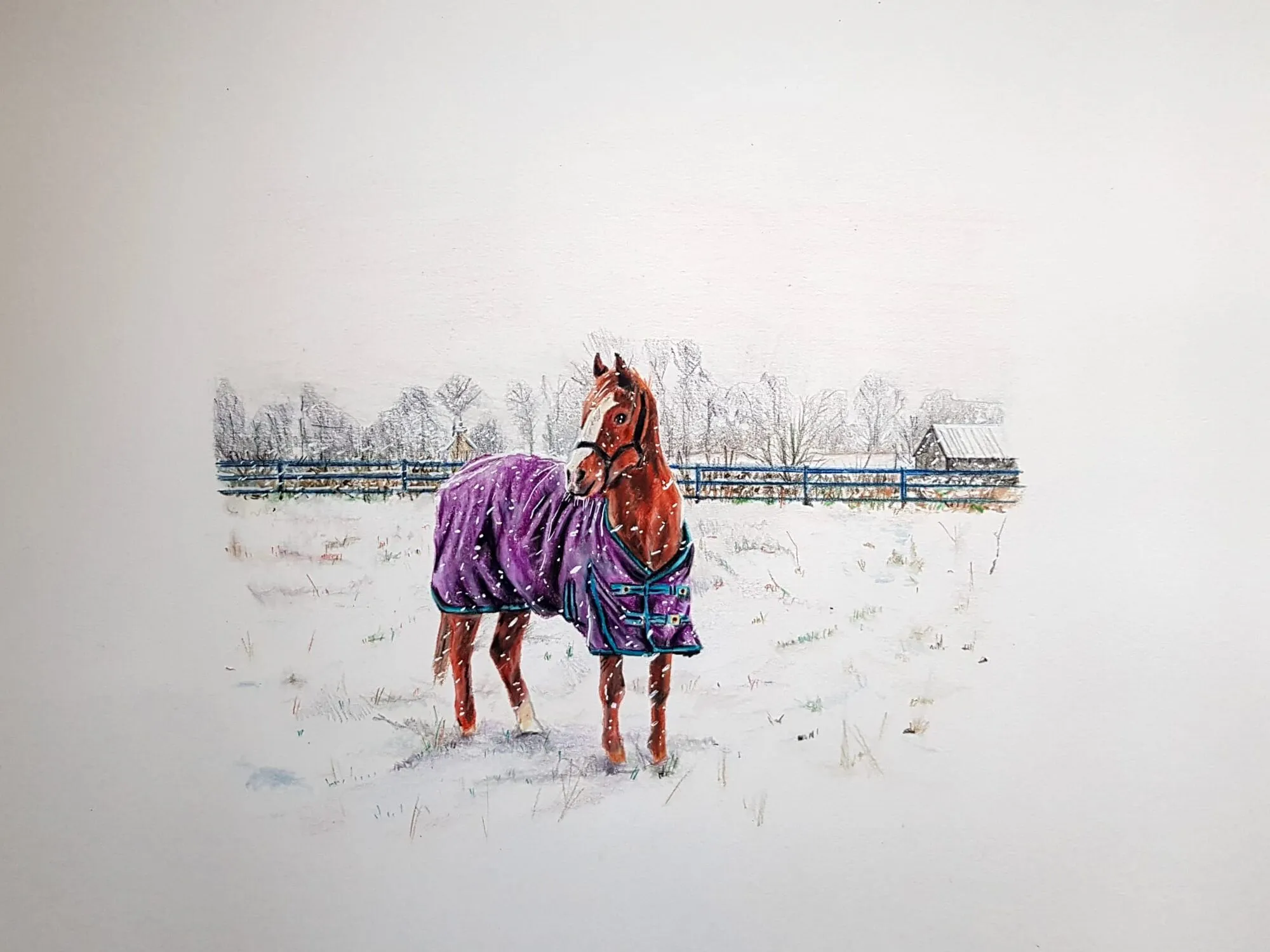
A horse in a purple rug standing in a snowy field, drawn in coloured pencil

How to Draw

How to Draw a Bird: Shapes, Feathers and Colour

Draw a bird from simple shapes to feathers: wing structure, beak and eye, feather direction, and how to build iridescent colour in coloured (colored) pencil.

7 min read

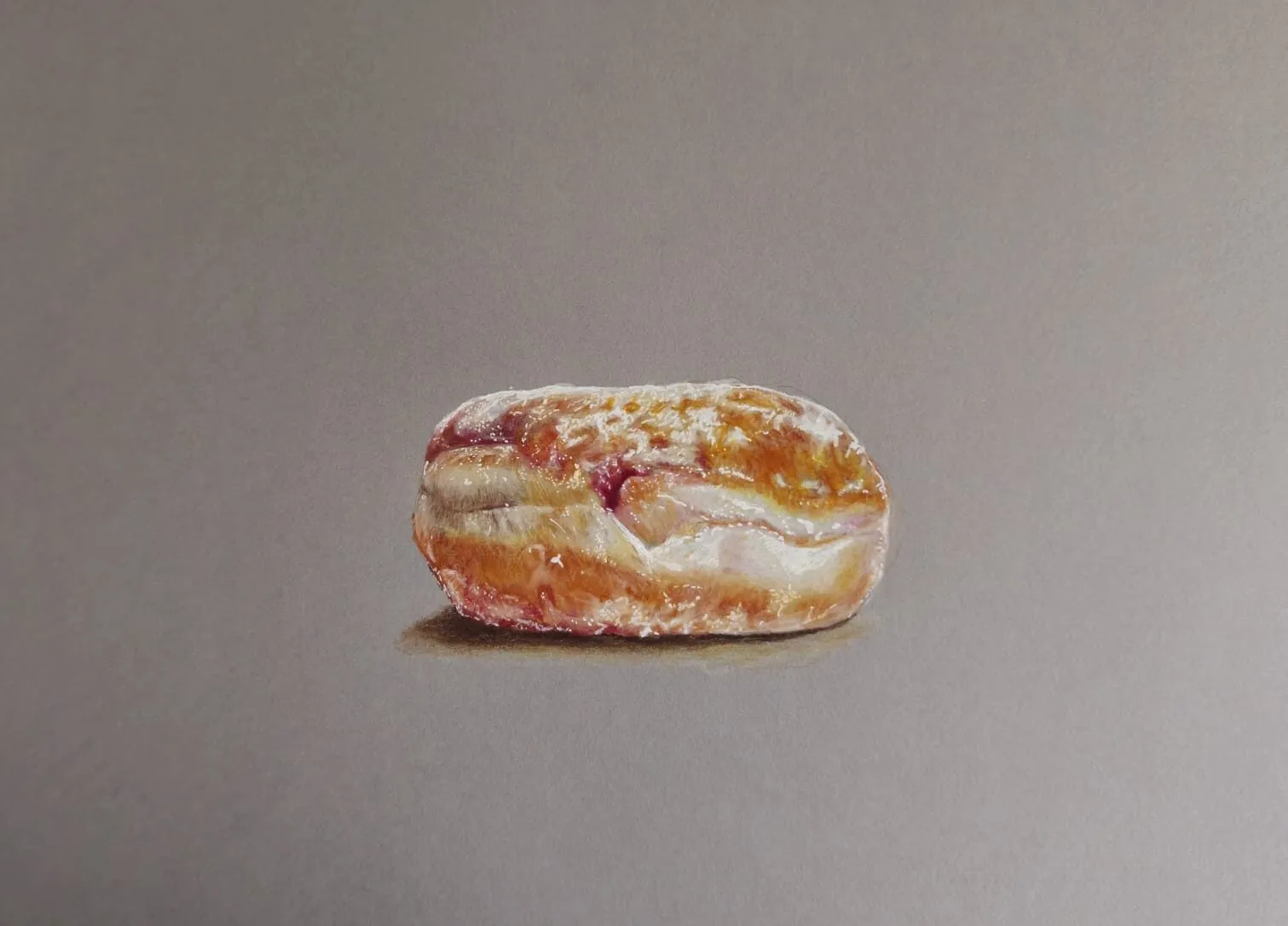
A sugared jam doughnut drawn in coloured pencil on grey paper

How to Draw

How to Draw Food Realistically in Coloured Pencil

Draw realistic food in coloured (colored) pencil: glossy glazes, icing, sauces, pastry texture, crumbs and cast shadows, built in four clear stages on grey paper.

7 min read

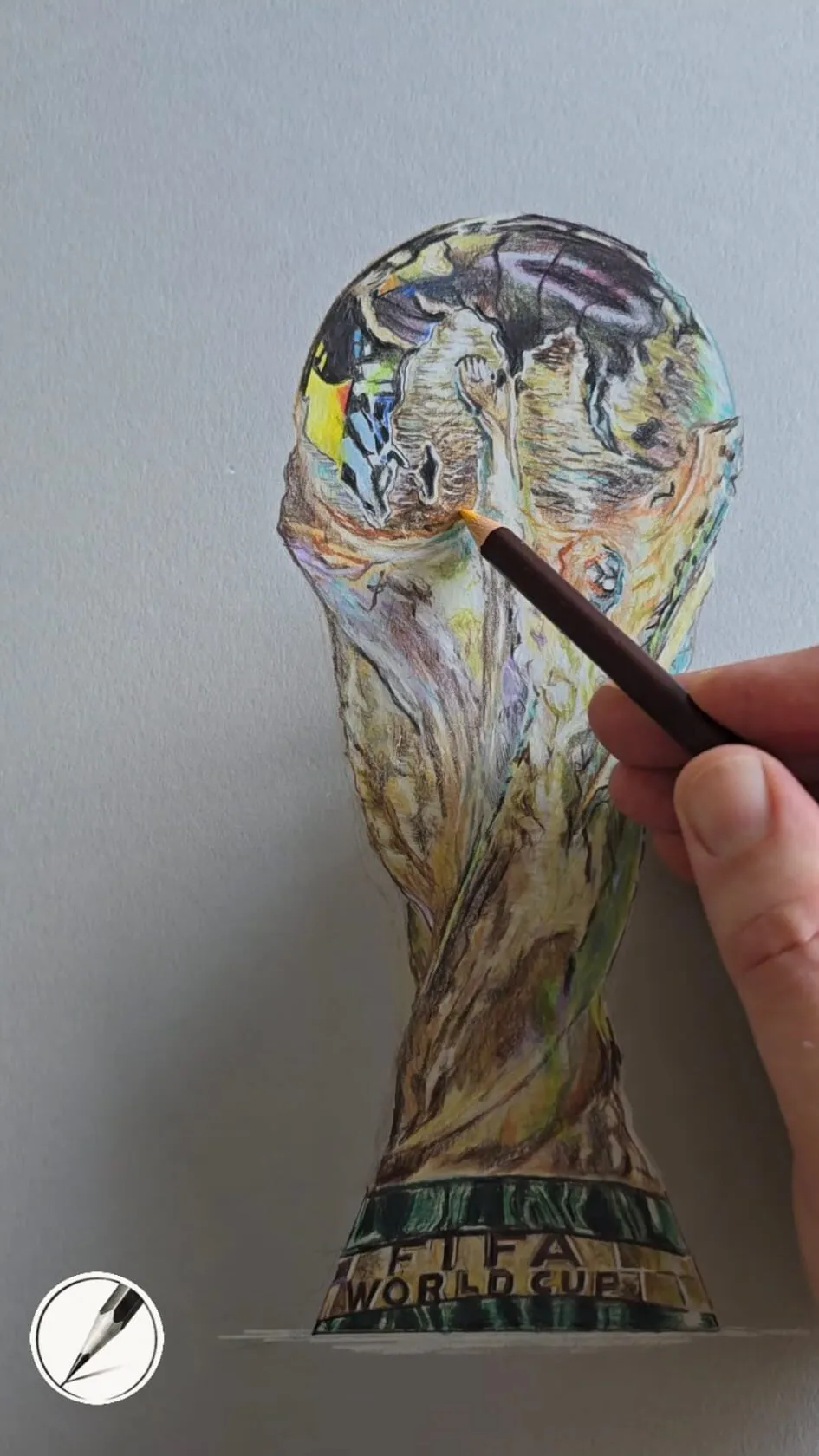
A hand drawing a gold trophy in coloured pencil on grey paper

How to Draw

How to Draw Basic Forms and Shading: Sphere, Cube, Cylinder, Cone

Learn to draw and shade the sphere, cube, cylinder and cone with light, core shadow, reflected light and cast shadow, in graphite, then colored pencil.

7 min read

A football stadium in snow drawn in three stages: layout first, then base colours, then final detail

How to Draw

How to Draw in Perspective: One-Point and Two-Point

Learn perspective drawing step by step: horizon line, vanishing points, one-point and two-point perspective, boxes into buildings and rooms, and common mistakes.

8 min read

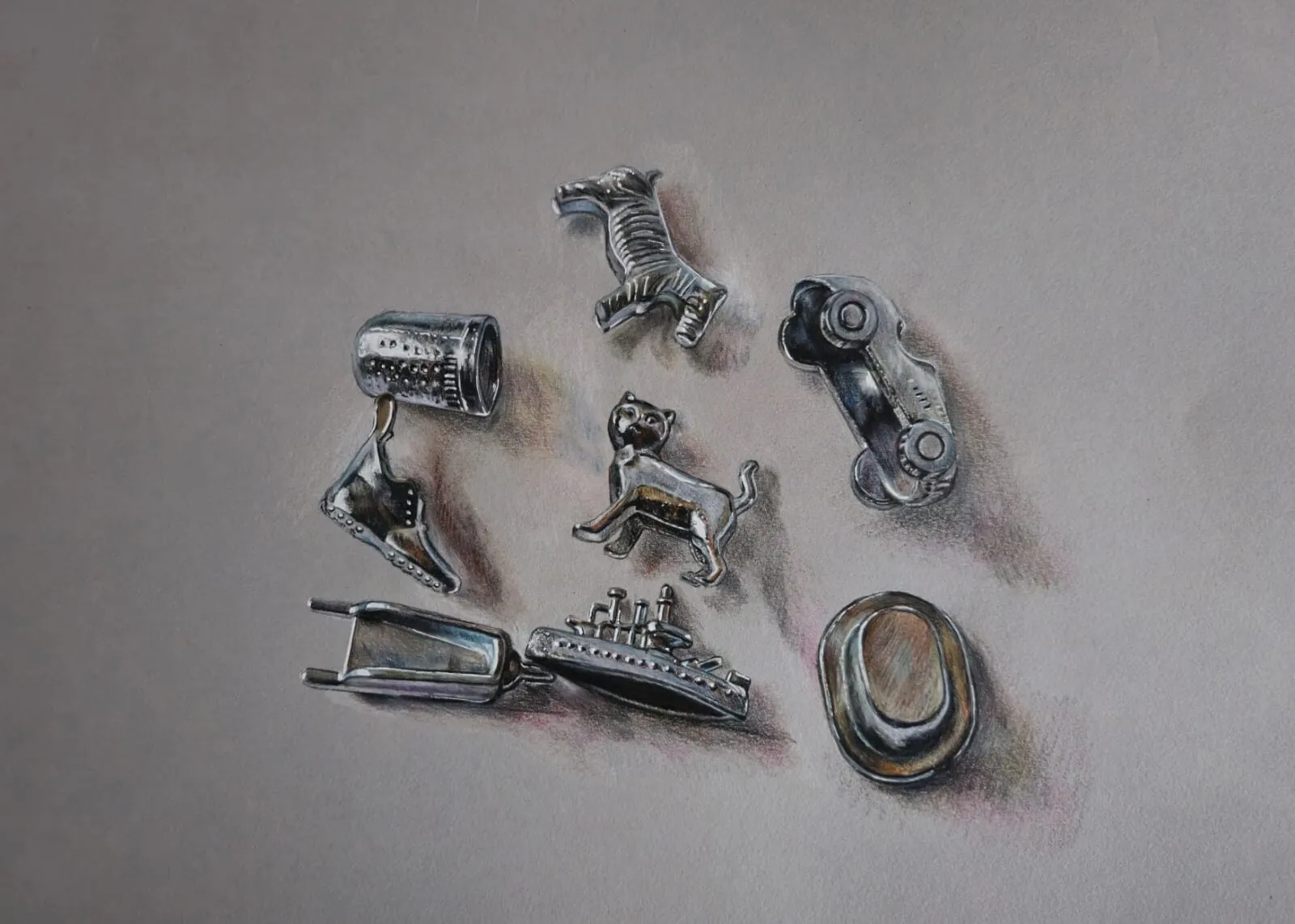
A group of silver metal board-game tokens drawn in coloured pencil on grey paper

How to Draw

How to Draw Shadows and Light: Form, Cast and Colour

Learn to draw shadows and light: direction, form and cast shadow, core shadow, reflected light, edges, contact shadow and shadow colour in coloured (colored) pencil.

7 min read

A rooster drawn in coloured pencil

How to Draw

Drawing Ideas for Beginners: 60 Things to Draw

Stuck on what to draw? Sixty beginner-friendly drawing ideas grouped by subject, each with what it teaches and how hard it is, plus how to choose one.

8 min read

Two drawings of the same subject made at different times, showing clear improvement

How to Draw

30-Day Drawing Challenge for Beginners

A day-by-day 30-day drawing challenge that builds from lines and shapes to shading, proportion, features, a still life and a finished piece. 15 to 60 minutes a day.

8 min read

A horse in a purple rug standing in a snowy field, drawn in coloured pencil

How to Draw

How to Draw a Cat: Proportions, Face and Fur

Draw a cat with believable proportions: block in the body, build the head, place eyes, nose and ears, then add whiskers and fur in graphite or coloured (colored) pencil.

9 min read

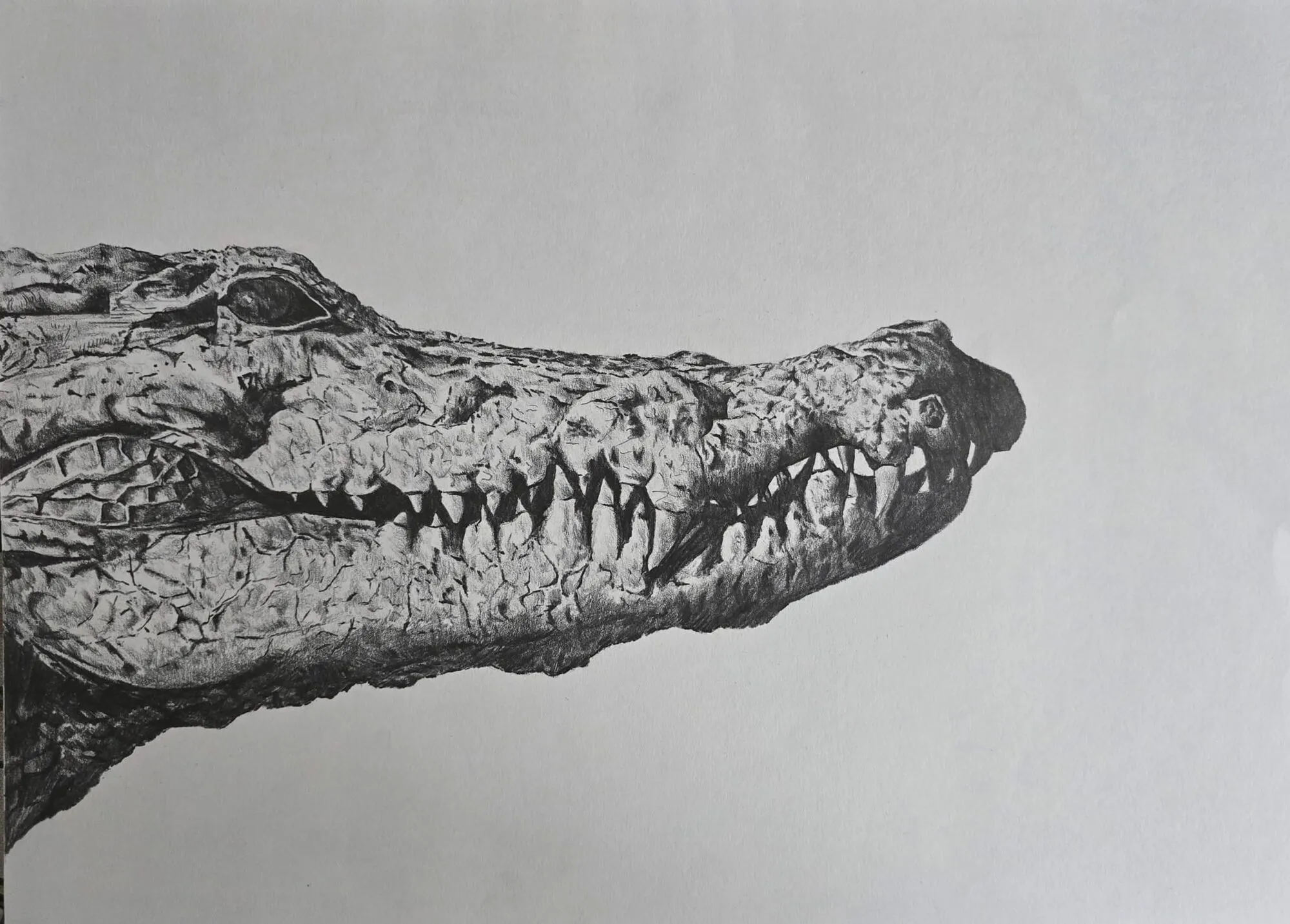
A crocodile's head and teeth drawn in graphite pencil

How to Draw

How to Draw a Lion: Mane, Face and Fur Masses

Draw a lion in graphite or coloured (colored) pencil: block in the head and body, structure the mane, place the eyes and muzzle, then build fur masses and tone.

7 min read

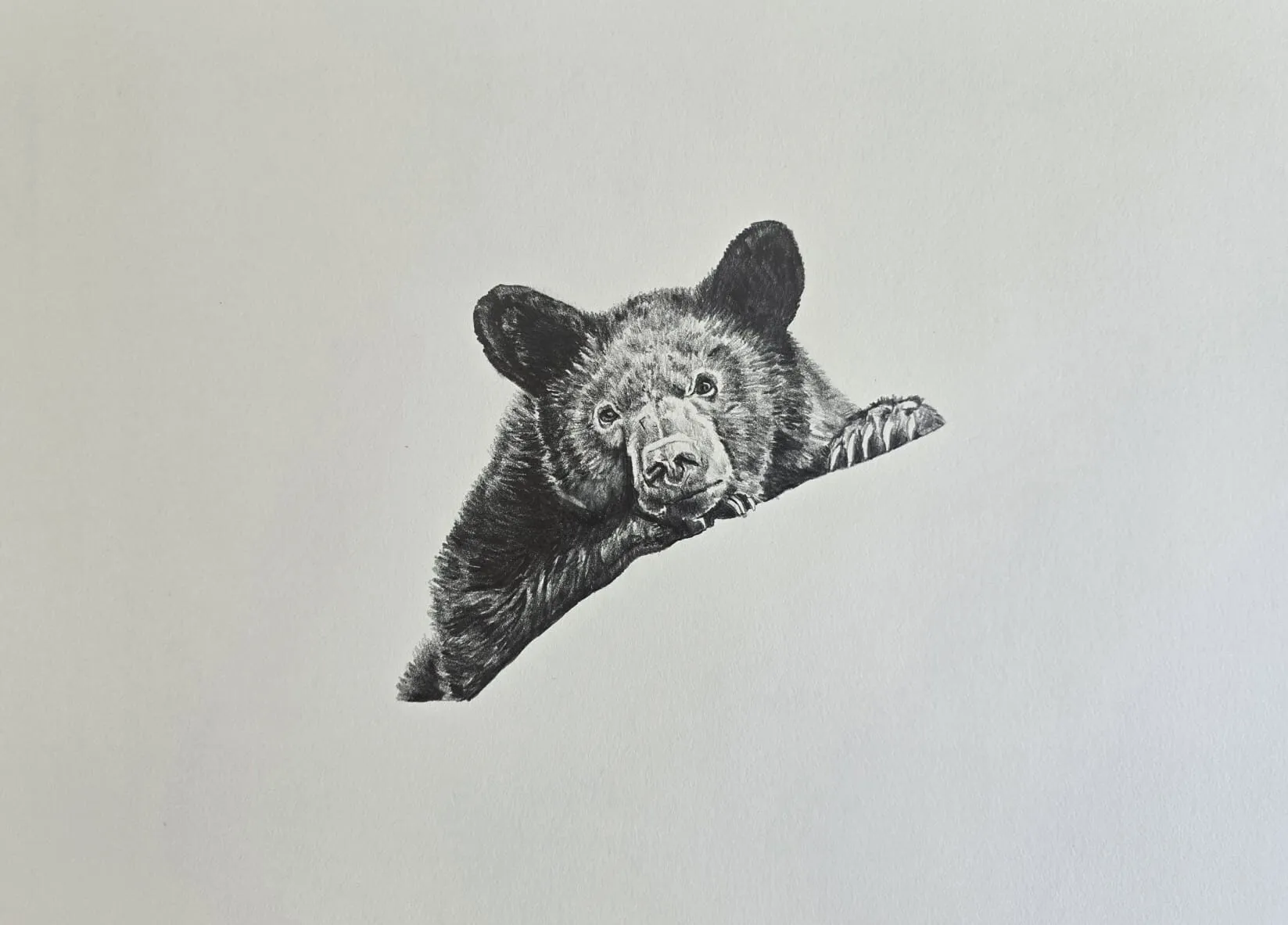
A bear cub resting on a branch drawn in graphite pencil

How to Draw

How to Draw an Elephant: Form, Trunk and Skin

Draw an elephant in graphite or coloured (colored) pencil: block in the huge forms, build the head and trunk, add ears, legs, wrinkles and skin texture, then shade.

7 min read

A horse in a purple rug standing in a snowy field, drawn in coloured pencil

How to Draw

How to Draw an Owl: Face, Feathers and Branch

Draw an owl in graphite or coloured (colored) pencil: build the head and facial disc, place eyes and beak, layer feathers, add pattern and a branch, then set values.

7 min read

A portrait of a woman in a multicoloured fur coat drawn in coloured pencil

How to Draw

How to Draw a Butterfly: Wings, Symmetry and Colour

Draw a butterfly in graphite or coloured (colored) pencil: set up symmetry, shape the wings, add veins and patterns, layer colour, then finish antennae and shading.

7 min read

A portrait of a woman in a multicoloured fur coat drawn in coloured pencil

How to Draw

How to Draw a Flower: Petals, Stem and Colour

Draw a flower in graphite or coloured (colored) pencil: learn simple flower anatomy, petal shapes and perspective, then add leaves, a stem, shading and layered colour.

7 min read

A portrait of a woman in a multicoloured fur coat drawn in coloured pencil

How to Draw

How to Draw a Sunflower: Petals, Centre and Colour

Learn how to draw a sunflower in graphite or coloured (colored) pencil: the seed disc pattern, overlapping petals, leaves, and layered yellows, ochres and browns.

9 min read

A study of a bearded man in a cap in dark and white pencil on toned paper

How to Draw

How to Draw Ears: Structure, Placement and Shading

Learn how to draw ears in pencil: the helix, antihelix, lobe and tragus, where to place them on the head, how they change with angle, and how to shade them.

9 min read

A head study of a bearded man wearing a cap in dark and white pencil on toned paper

How to Draw

How to Draw a Face from the Side: Profile Guide

Learn how to draw a face in profile: the ball-and-jaw head, the forehead, nose, lips and chin line, ear placement, the eye in profile, hair mass and shading.

9 min read

A graphite portrait of Abraham Lincoln

How to Draw

How to Draw Teeth and Smiles Without Making Them Look Fake

Learn how to draw teeth and smiles in graphite or coloured (colored) pencil: treat teeth as a mass, control edges and values, and avoid the white-blocks look.

8 min read

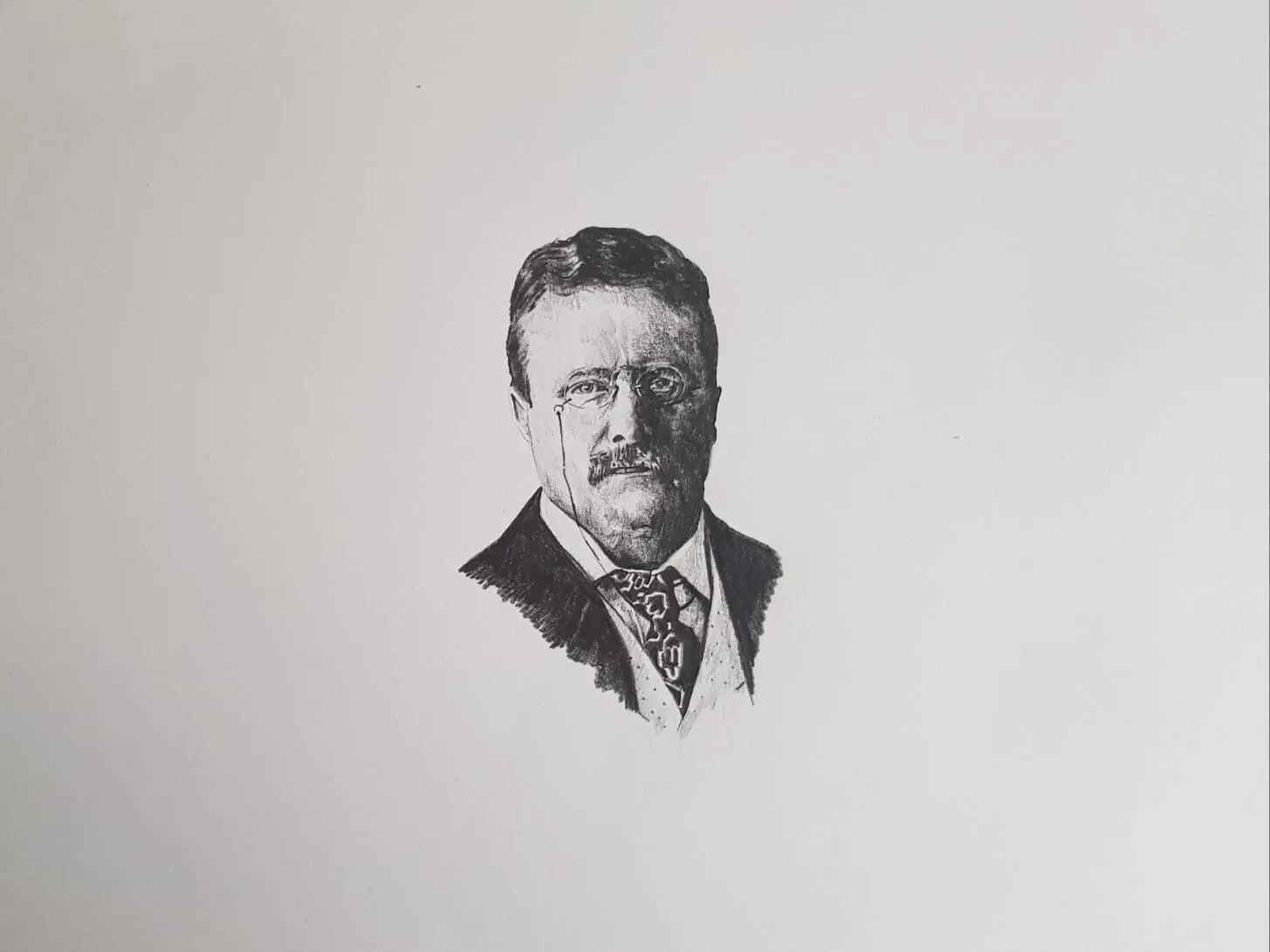
A graphite portrait of Theodore Roosevelt

How to Draw

How to Draw Wrinkles and Older Faces in Pencil

Learn how to draw wrinkles and older faces in graphite or coloured (colored) pencil: skin structure, wrinkle directions, light and shadow, soft edges, hair and eyes.

9 min read

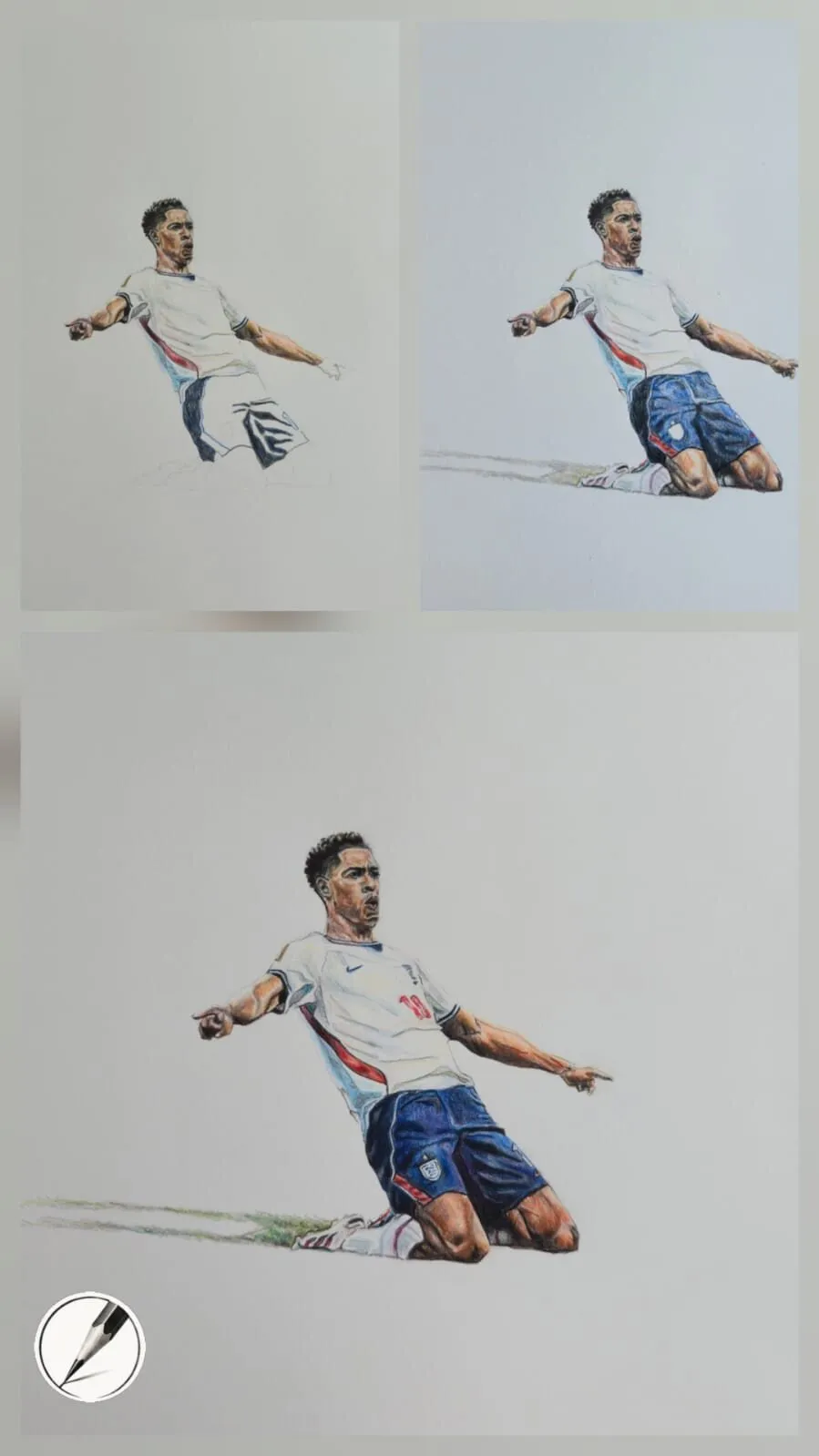
A drawing of a footballer in a dynamic pose, with shadow and grass added to give a sense of movement

How to Draw

How to Draw the Human Body: Proportions for Beginners

Learn human body proportions for drawing: head-count guides, landmarks, torso, arms and legs, differences by build and age, and how to simplify the figure into blocks.

9 min read

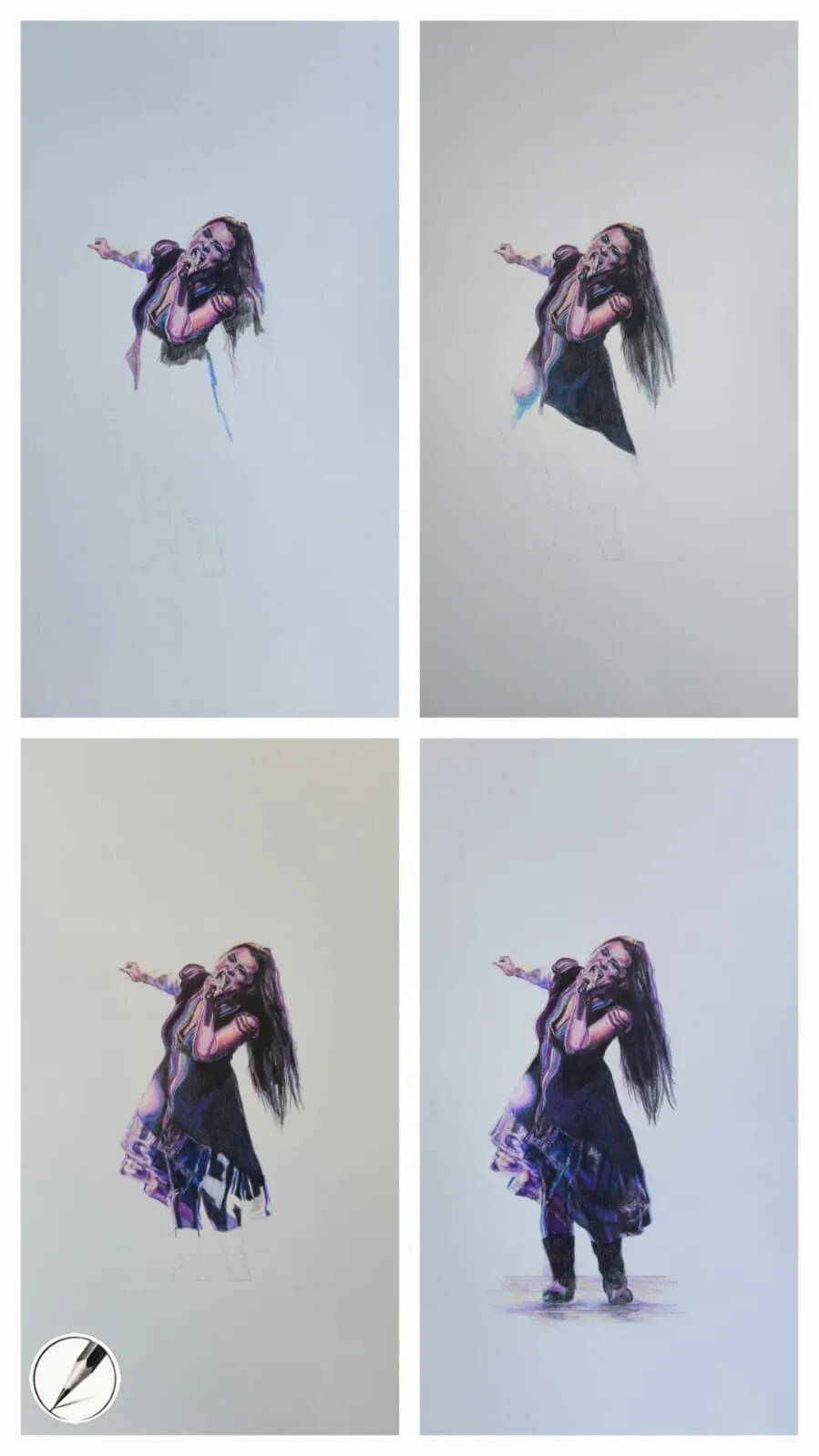
Four stages of one figure drawing shown top down, from a first pencil layout to a fully colored finish

How to Draw

How to Draw Gesture and Poses: Quick Figure Drawing

Learn gesture drawing and poses: line of action, 30 to 60 second sketches, simple shapes, balance and thumbnails, in graphite or coloured (colored) pencil.

8 min read

A rooster drawn in coloured pencil

How to Draw

How to Draw Fabric and Folds: Drapery in Pencil

Learn to draw fabric and folds: pipe, zigzag, drop, spiral and half-lock folds, tension points, light on cloth, texture and patterns in coloured (colored) pencil.

7 min read

A football stadium in snow drawn in coloured pencil, shown in three stages

How to Draw

How to Draw Water and Reflections in Pencil

Learn to draw water and reflections: still versus moving water, inverted reflections, ripples, highlights, transparency and colour in coloured (colored) pencil.

7 min read

A football stadium in snow drawn in coloured pencil, shown in three stages

How to Draw

How to Draw Mountains and Landscapes in Pencil

Learn to draw mountains and landscapes: planes of distance, atmospheric perspective, values, edges, foreground detail and skies, in graphite or coloured (colored) pencil.

7 min read

A football stadium in snow drawn in three stages: layout, base colours and final detail

How to Draw

How to Draw a House and Buildings in Pencil

Learn to draw a house and buildings: boxes, one and two-point perspective, windows and doors, materials, light and shadow, in graphite or coloured (colored) pencil.

8 min read

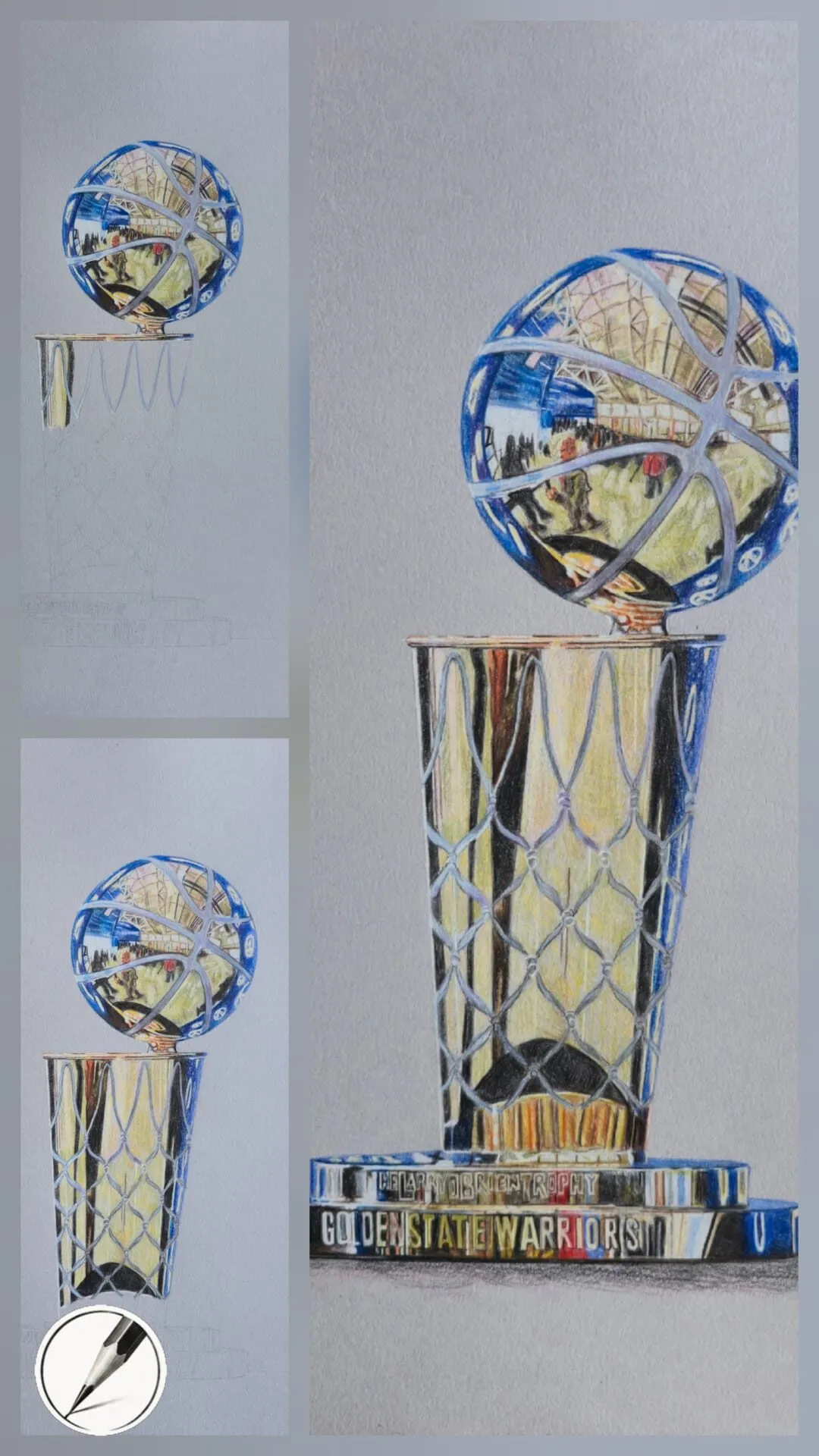
A silver and gold basketball trophy drawn in coloured pencil, shown in three stages

How to Draw

How to Draw Glass and Transparent Objects in Pencil

Learn to draw glass and transparent objects: edges, highlights, refraction, reflected light, cast shadows and caustics, in graphite or coloured (colored) pencil.

7 min read

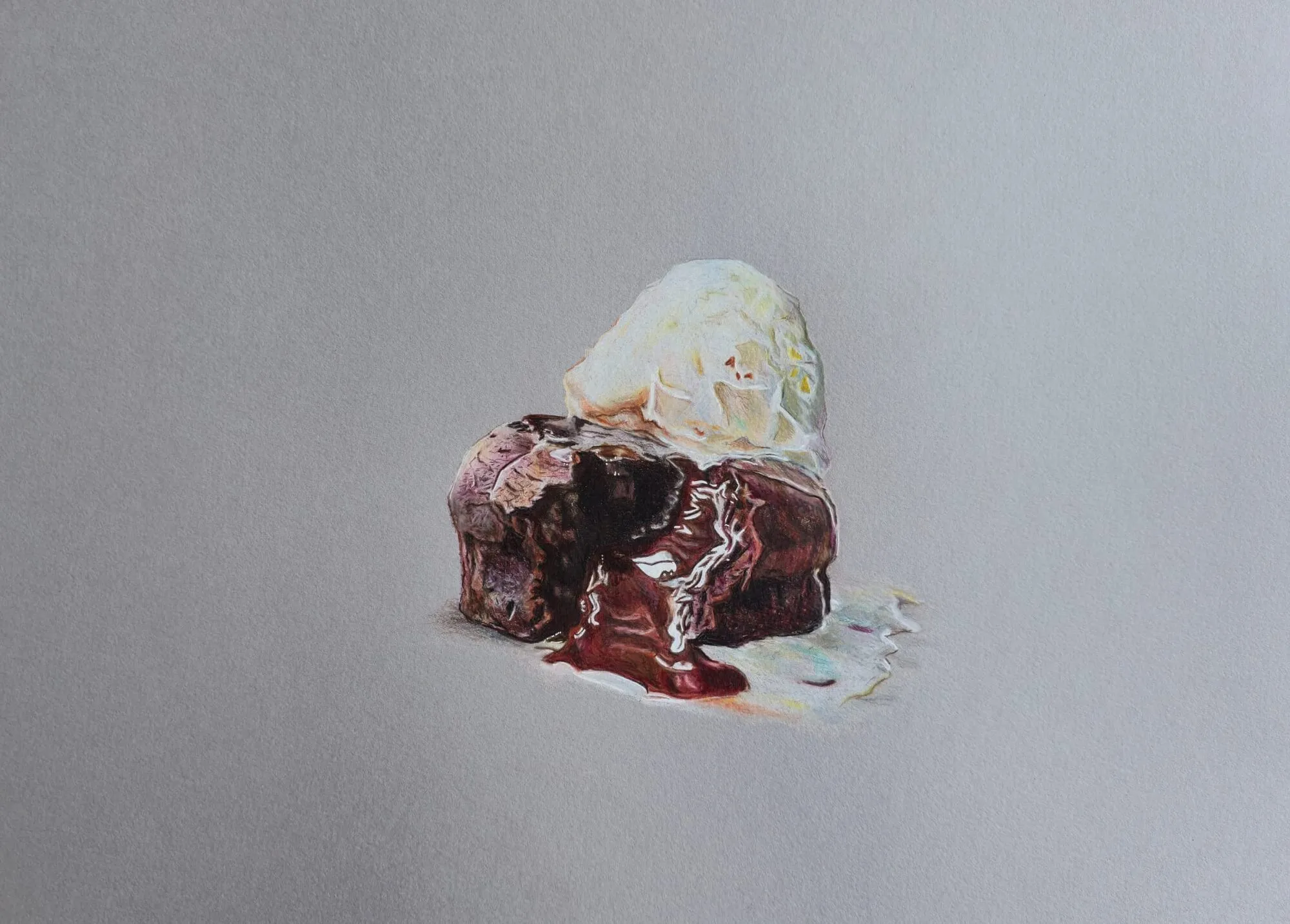
A molten chocolate dessert with ice cream drawn in coloured pencil on grey paper

How to Draw

How to Draw Fruit: Apples and Citrus in Pencil

Learn how to draw an apple and a citrus fruit in graphite or coloured (colored) pencil: basic forms, light and shadow, skin texture, colour layering and highlights.

9 min read

Close-up of sharpened pencil tips on textured paper

How to Draw

Drawing Exercises for Beginners: 20 to Try

Twenty concrete drawing exercises for beginners, grouped by skill, each with what it trains and how long it takes. Works in graphite or coloured (colored) pencil.

7 min read

Close-up of sharpened pencil tips on textured paper

How to Draw

How to Hold a Pencil for Drawing

How to hold a pencil for drawing: the tripod grip, overhand and underhand holds, arm movement, pressure control, posture and how to avoid smudging and hand fatigue.

8 min read

Searching “how to draw” returns thousands of tutorials, and most of them skip the part that matters: the order in which you learn things. Beginners jump straight to a realistic eye or a detailed portrait, get a flat, stiff result, and decide they lack talent. In reality they skipped the foundations that make an eye look round and a face look solid.

This section is a set of step-by-step lessons for pencil artists, arranged so that each one builds on the last. Every lesson works in graphite, and where colour changes the method it says so, including for coloured pencils (colored pencils in the US). Use this page as a map: where to start, what kit to buy, which tools help, and which lesson to open next.

Where to start

Start with what a drawing is made of: shapes with light falling on them. Before you attempt a face, learn to make a flat circle look like a sphere and a square look like a box. The lessons on basic forms and shading and shadows and light teach this, and everything else in the cluster leans on it.

Then choose a subject you care about. Motivation matters more than a perfect curriculum, and a beginner who loves horses will practise more than one grinding through cubes. Just keep the foundations running alongside: ten minutes of forms and shading before a session is a very good warm-up.

If you want a broader roadmap that covers habits and mindset as well as technique, drawing for beginners: where to start is the companion piece to this page.
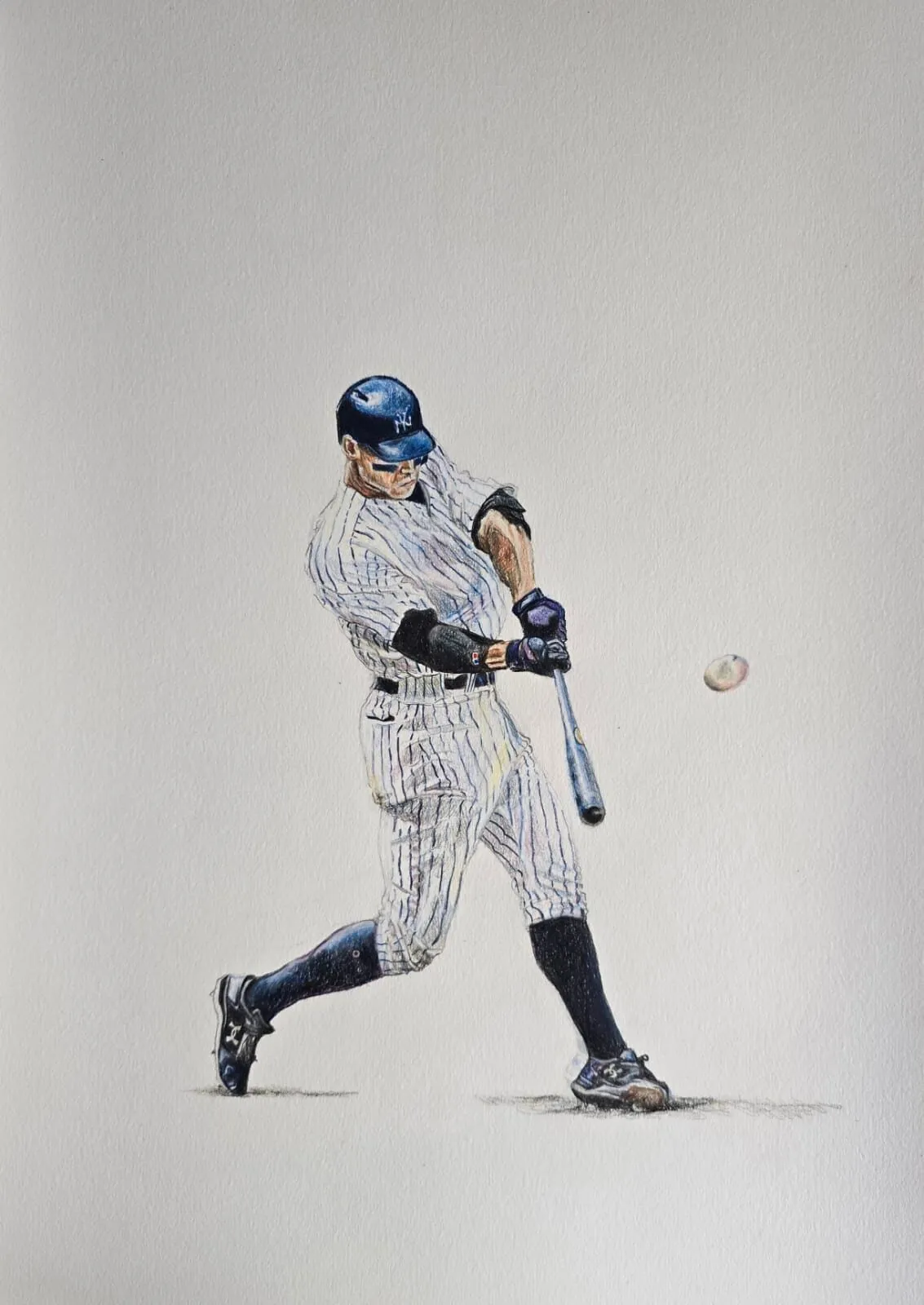
A baseball batter mid-swing drawn in coloured pencil

A baseball batter mid-swing drawn in coloured pencil. Drawing by Michael Brace.

A learning order that works

There is no single correct curriculum, but this sequence removes the most common frustrations.

1. Forms and shading

Simple solids (sphere, cube, cylinder, cone) under a single light show you the same structure every subject has: a light side, a shadow side, a cast shadow and a subtle bounce of light in the shadow. Spend a week here. The tone ideas carry straight into skin, fruit, fur and clouds.

2. Proportion and perspective

Once tone makes sense, learn to measure. Proportion is the relationship between parts, such as how wide an eye is compared with the space between the eyes, and perspective is how those relationships change with angle and distance. Drawing in perspective covers the basics for objects and scenes, and how to draw what you see explains the observational habits that make measuring accurate.

3. Features

Features are small studies with the proportions of a whole face packed into a tiny area, which is why they are a good next step: eyes, noses, lips and hair. Each one has a handful of shapes and a clear value structure that you can learn and repeat.

4. Whole subjects

With forms, proportion and features behind you, complete subjects stop being intimidating. This is where you assemble a face, a portrait from a photo, an animal, a plant or a landscape. The same three checks apply every time: is the structure right, are the values right, and only then, is the detail right.

Graphite or coloured pencil: two paths, one skill set

Graphite is the usual starting point. It is inexpensive, erases easily and forces you to think in values, which is the most important skill in realistic drawing. You can learn nearly everything in this cluster with an HB, a 2B and a 6B.

Coloured pencil adds hue and saturation to those same values. A drawing in colour still depends on getting light and dark right; colour that is correct but too light in the shadows reads as flat. Many artists learn on graphite, then move to colour when their value control is reliable. Others begin in colour because it keeps them motivated, and that works too, provided they keep checking value.

How the two paths compare in practice:

QuestionGraphiteColoured pencil
Cost to startVery lowLow to moderate, depending on the set
Ease of correctionEasy to eraseHarder, especially with wax-based pencils
Main skillValue and edge controlValue plus colour mixing and layering
Best first lessonForms and shadingForms and shading, then a limited palette

If you are still deciding, best drawing pencils for beginners and coloured pencil drawing for beginners each give a clear starting kit, and the pencil set quiz narrows down a set in a few questions.
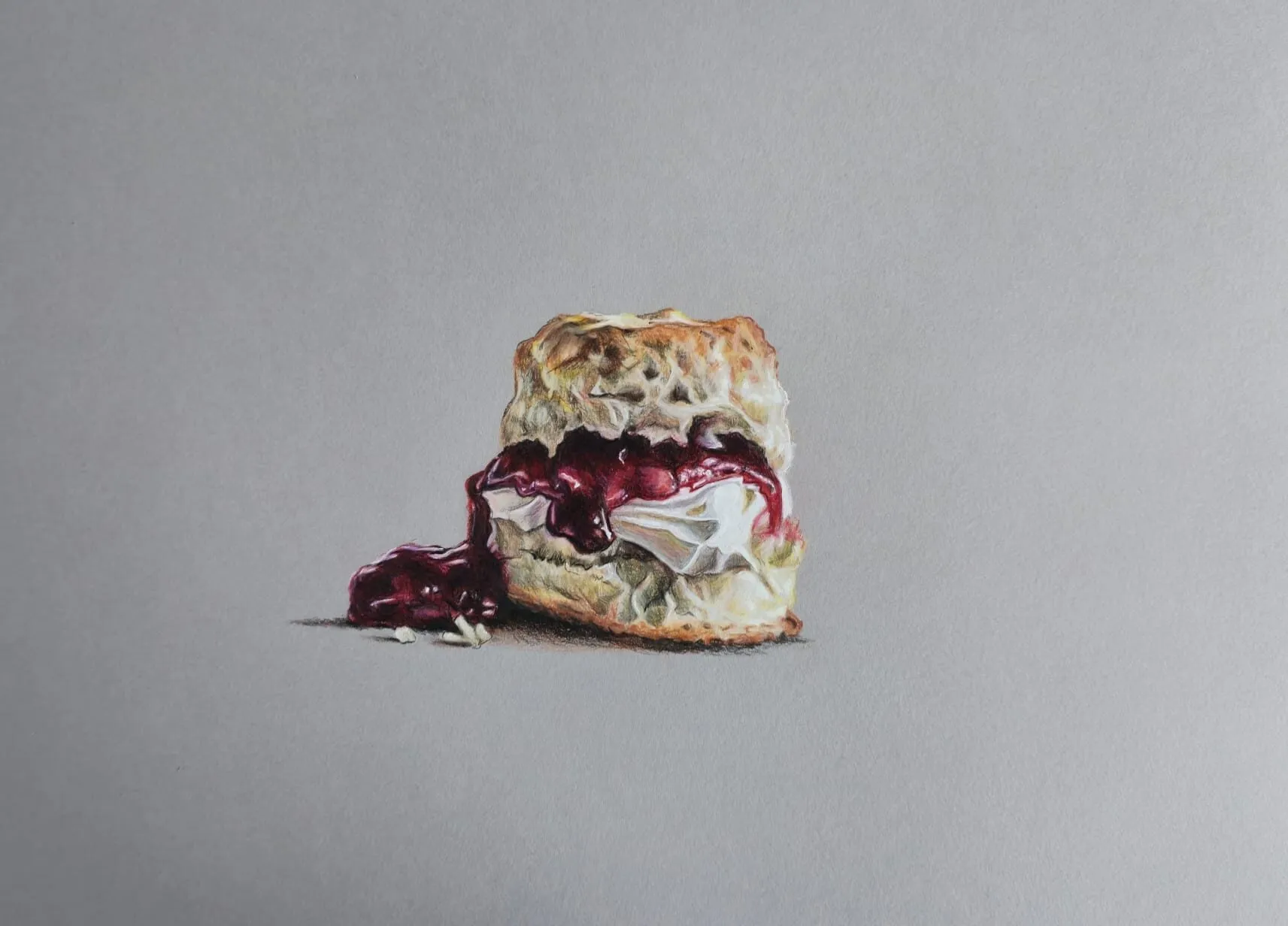
A scone with cream and jam drawn in coloured pencil on grey paper

A scone with cream and jam drawn in coloured pencil on grey paper. Drawing by Michael Brace.

Materials basics

You do not need much. You do need to avoid the two most common false economies: very thin paper and pencils that are too hard to shade with.

Paper

Paper decides how much layering and erasing a drawing can take. For graphite, a smooth to lightly textured sheet works well; see the best paper for graphite drawing. For coloured pencil, weight and tooth matter more, and the best paper for coloured pencils compares the options. If you want one place that covers beginner-friendly sheets and pads, start with the best drawing paper for beginners. The paper pillar explains weight, tooth and surface in depth.

Graphite pencils

A useful beginner set is an HB for light construction lines, a 2B for general work and a 4B to 6B for darks. Harder grades such as 2H are handy for very light guidelines that will not show through. The graphite pencil grades explained guide and the pencil grade chart show how the grades relate. More detail is in the graphite and charcoal pillar.

Coloured pencils

For colour work, a modest set is plenty. Look for pencils with soft, well-pigmented cores, and add a white pencil if you will work on toned paper. Read best coloured pencils for beginners or browse the coloured pencils pillar for the wider picture. Coloured pencils are called colored pencils in the US; the products are the same.

Extras worth having

A kneaded eraser for lifting highlights, a good sharpener, a blending stump or tortillon for graphite, and a sheet of scrap paper under your hand to prevent smudges. That is the whole list. For everything you might add later, see best drawing supplies for beginners.

Three tools that make beginner drawing easier

Good drawing is mostly good decisions, and these three tools help you make them.

The grid

A grid divides your reference and your paper into matching squares, so you only have to draw one small area at a time. It is a very reliable way to get proportions right, and it trains your eye rather than replacing it. The grid drawing tool lets you overlay a grid on a photo and match it to your paper size.

The value study

A value study is a small drawing in a handful of tones that plans where the lights, mid-tones and darks go before you commit to detail. Making one is the fastest way to find out why a drawing looks flat. The value study tool reduces a photo to a few tones so you can see the structure, and value in drawing explains the principle.

The palette

If you work in colour, choose your pencils before you start rather than reaching for whatever is nearest. Palette from photo pulls a set of colours from your reference, and the colour scheme generator helps if you want a harmonious set instead. A small palette makes drawings look consistent, and limited palette drawing shows why.

Every lesson in this cluster

The lessons are grouped by what they teach. Open the one that matches what you want to draw, and come back to the foundations whenever a drawing looks flat.

Foundations

Faces and figures

Nature and animals

Still life

Ideas and practice

How to practise

The most useful habit is small and regular. Twenty to thirty minutes on most days will do more than a long weekend session, and how to practise drawing daily explains how to structure it. Repeat a lesson rather than always moving on: a second attempt at the same eye, a week later, shows what you have actually absorbed.

Keep every drawing, dated, in a folder or sketchbook. Progress in drawing is slow enough to be invisible from one day to the next, and gaps of a few months make it obvious. When you get stuck, look at the drawing next to your reference, squint to reduce both to simple shapes and tones, and ask what is different. That comparison is the core skill, and how a realistic drawing comes together walks through it from start to finish.

Where the lessons lead

Once you can build form with tone, the specialised guides open up. How to draw portraits in coloured pencil takes the face lessons into colour, how to shade with pencil deepens the graphite side, and how to layer coloured pencils is the next step for colour. Books also speed things up; the best books to improve your drawing lists ones worth owning.

The short version

Draw forms and shading first. Learn proportion next. Practise features on their own, then assemble whole subjects. Use graphite to learn value and coloured pencil when you want colour, keep the kit simple, and lean on the grid, the value study and a small palette. Open a lesson, do the practice exercises, and repeat.

Frequently asked questions

How do I start learning to draw?+

Start with basic forms and shading: draw a sphere, cube and cylinder in graphite and shade them from a single light source. Then practise proportion by copying simple shapes, and only after that move to features such as eyes and noses. This order builds the skills every later subject depends on.

What do I need to start drawing with pencil?+

Two or three graphite pencils (for example an HB and a soft 4B or 6B), a good eraser, a sharpener and paper with a little tooth. That is enough for every lesson here. Add coloured pencils, called colored pencils in the US, when you want to move into colour.

Should I learn graphite or coloured pencil first?+

Graphite is the cheaper, more forgiving way to learn value, proportion and shape, so most beginners benefit from starting there. Coloured pencil uses exactly the same skills with an extra layer of colour, so nothing is wasted. You can also begin with coloured pencil if that is what motivates you.

How long does it take to learn to draw realistically?+

It varies with how often you practise and how carefully you observe. Beginners usually see clear improvement within a few weeks of regular short sessions, but realism is a long-term skill that keeps developing. Focus on completing small studies regularly rather than on a deadline.

Tools

Useful with this topic

The studio letter

One drawing lesson, once a month.

New guides, tool updates and the story behind a finished drawing - straight from the studio. No spam.