Paper & Surfaces
Best Drawing Paper for Beginners
How to choose drawing paper as a beginner: weight, tooth, pads versus blocks, cartridge versus mixed media, and practice paper versus finished-work paper.
This guide contains affiliate links. If you buy through them we may earn a small commission at no cost to you. How this works.
Jump to recommended products
Key takeaways
- ◆Choose a mid-weight paper with a little tooth: it is forgiving for graphite and holds a few layers of coloured pencil.
- ◆Cartridge paper is the low-cost place to practise, mixed media paper gives more grip and durability, and smooth bristol-style surfaces suit fine detail.
- ◆Use one paper for practice and a better one for finished work, so cost never stops you drawing.
- ◆Test a paper before buying a large pad by drawing a value ramp, a blend and an erase on a small sheet.
- ◆Weight and tooth matter more than brand name when you are starting out.
The wrong paper can make good pencils feel terrible. Thin, slick sheets shred under an eraser, smudge at a touch and refuse to hold more than a couple of layers, and beginners often blame themselves. A sensible paper choice removes a whole layer of frustration before you have drawn a line.
This guide explains what to look for, how the main paper types differ, how to test before you buy and how to split your paper between practice and finished work. It links to our deeper guides on paper weight in gsm and paper tooth when you want more detail.
The short answer
Start with a mid-weight cartridge paper for practice. If you want to layer coloured pencils - colored pencils in the US - or need more durability, try a mixed media paper. Save smoother, heavier papers for finished pieces once you know how you like to work.
| Paper type | Feel | Good for | Trade-off |
|---|---|---|---|
| Cartridge paper | Soft, absorbent, moderate tooth | Practice, graphite, general sketching | Less forgiving of heavy erasing |
| Mixed media paper | Textured, sturdy | Coloured pencil, layering, mixed techniques | More tooth, so less smooth for fine detail |
| Smooth bristol-style surface | Very smooth, firm | Fine detail, crisp graphite | Holds fewer layers, shows mistakes |
Brand ranges and specifications change, so check the manufacturer’s current information for weights and finishes.
A studio storeroom with shelves of paper rolls and sheets.
Weight
Paper weight is measured in grams per square metre, or gsm. It tells you how thick and sturdy the sheet is. In Michael’s terms, lighter papers around 120 to 180 gsm are flexible and good for sketching, but can buckle or wear down under heavy coloured pencil layering. Heavier papers feel more like card, stay flat, resist damage and allow many layers.
For a beginner:
- Light (around 120 to 180 gsm). Fine for graphite sketching. Can wear or buckle under repeated erasing or heavy layers.
- Mid (around 180 to 250 gsm). A good general range: sturdy enough to layer and erase, flexible enough to be affordable.
- Heavy (around 300 gsm and above). The best for layered work and heavy correction, but costlier.
Our paper weight guide covers what the numbers mean in more depth.
Tooth
Tooth is the texture of the paper, the tiny hills and valleys that catch pigment. Rough surfaces grip well, so they allow more layers and richer darks, but they can look grainy and make fine detail harder. Smooth surfaces give finer detail and softer blends, but they hold fewer layers.
A little tooth is best for beginners. It helps graphite and coloured pencil grip, and it gives you room to build tone gradually. Our tooth guide shows how the choice affects finish, and hot press versus cold press paper explains the smoother and rougher watercolour-style surfaces you will see named in shops.
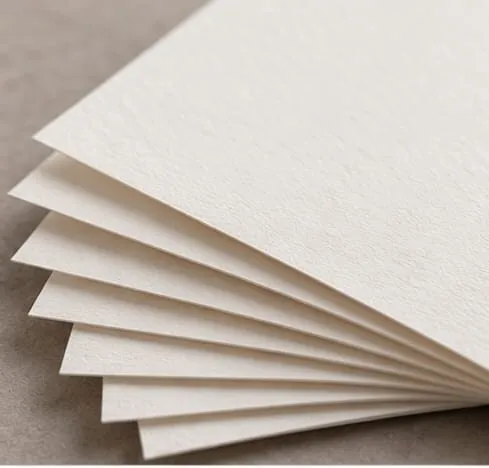
A fanned stack of heavyweight white paper showing the thick edges.
Cartridge paper
Cartridge paper is the traditional general-purpose drawing paper. It is usually white or cream, has a mild tooth and is affordable. Michael describes it as ideal for warm subjects, absorbing pencil differently, giving deeper tones and softer blends, and being less suited to high-gloss finishes. It usually sits at a lighter to middle weight, which makes it softer and more absorbent than heavy paper, but also more prone to scuffing and less tolerant of heavy erasing. That is why planning matters.
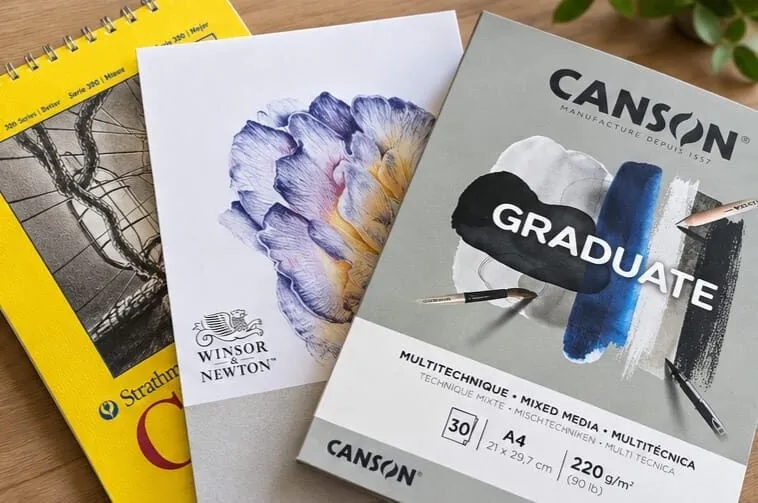
Winsor & Newton cartridge paper is a familiar option that gives graphite the tooth needed for rich shadows. For beginners it is a low-cost, sensible place to practise. See when to use cartridge paper for more.
Mixed media paper
Mixed media paper is designed to take a range of dry and light wet media. It tends to be sturdier and more textured, gripping pigment firmly. Michael’s preference for Canson Mixed Media in grey is because it has a lot of grain, or teeth, which lets pencils layer well and maintain their colour. It is also robust enough for detailed corrections.
It is a good choice if you plan to draw in coloured pencil, use toned paper or want one paper that copes with many techniques. It is less suited to very smooth blending, because the tooth is pronounced. Read why use grey paper for coloured pencil to see how a toned mixed media paper is used.
Smooth bristol-style surfaces
Smooth, firm papers, often sold as bristol board or hot press sheets, suit fine detail, crisp lines and delicate blending. They are less forgiving: pigment sits on the surface, so layers fill up faster and erasing can be harder. They are often better for graphite portraits and precise work than for beginners learning to layer. Save them for later, once your control is better. Compare them in best paper for realistic drawing.
Sketch pads, blocks and sketchbooks
The format changes how you use the paper.
- Sketchbooks keep everything together, encourage daily practice and are portable. Our best sketchbooks for drawing explains binding and paper.
- Pads are glued or spiral bound at one edge; you tear off sheets to frame or share. They are inexpensive and flexible.
- Blocks are glued on all four sides, which keeps the paper flat while you work, especially if you use water. You cut the sheet off when finished.
- Loose sheets are the best value for finished work but need a board.
Use a sketchbook for practice and a few loose or block sheets for finished drawings.
Practice paper versus finished-work paper
One of the smartest habits is to separate the two.
- Practice paper is inexpensive, so you do not worry about wasting it. Fill it with value ramps, blends, thumbnails and studies. Cartridge paper or a basic sketchbook is fine.
- Finished-work paper is the better paper you use for drawings you want to keep, exhibit or sell. It should be heavier, with a surface suited to your medium and, if you plan to sell, archival quality. See archival paper for selling your drawings.
Practising on the same paper you finish on has an advantage, since you learn how it behaves, but starting with an economical paper for practice stops cost from becoming a barrier.
How to test paper before you buy in bulk
Cut or tear a small piece and run these tests.
- Value ramp. Draw a ramp from light to dark with one pencil. Does the paper hold a dark tone without gloss?
- Blend. Blend a graphite or coloured pencil patch with a finger or stump. Does it smooth easily or stay grainy?
- Erase. Draw and erase. Does the paper stay clean, or does it scuff and pill?
- Layer. Lay down three or four layers of coloured pencil. Does the paper still accept pigment?
- Fold or bend. Is the sheet flexible and robust, or fragile?
- Check the back. Does the pencil show through or dent the reverse?
For coloured pencil specifically, see best paper for coloured pencils, and for graphite, best paper for graphite drawing.
Size
Choose a size that is easy to finish. A4 is popular for beginners because it is portable, and you can check dimensions in our A4 size guide. If you work between metric and US sizes, the paper size converter helps you compare.
Common mistakes
- Buying huge pads first. A large pad of the wrong paper is expensive to abandon.
- Using printer paper. It is thin and smooth, so it wears out quickly.
- Choosing by brand alone. Weight and tooth matter more than name.
- Ignoring the medium. Graphite, coloured pencil and washes want different surfaces.
- Never testing. A five-minute test saves a wasted pad.
The short version
For beginners, a mid-weight cartridge paper is the sensible default, a mixed media paper is the next step for layered coloured pencil, and smooth bristol-style sheets are for later. Choose weight and tooth over brand, separate practice paper from finished-work paper and test before you buy in bulk. For a broader starter kit, see best drawing supplies for beginners.
Where to buy
Recommended products
Affiliate links. We may earn a small commission if you buy, at no extra cost to you. Why?
Paper · Winsor & Newton
Winsor & Newton Cartridge Paper
Classic white cartridge paper with enough tooth for graphite and cross-hatching.
Paper · Canson
Canson Mixed Media Grey Paper
A toothy mid-tone grey paper that grips pigment and makes highlights glow.
Quick answers
Frequently asked questions
What is the best paper for beginners to draw on?+
A mid-weight cartridge paper is a good default: it is affordable, has enough tooth for graphite and light coloured pencil, and forgives mistakes. Step up to mixed media or a smoother paper when you know what finish you want.
What weight of paper should a beginner use?+
Around 120 to 180 gsm is flexible and fine for sketching, but heavier paper copes better with layering and erasing. Choose something heavier if you plan to use coloured pencil, watercolour pencils or lots of erasing.
Should beginners buy a sketchbook or a pad?+
A sketchbook keeps everything together and suits daily practice. A pad or block suits loose sheets you want to frame or share. Many beginners use a sketchbook for practice and a few better sheets for finished drawings.
Can I use printer paper to draw on?+
You can for quick sketches, but it is thin and smooth, so it wears out quickly and struggles with layering or erasing. A proper drawing paper costs little more and lasts far better.