Coloured Pencils
Derwent Coloursoft Coloured Pencils Reviewed
Derwent Coloursoft coloured (colored) pencils reviewed: velvety, rich and painterly, with soft blending, best subjects, paper pairings and how they compare.
This guide contains affiliate links. If you buy through them we may earn a small commission at no cost to you. How this works.
Jump to recommended products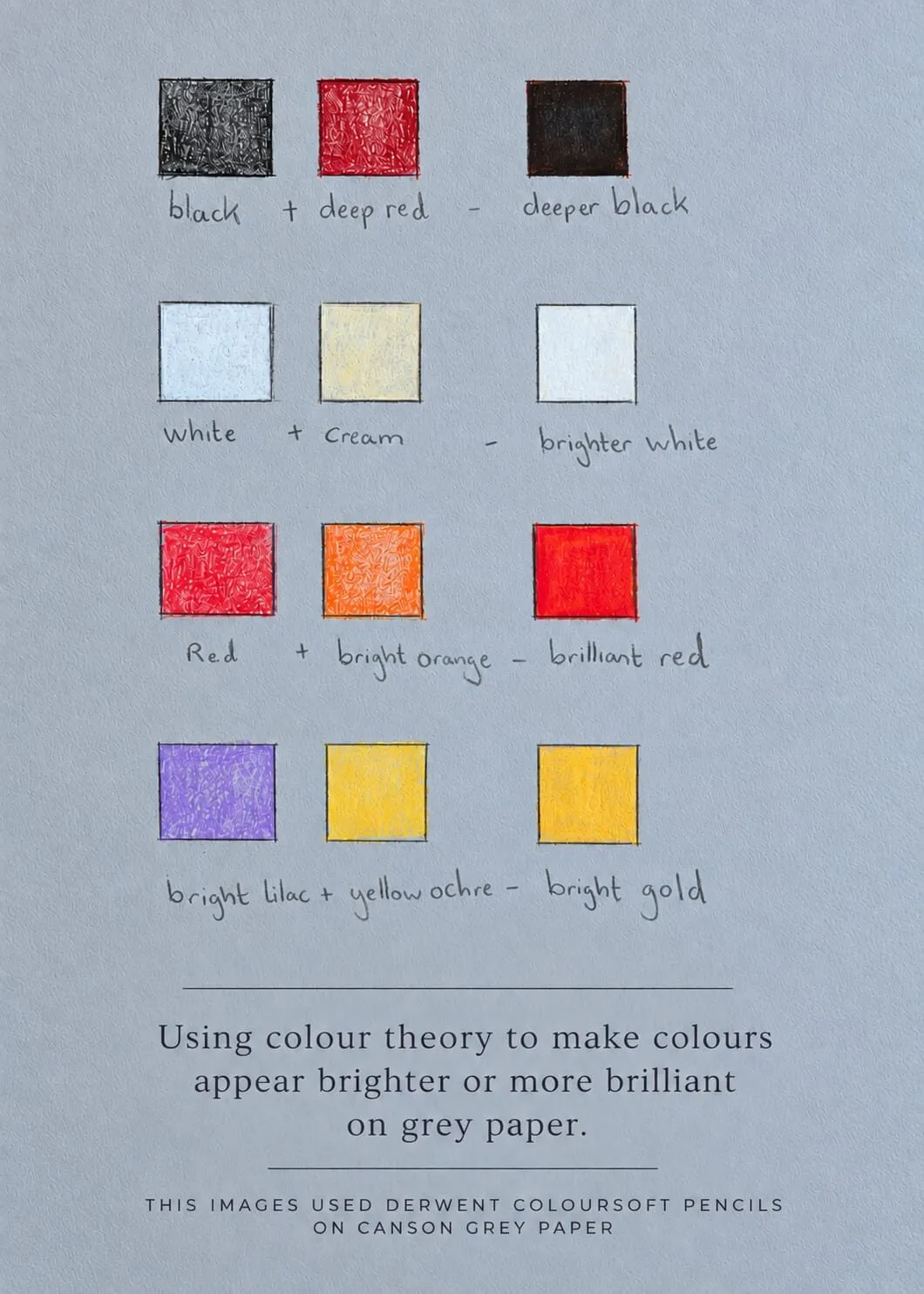
Key takeaways
- ◆Coloursoft is velvety and rich, and it is great for soft blending and painterly effects.
- ◆It lays colour down generously, so large areas cover quickly and transitions feel smooth.
- ◆Soft cores dull faster and are not the pencil for the finest hairline detail, so keep them sharp and press lightly at first.
- ◆On grey paper, colour theory can make Coloursoft colours look brighter, as Michael's swatch card shows.
- ◆Choose Coloursoft for expressive, soft work; look at Chromaflow for learning or Prismacolor Premier for a close soft-wax alternative.
Derwent Coloursoft is the range people reach for when they want colour to feel rich and buttery. It is velvety, it blends softly and it suits painterly, expressive work. The name is a fair description of the pencil: a soft core that lays down colour generously.
This review of Coloursoft coloured pencils (colored pencils in the US) covers how it feels, how to layer and blend it, which subjects and papers suit it, and how it compares with Chromaflow and Prismacolor Premier. It sits alongside our overview of Derwent coloured pencils and the complete coloured pencil guide. We stick to what Michael’s notes and general knowledge support, so check the current range and specification before buying. If you are still deciding between sets, the pencil set quiz helps.
What Coloursoft is
Michael’s description is short: velvety, rich, great for soft blending and painterly effects. It is a soft coloured pencil, and Derwent sells it as one of several ranges, each aimed at a different job. Against the rest of the Derwent family, it is the one for soft, expressive colour, while Chromaflow is the vibrant learning pencil and Lightfast is the premium professional range.
It is also a friendlier price point than the premium artist ranges, which makes it an accessible way to get a soft, rich pencil into your kit. Check the current range to see how many colours are on offer and how sets are organised.
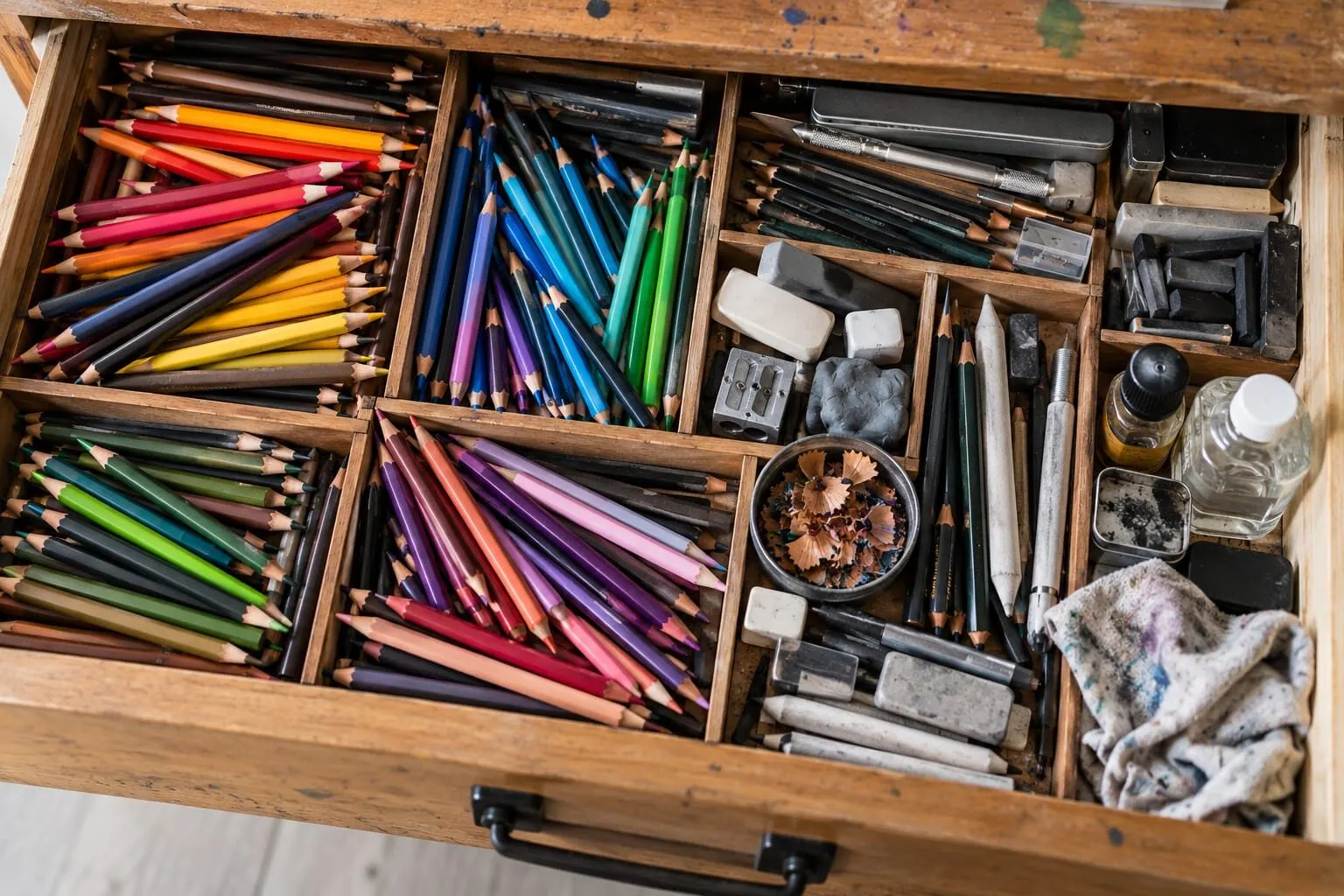
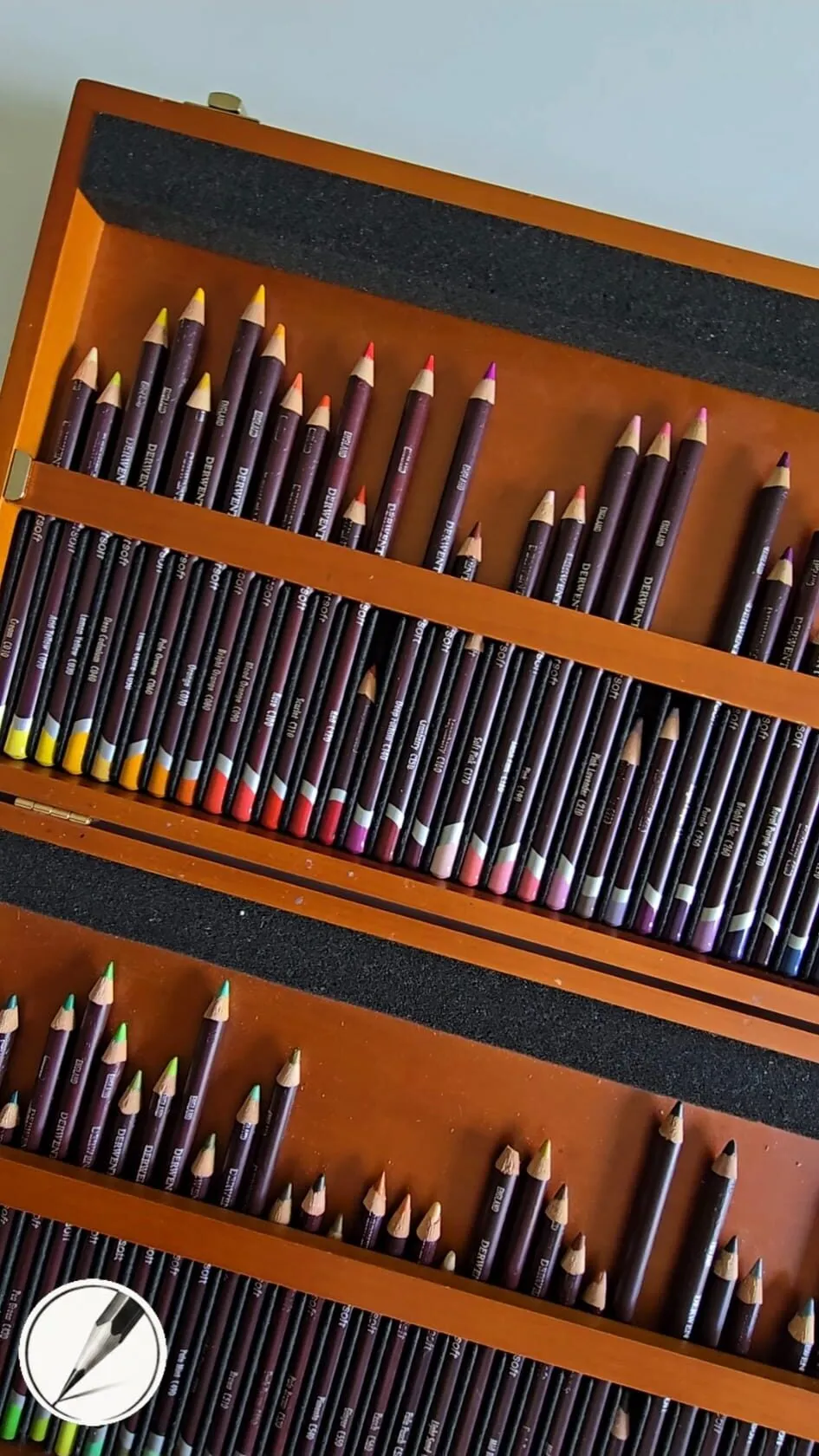
A wooden drawer of coloured pencils, erasers, brushes and art supplies in separate compartments.
How it feels and behaves
Coloursoft lays colour down generously. A little pressure gives a clear, saturated mark, and large areas cover quickly. Transitions between colours feel smooth because the soft core lets pigment melt together rather than sit in separate strokes.
That produces some clear advantages:
- Quick coverage. Broad areas of background or skin tone fill fast.
- Soft transitions. Gradients blend without a harsh line where two colours meet.
- Painterly results. The velvety laydown suits loose, expressive handling as well as careful realism.
- Rich colour. Strong colour arrives early, which is encouraging on larger pieces.
The trade-off is physical. Soft cores dull faster, so keep the pencils sharp and press lightly at first to avoid filling the tooth of the paper. It is not the pencil for the finest hairline detail. A quality sharpener helps a great deal; see best pencil sharpeners for coloured pencils and how to sharpen coloured pencils.
Layering and blending
Soft pencils reward restraint. Lay down light, even layers first and let colours mix on the paper rather than pressing hard early. Heavy pressure in the first layers flattens the tooth and leaves no space for later colour, which is the most common way soft pencils stop cooperating.
A sensible rhythm looks like this:
- Block in lightly with the side of the point, working from light to dark where you can.
- Mix by overlaying two or three related colours rather than reaching for a new pencil each time.
- Soften transitions with a light pass of a paler colour, or with a blending tool if you want a smoother finish.
- Deepen and refine last, and keep pressure for the final layers.
The method is explained in full in how to layer coloured pencils and how to blend coloured pencils. For tools that help, see best blending tools for coloured pencil.
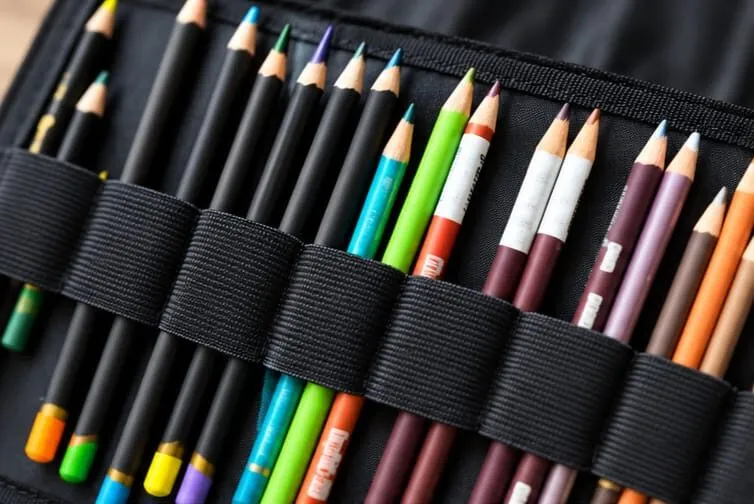
Sharpened coloured pencils lined up on cream paper.
Michael’s swatch card on grey paper
The clearest demonstration of Coloursoft in Michael’s work is a swatch card on Canson grey paper. It shows how colour theory can make colours appear brighter or more brilliant against a midtone.
The pairings are practical ideas you can copy onto your own paper:
| Combination | Result on grey paper |
|---|---|
| Black + deep red | A deeper black |
| White + cream | A brighter white |
| Red + bright orange | A brilliant red |
The logic is that a colour placed beside or over a related one can look stronger than it does alone, and a midtone ground helps by giving both highlights and saturated colour something to sit against. Try the same pairings with your own pencils and swatch them before starting a drawing. For more on the idea, read colour theory on grey paper and why use grey paper for coloured pencil.
Best subjects
Coloursoft suits work that depends on soft transition and rich colour.
- Food and desserts. Glossy sauces, soft icing and warm baked tones respond well to creamy, blendable colour.
- Portraits and skin. Gentle gradients and soft shadow work are natural; pair with a firmer pencil for eyes and hair if you want crisp edges. See best coloured pencils for portraits.
- Skies, petals and atmosphere. Broad soft areas cover quickly and blend cleanly.
- Expressive or painterly work. If you like visible colour and a loose finish, the velvety laydown fits.
It is less suited to fur strands, whiskers and mechanical detail. For those, add a firm pencil and read how to draw animal fur.
Paper pairings
Because Coloursoft lays colour quickly, the paper’s tooth decides how many layers you get.
| Paper type | What to expect |
|---|---|
| Grey mixed media (such as Canson) | Midtone base makes colour and highlights stand out; good tooth for soft layers |
| Smooth hot press | Very smooth blends; fills faster, so keep pressure low |
| Dark or atmospheric grey | Dramatic, moody results; soft pencils cover well |
Michael’s swatch card used Canson grey, and our guide to Canson mixed media grey covers that paper in detail. For an overview, see best paper for coloured pencils and paper tooth: smooth vs textured. Always test on a scrap of the real paper first.
How it compares
Against Chromaflow. Both are soft and easy to blend. Chromaflow is vibrant and beginner-friendly, made for learning layering and transitions; Coloursoft is velvety and rich, leaning toward painterly effects. The full comparison is in Coloursoft vs Chromaflow.
Against Prismacolor Premier. Both are soft and wax-based, so both give quick coverage and easy blending. Prismacolor Premier has a creamy reputation and is widely discussed for breakage and wax bloom, which are common trade-offs with soft wax. The two are compared directly in Coloursoft vs Prismacolor Premier, and our Prismacolor Premier review covers that pencil on its own.
Against firm pencils. Polychromos trades softness for control, so they suit detail and many clean layers; see wax vs oil-based coloured pencils.
Buying advice
Sets come in small, mid and large sizes, and exact colour counts change, so check the current range. A small or mid set is plenty to learn the feel and to try the swatch pairings above. Move to a larger set only when you find yourself short of a specific hue. Open stock, where available, lets you replace the colours you use fastest, usually whites and darks.
Pair the pencils with a good sharpener and keep them stored so the soft cores are not knocked about. If you plan to sell or exhibit, check each colour’s published lightfastness information, since ratings vary; coloured pencil lightfastness explained shows how to read it.
The short version
Derwent Coloursoft is a velvety, rich, soft pencil for blending and painterly effects. It covers generously, transitions feel smooth and it comes alive on grey paper, as Michael’s swatch card shows. Keep it sharp, press lightly at first and use a firmer pencil for the finest detail. Compare it with Chromaflow if you are learning, or Prismacolor Premier if you want another soft wax option.
Where to buy
Recommended products
Affiliate links. We may earn a small commission if you buy, at no extra cost to you. Why?
Pencils · Derwent
Derwent Coloursoft Pencils
Soft, velvety and richly pigmented - excellent for painterly blending and bold colour.
Pencils · Prismacolor
Prismacolor Premier
Creamy, smooth pencils famous for easy blending and soft shading.
Quick answers
Frequently asked questions
Is Derwent Coloursoft good for blending?+
Yes. Blending is its main strength. The soft, velvety core lays colour down generously and lets one colour melt into the next, so smooth transitions and painterly effects come easily. Keep the pencils sharp and use light pressure at first so the paper keeps some tooth for later layers.
Is Coloursoft good for detail?+
It is better for soft work than for the finest detail. A soft core dulls faster, so hairline marks need frequent sharpening. Many artists use Coloursoft for broad passages and switch to a firmer pencil, such as an oil-based one, for crisp edges and tiny details.
What paper works best with Derwent Coloursoft?+
Toned paper such as a grey mixed media sheet suits it well, because rich colour and light highlights stand out against a midtone. A lightly textured surface gives the soft core more tooth to hold layers. Test on a scrap of your chosen paper before starting a large drawing.
Are colored pencils and coloured pencils the same thing?+
Yes. Coloured is the UK spelling and colored is the US spelling, and both describe the same drawing medium. Derwent Coloursoft pencils are the same product whichever spelling a shop or search uses, and the advice here applies equally to both.