Paper & Surfaces
Best Paper for Graphite Drawing
The best paper for graphite pencil: Arches Cold Press for rich shadows, Winsor & Newton cartridge for everyday work, and how tooth and weight change the result.
This guide contains affiliate links. If you buy through them we may earn a small commission at no cost to you. How this works.
Jump to recommended products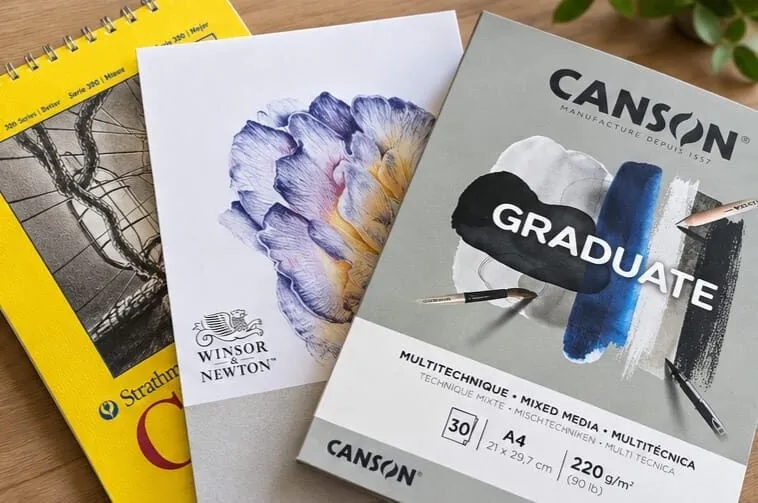
Key takeaways
- ◆Michael recommends Arches Cold Press and Winsor & Newton cartridge paper for graphite: both give the tooth needed for rich shadows and crosshatching.
- ◆Tooth is the deciding factor: more tooth holds more graphite for deep darks, while smooth paper suits fine detail and crisp edges.
- ◆Weight matters less for graphite than for coloured pencil, but heavier sheets cope better with erasing, lifting and heavy pressure.
- ◆Paper and pencil grade interact: soft grades on toothy paper build darks fast, while hard grades on smooth paper give fine, controlled lines.
- ◆Smudging is a paper issue as well as a technique issue, so use a slip sheet and consider how much tooth you need.
Graphite is a forgiving medium, but the paper you put under it decides how dark your shadows can go, how sharp your edges look and how much abuse your eraser can inflict. The wrong surface leaves you fighting the paper: greys that will not deepen, lines that skate, or a page that smears the moment your hand touches it.
This list covers the papers Michael recommends for graphite, with the qualities to look for in each and how to match the surface to your subject. For the pencils themselves, see graphite pencil grades explained. Most of these papers also suit coloured pencils (colored pencils in the US). If you are just starting, pair the paper with the best drawing pencils for beginners, see best drawing supplies for beginners and practise with how to draw basic forms and shading.
What graphite needs from paper
Graphite sits on the paper rather than soaking in. That gives four qualities to weigh up.
Tooth
Tooth is the texture of the paper: the tiny hills and valleys that catch pigment. Graphite is a dry mark, and the more valleys there are to catch it, the more it can hold. That is why textured papers allow rich shadows and give crosshatching something to grip. Very smooth paper produces fine, controlled lines and crisp edges, but reaching a deep black takes many layers and the surface can polish and shine. For a deeper look at tooth, read paper tooth: smooth vs textured.
Weight
Graphite does not build layers as heavily as coloured pencil, so lighter paper often copes. But heavier paper is more stable if you press hard, work large, or erase and rework highlights. As a rough guide, around 150 to 200 gsm handles most graphite work, and heavier sheets add resilience. Our guide to paper weight explained has the details.
Erasing and lifting
Erasers are a drawing tool for graphite artists, used for highlights as well as corrections. A sturdy paper survives repeated lifting without going fluffy or thin. Softer papers, such as light cartridge, scuff sooner.
Smudge resistance
Graphite smudges. Toothy paper holds graphite in its valleys and smudges less readily than very smooth paper, where the graphite sits on top. Even so, keep a slip sheet under your hand and read how to avoid smudging pencil drawings.
A collection of white and brown paper rolls.
The best papers for graphite
1. Arches Cold Press: best for rich shadows
Arches Cold Press is Michael’s first choice for graphite because it gives the tooth needed for rich shadows and crosshatching. Its light, even texture holds graphite well, so soft grades build deep tone quickly, and hatched lines accumulate convincingly into dark areas. As a premium cotton watercolour paper it is sturdy, stands up to erasing, and is archival, which matters if you plan to sell (see archival paper for selling your drawings).
Who it suits: shading-heavy subjects such as animals, textured surfaces and dramatic portraits.
Who it does not suit: artists chasing an ultra-smooth, photographic surface, since the grain will show in light areas.
2. Winsor & Newton cartridge: best everyday paper
Winsor & Newton cartridge paper is the second paper Michael names for graphite. Cartridge paper is a general purpose drawing surface with a light tooth, and it is typically lighter and more affordable than watercolour paper. It absorbs pencil well, which suits smooth tonal shading, and it is a practical choice for studies, practice and finished pieces where you do not need heavy erasing.
Who it suits: everyday drawing, tonal studies, and anyone building skills.
Who it does not suit: heavy reworking, since cartridge is softer and less forgiving of repeated erasing. For more on the trade-offs, see when to use cartridge paper.
3. Arches Hot Press: best for fine detail
Hot press is smooth, and although Michael recommends it primarily for coloured pencil portraits, it is a legitimate graphite option when the priority is crisp detail and a polished finish. Fine lines, small features and delicate edges are easiest here. The trade-off is depth: reaching a rich dark takes more layers, and heavy pressure can burnish the graphite to a sheen. If your graphite work is fine portraiture, try it alongside cold press. The full comparison is in hot press vs cold press paper.
Who it suits: fine portraits, botanical studies and detail-led drawings.
Quick comparison
| Paper | Surface | Best for | Watch out for |
|---|---|---|---|
| Arches Cold Press | Light, even texture | Rich shadows, crosshatching | Grain shows in soft areas |
| Winsor & Newton cartridge | Light tooth, general purpose | Everyday studies, tonal shading | Less resilient to heavy erasing |
| Arches Hot Press | Smooth | Fine detail, polished finish | Deep darks need more layers |
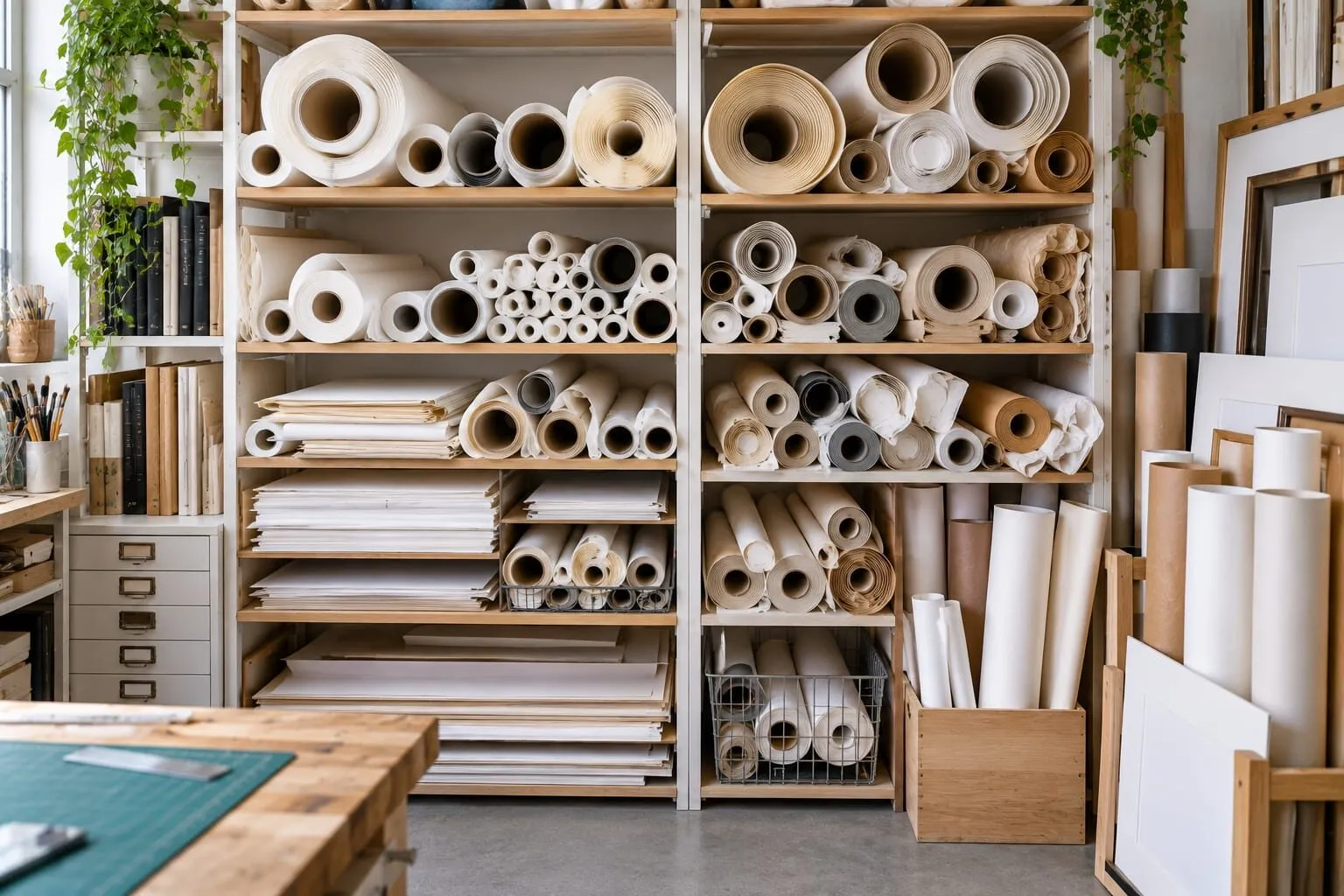
A studio storeroom with shelves of paper rolls and sheets.
How pencil grades interact with paper
Hardness grades and paper tooth work together. A soft grade such as 6B deposits a lot of graphite, so on toothy paper it builds darks quickly but can fill the surface and become shiny if overworked. A hard grade such as 2H leaves a light, precise mark that suits smooth paper and fine work, but on very toothy paper it can skip across the peaks and leave gaps.
A few practical pairings:
- Textured paper, soft grades: fast, rich shadow.
- Textured paper, hard grades: use light pressure and layer patiently for even tone.
- Smooth paper, hard to mid grades: crisp lines and detail.
- Smooth paper, very soft grades: possible, but use restraint to avoid a glossy build-up.
Use the pencil grade chart to see the range of grades side by side, and test a chart of your own on any new paper.
Tips for using graphite on paper
- Match the subject to the surface. Heavy shadow and texture suit cold press. Detail-led subjects suit hot press.
- Build tone in layers. Start with light pressure and add gradually. Overworked areas polish and lose their grip.
- Protect the page. Use a slip sheet and a mahl stick or clean paper under your hand.
- Lift, do not scrub. Use a kneaded eraser to lift highlights, and see best erasers for graphite.
- Plan for storage. Graphite smudges in a portfolio, so interleave finished work with clean sheets.
Common paper problems with graphite
- Shine. Overworking soft graphite on smooth paper polishes it into a metallic sheen. Use a harder grade for the final layers, or switch to a paper with more tooth.
- Flat greys. If you cannot get a deep dark, the paper may be too smooth or you may be using pencils that are too hard. Try a softer grade on a textured sheet.
- Ripples. Thin paper can ripple if you press hard or fix the drawing with a spray. Tape sheets to a board or use heavier paper.
- Fluffy erasing. If the surface roughens when you erase, the paper is too soft for the job. Switch to a sturdier sheet or use a kneaded eraser that lifts rather than rubs.
- Visible grain in light areas. Texture can make delicate skin tones look speckled. Use lighter pressure, a harder grade, or a smoother sheet for those subjects.
Matching paper to the subject
Animals, rocks, bark and weathered faces reward a toothy surface, where texture and shadow carry the drawing. Portraits with soft skin, glass or polished metal often prefer a smoother sheet with fine control of tone. If your work mixes both, choose the paper for the area that matters most, or keep a small stock of each and decide per drawing.
The short version
Buy Arches Cold Press when you want rich shadows and confident crosshatching, Winsor & Newton cartridge for everyday drawing and studies, and Arches Hot Press when fine detail matters most. Test with your own pencils, and match grade to surface. Return to the paper hub for the wider guide.
Where to buy
Recommended products
Affiliate links. We may earn a small commission if you buy, at no extra cost to you. Why?
Paper · Arches
Arches Cold Press Paper
Archival paper with a gentle texture - good for rich graphite shadows.
Paper · Winsor & Newton
Winsor & Newton Cartridge Paper
Classic white cartridge paper with enough tooth for graphite and cross-hatching.
Paper · Arches
Arches Hot Press Paper
Smooth, archival paper prized for portraits, fine detail and subtle blending.
Quick answers
Frequently asked questions
What is the best paper for graphite pencil?+
Arches Cold Press is a top choice for graphite because its light texture holds enough pigment for rich shadow and gives crosshatching something to grip. Winsor & Newton cartridge paper is a good everyday alternative. For very fine detail and polished finishes, a smooth hot press sheet also works.
Is smooth or textured paper better for graphite?+
It depends on the subject. Textured paper builds deeper darks and suits shading and hatching. Smooth paper gives crisper lines and cleaner detail but reaches deep black less readily. Many artists choose a light texture as a compromise, which is why cold press and cartridge paper are popular.
Can I use sketchbook paper for graphite?+
Yes, sketchbook paper is fine for studies, thumbnails and practice. For finished work, choose heavier, better quality paper because it copes with more layers, erasing and lifting. Very thin pages can dent or wear if you press hard or rework an area repeatedly.
How do I stop graphite smudging on paper?+
Rest your hand on a clean slip sheet, work from top to bottom, and avoid over-working areas until the paper is too smooth to hold more graphite. Toothy paper holds graphite better than very smooth paper. Fixative can help but changes the look, so test it on a scrap first.