Graphite & Charcoal
Graphite vs Charcoal: Which Should You Draw With?
Graphite or charcoal? Compare darkness, smudging, erasing, paper, detail versus atmosphere and cost, and learn when to use each or combine them.
Key takeaways
- ◆Graphite is precise, clean and silvery; charcoal is broad, dusty and deeply black.
- ◆Charcoal reaches a darker, matte black faster; graphite gives finer detail and more controlled edges.
- ◆Charcoal smudges and lifts easily and usually needs fixative; graphite smudges less but still needs care.
- ◆Graphite suits small, detailed, realistic work; charcoal suits bold, tonal, atmospheric drawing.
- ◆The two mix well: charcoal for big darks and graphite for refined detail, with some caution about layering order.
Both are dry, black-and-grey media that give a full range of tone from a single colour, and both have a long history. Yet they behave quite differently. Graphite draws with precision and restraint. Charcoal draws with weight and drama. Choosing between them affects the finish of the drawing, how you work and the tools you need.
This comparison sets the two side by side across the things that matter most: character, darkness range, smudging and fixative, erasing, paper, detail versus atmosphere, cost and mixing them. It ends with a clear guide to which to choose for which job. For the wider picture, start with our graphite and charcoal guide.
The short answer
Choose graphite for precise, detailed, realistic work at a small to medium scale, and for anything where fine edges and subtle tone matter. Choose charcoal for large, bold, tonal drawings, expressive figure work and deep, atmospheric darks. Choose both when you want the strengths of each in a single piece.
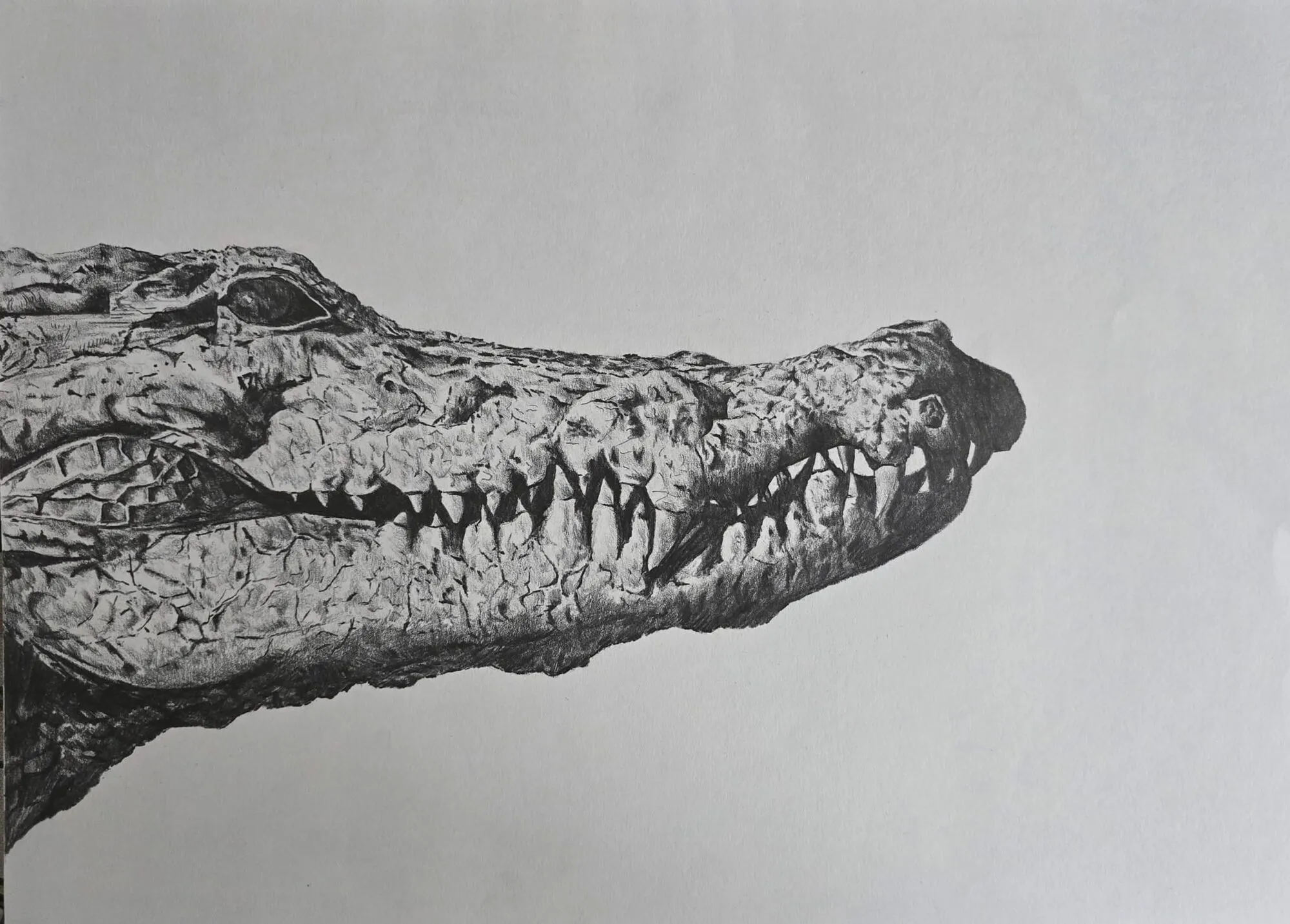
A crocodile’s head and teeth drawn in graphite pencil. Drawing by Michael Brace.
Side by side
| Feature | Graphite | Charcoal |
|---|---|---|
| Mark | Silvery grey, slight sheen when heavy | Matte, deep black |
| Darkest tone | Dark grey, some sheen | Deep black, especially compressed |
| Detail | Excellent, holds a fine point | Good with pencils, limited with sticks |
| Blending | Smooth with stumps and tissue | Very easy, blends with fingers |
| Smudging | Moderate | High |
| Fixative | Optional | Usually advisable |
| Erasing | Clean with kneaded or vinyl | Lifts easily but can stain |
| Speed | Slower for big areas | Fast for big areas |
| Mess | Low | High |
| Cost | Low to moderate | Low to moderate |
Character and look
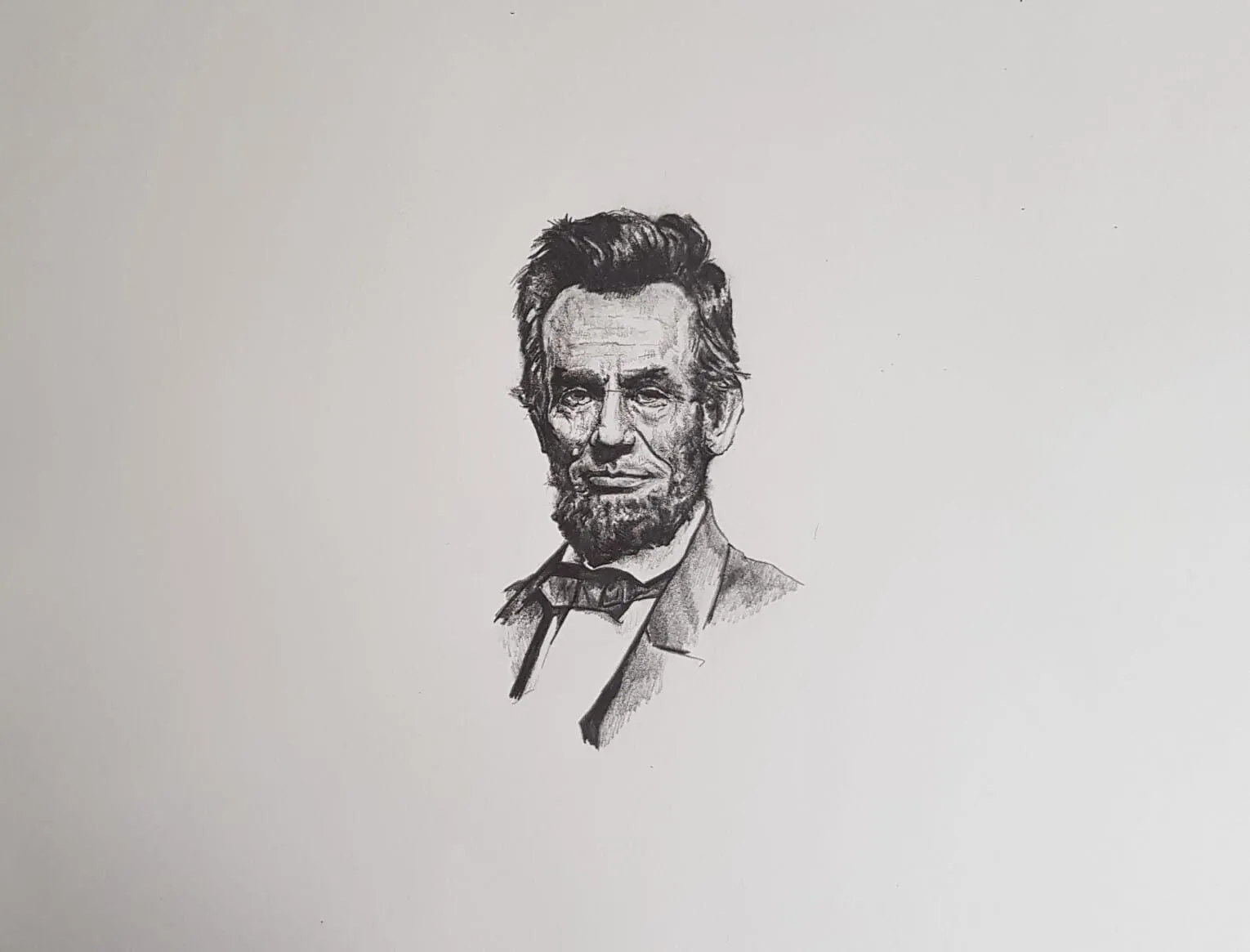
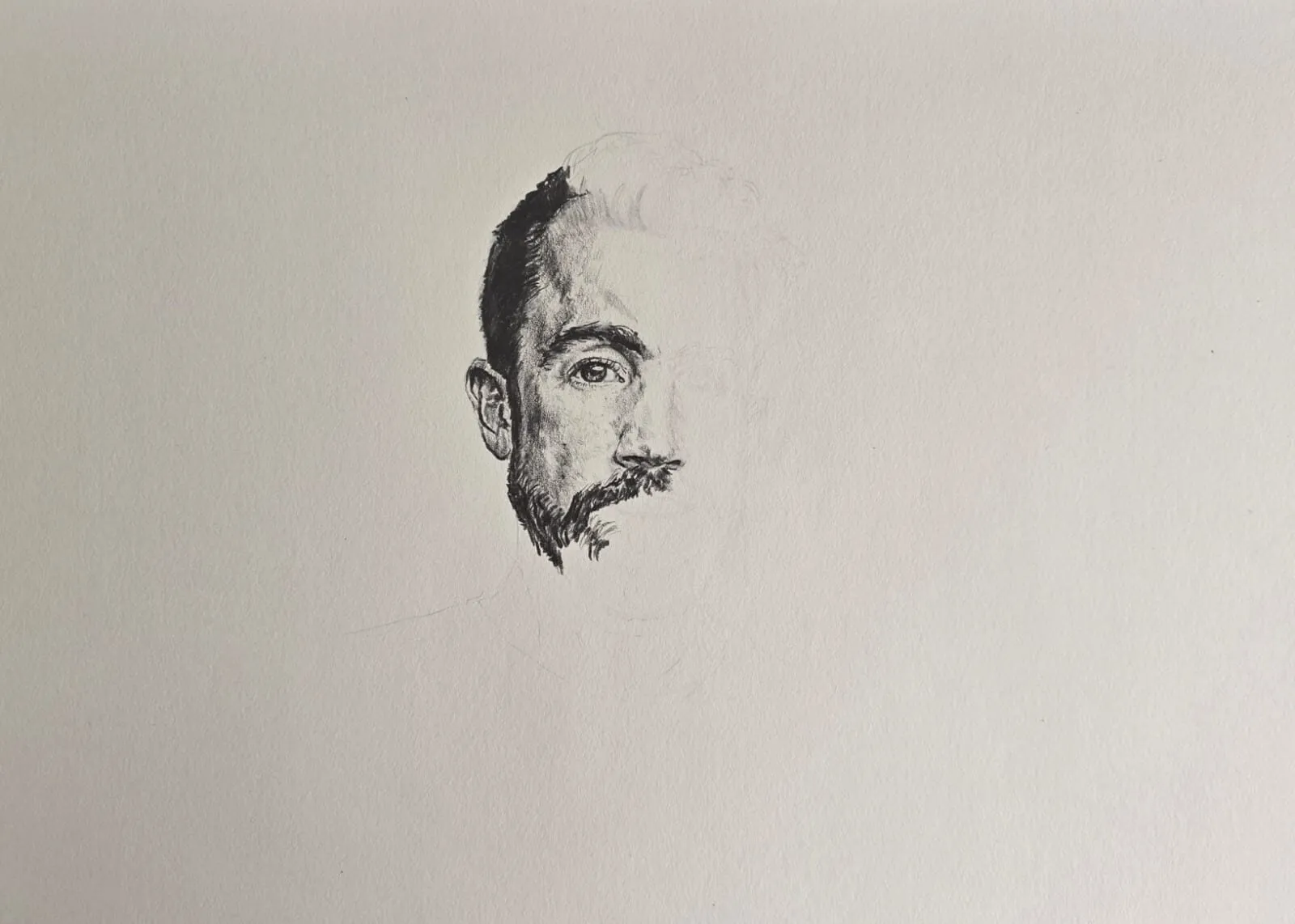
Graphite lies on the paper in fine, controlled marks that hold detail. Its tone is a cool, silvery grey, and in heavy layers it can catch the light with a subtle sheen. Because you can sharpen it to a fine point, it is the natural medium for accuracy: portraits, animals, still life and anything realistic.
Charcoal is soft, porous and matte. It leaves a warm to neutral black that absorbs light, with a velvety softness. Vine charcoal is light and airy; compressed charcoal is dense and dark. It encourages broad shapes and strong contrast, and it is good for creating atmosphere, mood and drama.
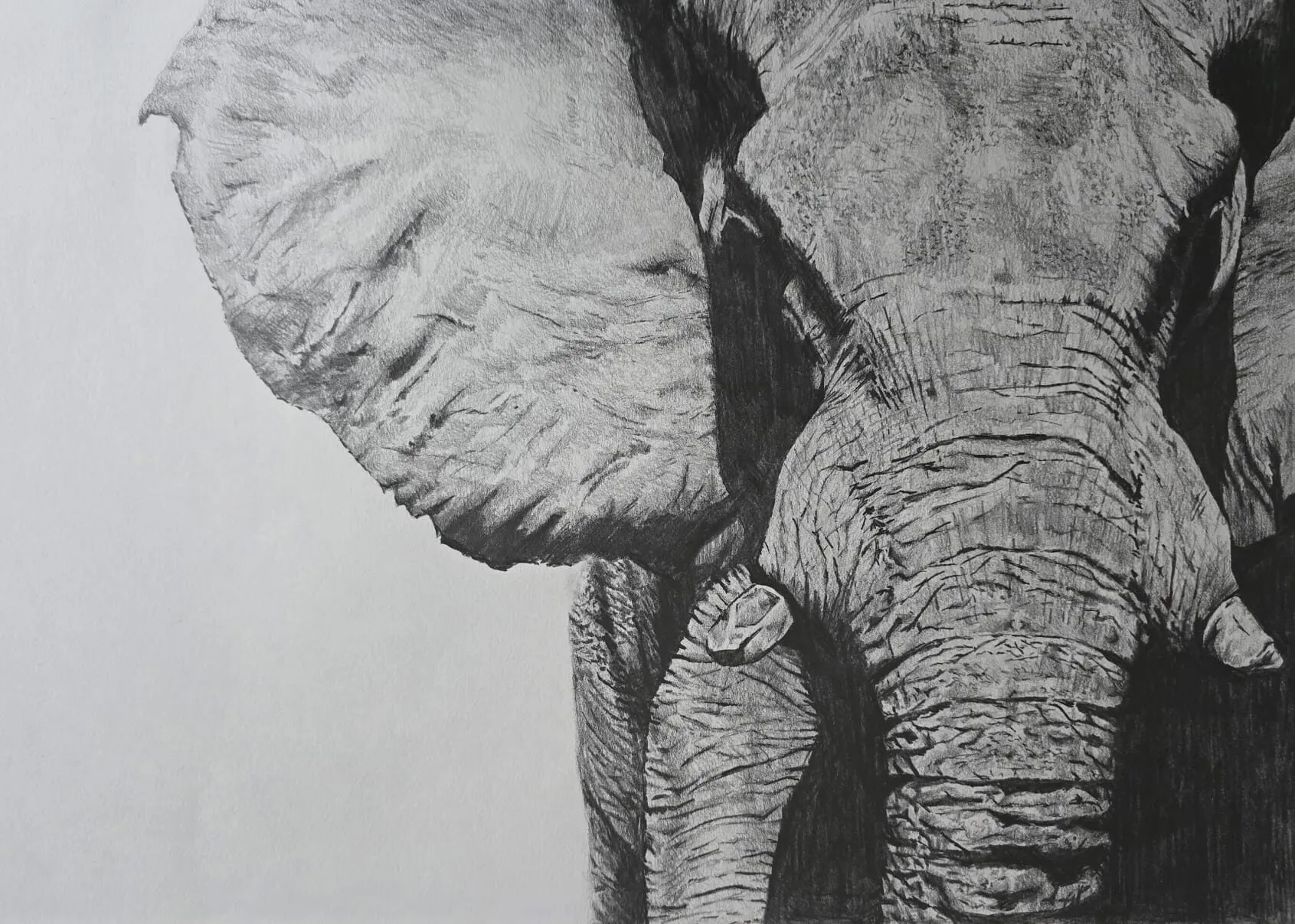
A close-up of an elephant’s ear, trunk and skin drawn in graphite pencil. Drawing by Michael Brace.
Darkness range
Charcoal gets darker faster. Compressed charcoal or a soft charcoal pencil gives a deep black in one or two passes, and because it is matte, the black looks rich rather than shiny. Graphite takes more layers to approach the same depth, and even the softest grades develop a sheen in heavy layers that reads as a grey gloss under some lights.
For a full tonal range in graphite, use several grades, from hard for light tone to very soft for the darkest areas, and build gradually. Our guide to graphite pencil grades explained shows how the range works.
Smudging and fixative
Charcoal smudges very easily. The particles sit loosely on the paper’s surface, and even a light touch moves them. This is useful for blending but troublesome for keeping a drawing clean. Fixative helps considerably, and most charcoal drawings benefit from a coat when finished, along with careful handling and framing behind glass with a mount that keeps the glass off the surface.
Graphite is more stable, but it still smudges, especially in soft grades. Fixative can reduce the risk but may slightly alter the tone or sheen, so many graphite artists prefer to rely on careful handling and framing. Our guide to how to avoid smudging pencil drawings covers hand position, working order and fixative types in general terms.
Erasing
Both media can be erased, but they behave differently.
- Graphite lifts cleanly with a kneaded or vinyl eraser, which makes it forgiving for corrections. Heavy layers can leave a ghost of the mark, and hard pressure can leave shiny areas that do not erase fully.
- Charcoal lifts easily with a kneaded eraser, which makes it excellent for drawing with the eraser by lifting highlights out of a toned surface. However, charcoal that has been pressed into the paper or blended heavily can stain, and rubbing it hard can smear it.
The best erasers for graphite guide covers eraser choices in depth, and many of the tools work for charcoal too.
Paper
Both media suit paper with some tooth, but the amount differs.
- Graphite works on a wide range of surfaces, from smooth to moderately toothy. Michael’s graphite paper choices, Arches Cold Press and Winsor and Newton cartridge paper, give the tooth needed for rich shadows and cross-hatching. Our guide to the best paper for graphite drawing covers the options.
- Charcoal generally needs more tooth to hold the loose particles, and is often used on rough or laid papers, or on toned paper. Very smooth paper gives little grip and leaves charcoal easy to brush off.
Detail versus atmosphere
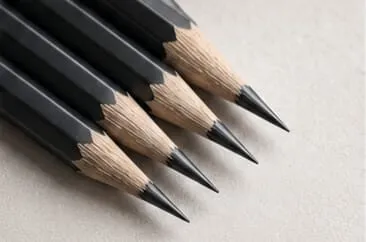
Graphite excels at detail. A sharp 2H or a mechanical pencil can make hairline marks, and layered tone gives subtle transitions. Charcoal excels at atmosphere: big masses of tone, dramatic light and shadow, and soft edges. Charcoal pencils give more detail than sticks, but they are still broader and softer than graphite.
A fair rule of thumb is that graphite draws what things look like up close and charcoal draws how they feel from a distance. The ideal choice depends on subject and scale. A finely observed animal or portrait suits graphite; a dramatic figure study or landscape with strong light suits charcoal.
Cost and practicalities
Both are inexpensive to start. Graphite pencils and paper are widely available, and a good starter kit is affordable. Charcoal sticks are cheap, though quality compressed charcoal and pencils cost a little more. Consider also the extras: charcoal usually needs fixative and more care with dust, and its mess needs a workspace you do not mind marking. Graphite is cleaner and easier to use anywhere.
Work also tends to have different display needs: charcoal benefits from protective framing because it is more fragile, while graphite is stable but still needs glazing.
When to use each
Choose graphite when
- The subject demands fine detail, such as portraits, animals and still life.
- You want a clean, controlled finish.
- You are working small to medium in size.
- You need precise edges and subtle gradations.
- You want to work anywhere without mess.
Choose charcoal when
- You want bold, dramatic tone and deep blacks.
- You are working large or quickly.
- You are drawing figures or landscapes with strong light and shadow.
- You like to draw with the eraser, lifting light out of toned paper.
- You want soft, atmospheric edges.
Mixing graphite and charcoal
Combining the two is common and effective. A typical approach:
- Establish the big dark shapes and mass with charcoal, keeping it loose.
- Fix lightly if you need to stop it moving.
- Add detail and refinement with graphite, using a sharp pencil for edges and small marks.
- Lift highlights with a kneaded eraser.
Graphite generally goes on top of charcoal reasonably well, but charcoal over heavy graphite can slide off or look patchy because the graphite layer is slick. Test the combination on a scrap of the same paper first.
Common mistakes
- Choosing charcoal for tiny detail. It is too broad; use graphite or a charcoal pencil.
- Pressing charcoal hard into the paper. It fills the tooth and can no longer be lifted or corrected.
- Not testing combinations. Graphite and charcoal layered in the wrong order can look patchy.
- Forgetting the dust. Charcoal dust gets on hands, clothes and paper; keep your work area organised and ventilated. See the best charcoal for drawing for safety notes.
Building skills across both
The underlying skills are the same: seeing values, controlling edges and building form. Practise them in either medium. Use the value study tool to check that your tonal range is full, and study how to shade with pencil for pressure and layering habits. When you are ready to try charcoal, our guide to the best charcoal for drawing explains the types and how to choose.
If you are choosing a first pencil, see the best drawing pencils for beginners, and for a lesson on tone try drawing shadows and light.
The short version
Graphite is precise, clean and controlled; charcoal is bold, dark and atmospheric. Use graphite for detail and small to medium work, charcoal for big shapes, deep black and drama, and combine them by laying down big darks in charcoal and finishing with graphite. Test your paper and layering order first, protect charcoal with care and fixative, and pick the medium that suits the subject.
Quick answers
Frequently asked questions
Is charcoal darker than graphite?+
Generally yes. Charcoal, especially compressed charcoal, gives a deeper, matte black with less effort, while graphite tops out at a shinier dark grey even in very soft grades. Layering graphite can get close to black, but it takes more work and develops a sheen that charcoal does not.
Which is easier for beginners, graphite or charcoal?+
Graphite is usually easier to control because it is cleaner, holds a point and erases predictably. Charcoal is easier for quick, bold tone but messier and harder to keep precise. Many beginners start with graphite to learn value and drawing, then add charcoal for broader, more expressive work.
Do you need fixative for charcoal and graphite?+
Charcoal almost always benefits from fixative because the dust lifts and smudges easily. Graphite is more stable and often gets by without it, though fixative can reduce smudging on soft-grade drawings. Some artists avoid fixative on graphite because it can slightly change the tone, so test on a scrap first.
Can you use graphite and charcoal together?+
Yes. A common approach is to establish large dark shapes with charcoal, then add detail with graphite. Graphite goes over charcoal reasonably well, while charcoal over heavy graphite can slide and look patchy. Test your combination on scrap paper, and use fixative sparingly between stages if needed.