Coloured Pencils
Best Erasers for Coloured Pencils
Which eraser works on coloured pencil (colored pencil in the US)? Compare eraser pencils, battery erasers, kneaded putty and tape lifting, and what erasing can do.
This guide contains affiliate links. If you buy through them we may earn a small commission at no cost to you. How this works.
Jump to recommended products
Key takeaways
- ◆Coloured pencil never erases as completely as graphite, so choose your eraser for lifting and correcting rather than total removal.
- ◆Eraser pencils and battery erasers give precise control for small highlights and corrections.
- ◆Kneaded putty and tape lift pigment gently and are best for light adjustments and softening.
- ◆How well any eraser works depends heavily on the paper, the pencil and how many layers you have built.
- ◆Plan corrections early: lifting works far better before you burnish or build heavy layers.
Every coloured pencil (colored pencil in the US) artist eventually wants an undo button. A stray mark lands in the wrong place, a highlight needs to be brighter, or an edge needs tidying. The bad news is that coloured pencil does not erase like graphite. The good news is that the right eraser, on the right paper, at the right stage, does a lot more than most people expect.
This guide compares the main eraser types, shows which suits which job, and is honest about the limits. For the technique itself, see our guide to lifting and erasing coloured pencil. Blending and softening are different jobs, covered in best blending tools for coloured pencil, and a beginner kit is laid out in best drawing supplies for beginners.
Why coloured pencil is hard to erase
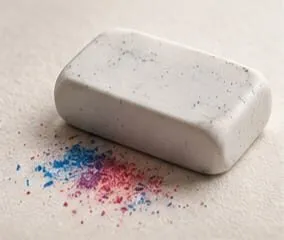
Graphite sits on the surface and lifts easily. Coloured pencil is pigment held in wax or oil binder, and pressure works that binder into the tooth of the paper. The harder you press and the more layers you add, the more firmly the pigment locks in.
Three factors decide how much you can remove:
- Pressure and layers. Light, early layers lift far more easily than heavy, burnished ones.
- Paper. Durable paper with good tooth survives repeated lifting. Thin or soft paper does not. See paper tooth and paper weight.
- The pencil. Waxy pencils smear and stain; firm oil-based pencils often lift more cleanly. The difference is covered in wax versus oil-based coloured pencils.
A black picture frame with a white mount in landscape format.
The main eraser types
| Tool | Best for | Limits |
|---|---|---|
| Eraser pencil | Tiny highlights, tidy edges | Slow on large areas; can burnish paper if rubbed hard |
| Battery eraser | Crisp, controlled lifting | Can abrade paper with pressure |
| Kneaded putty | Gentle lifting, softening tone | Removes little from heavy layers |
| Precision erasers | Small corrections | Limited on dense layers |
| Tape | Lifting stray specks, small clean patches | Can tear soft paper; low-tack is safer |
Eraser pencils
An eraser pencil, such as the Pasler eraser pencils, gives you a fine, controllable tip for small work. Because it is shaped like a pencil you can sharpen it, hold it with the same grip you use to draw, and place a highlight or clear an edge exactly where you want. They suit small, deliberate corrections rather than clearing big areas. Use them with light pressure, because rubbing hard shines and polishes the paper.
Battery erasers
A battery-powered eraser such as the Derwent Electric Eraser is popular for lifting crisp highlights, particularly on glossy subjects. The small rotating tip does the work with less pressure from you, which helps on paper that can take it. Use short passes, keep the tip clean, and lift in stages rather than grinding in one spot. Read the manufacturer’s guidance for use on your chosen paper.
Kneaded putty
A kneaded putty eraser is soft and mouldable. It lifts pigment by pressing and dabbing rather than rubbing, which makes it ideal for softening an area that has become too dark, or lightening a passage without disturbing the tooth. It will not clear heavy layers, but it is gentle and reusable. Knead it clean often.
Precision erasers
Small, firm precision erasers help with corrections around edges and fine detail. They work best on light layers, and you can cut them to a sharp edge for cleaner results.
Tape lifting
Low-tack tape pressed onto the drawing and peeled away lifts loose pigment. It is useful for small stray specks and for creating a clean-edged patch of lighter colour. Test on scrap paper first. Firm tape can tear soft paper, so use a gentle tack and peel slowly. Tape works best on unburnished layers.
What works on which paper
- Heavy, toothy paper such as heavyweight mixed media paper can take repeated lifting with a battery eraser or eraser pencil. Michael works on around 300 gsm paper for this reason: it stands up to layering, erasing and reworking. See why use grey paper for coloured pencil for more on that.
- Smooth hot press paper shows scuffing quickly, so use gentle tools like kneaded putty and light tape lifting first.
- Thin paper tolerates very little. Avoid battery erasers and aggressive rubbing.
Compare surfaces in the best paper for coloured pencils.
A black picture frame with a white mount in portrait format.
Realistic limits
Be realistic about what you can achieve.
- You can lift crisp highlights, clean edges, reduce tone, and tidy small errors.
- You cannot always return the paper to its original white or grey, especially after heavy layering or burnishing.
- You may need to work over the mistake, using an opaque pencil to cover it, rather than erase it.
Planning helps more than any eraser. Build layers lightly, leave highlights until later, and keep pressure low until you are confident. That is the same approach taught in how to layer coloured pencils and how to draw glossy surfaces, where highlights are the last thing you place.
Step by step: lifting a highlight
Here is a reliable way to lift a small highlight, such as a glint on glaze or a catchlight in an eye.
- Decide early. Lifting works best on light to moderate layers, before any burnishing.
- Mask the shape. Cut a small opening in a piece of thin card or use a low-tack masking film, so the lifted area has a crisp edge.
- Use a light touch. Work with short, gentle strokes or dabs with your chosen tool, and stop to check often.
- Brush away debris. Use a soft brush, not your hand, so crumbs do not smear back over the drawing.
- Repeat rather than press. Several light passes lift more safely than one hard one.
- Add a final accent. If the lifted patch is not bright enough, a touch of white pencil or a lighter colour restores the sparkle.
Erasing when the paper is toned
On grey or other toned paper, lifting exposes the paper colour, which is exactly what you want for a mid-tone base but is not a true white. To create a real highlight, lift first, then add opaque white over the top. That combination is a big reason grey paper suits glossy subjects, as explained in why use grey paper for coloured pencil.
Care of your erasers
- Keep erasers clean. A dirty eraser deposits old pigment. Cut back eraser pencils, clean putty by kneading, and replace battery eraser tips regularly.
- Store them wrapped. Dust and grit scratch paper.
- Do not use pen or marker erasers on your drawing. They are abrasive and can chew through the surface.
Choosing by subject
Different subjects lean on different tools. Glossy still life, such as glazes, metal and glass, depends on crisp highlights, so a battery eraser or eraser pencil earns its place. Soft subjects such as portraits and fur benefit more from kneaded putty, which lightens gently without leaving hard edges. For fine linear detail, such as a single hair crossing a shadow, a sharpened eraser pencil is the most accurate tool. If you draw across several subjects, keep one tool of each type within reach and pick the gentlest that will do the job.
What about graphite?
Graphite erases far more easily, and it needs different tools. If you also work in graphite, our guide to the best erasers for graphite covers the options, and the two lists overlap only partly.
Which should you buy?
A sensible starter kit is a battery eraser or eraser pencil for precision, plus kneaded putty for soft adjustment. Add tape when you need it. If you are choosing your other tools too, pair them with good points from the best pencil sharpeners for coloured pencils.
The short version
Coloured pencil erases only partly, so choose erasers for lifting highlights and correcting details, not for undoing heavy work. Eraser pencils and battery erasers give precision, kneaded putty softens gently, and tape lifts small patches. Work on sturdy paper, correct early, and read our full lifting and erasing guide for the method. For the wider picture, see the best coloured pencils.
Where to buy
Recommended products
Affiliate links. We may earn a small commission if you buy, at no extra cost to you. Why?
Tool · Derwent
Derwent Electric Eraser
A battery eraser for precise highlights and clean lifting of pigment.
Buy on AmazonAffiliate link · opens Amazon
Tool · Pasler
Pasler Eraser Pencils
Pencil-style erasers for pin-point corrections and crisp highlights.
Buy on AmazonAffiliate link · opens Amazon
Quick answers
Frequently asked questions
Can you erase coloured pencil?+
Partly. Light, unburnished layers on a durable paper can be lifted quite well, but heavily layered or burnished coloured pencil is far harder to remove completely. Wax and oil binders also press pigment into the paper. Treat erasing as correcting and lifting highlights, not as a way to undo everything.
What is the best eraser for coloured pencil?+
There is no single best. An eraser pencil or a battery-powered eraser gives the most control for precise corrections, kneaded putty lifts gently, and tape can lift small areas cleanly. Most artists keep two or three types and use them for different jobs.
Do electric erasers damage paper?+
They can if you press hard, hold in one spot or use them on thin paper. On heavier, durable paper with light pressure, they are useful for crisp highlights. Work in short passes, use a fresh eraser tip, and test on a scrap first.
How do I lift colour to make a highlight?+
Use a clean, firm eraser or a lifting tool on unburnished pigment, working in light strokes and brushing away debris. Placing a stencil or masking shape helps keep edges crisp. Lifting is most effective early, before heavy layering fills the tooth of the paper.
Are colored pencils and coloured pencils the same?+
Yes. Coloured pencils is the British spelling and colored pencils is the American one, and both describe the same drawing medium: pigment in a wax or oil binder, set in a wooden barrel. Brands, sets and techniques do not change with the spelling, so advice about one applies equally to the other. Only shop listings and product names follow one spelling or the other.