Books & Courses
How to Practise Drawing Daily
A realistic daily and weekly drawing routine: warm-ups, gesture, contour, value studies, timed studies and sketchbooks, plus tracking progress and beating plateaus.
Key takeaways
- ◆Twenty to thirty focused minutes on most days beats an occasional long session, because drawing skills consolidate through repetition.
- ◆Structure each session: warm-up, one deliberate exercise, then a short study from a real subject.
- ◆Use a weekly rhythm - gesture, contour, value, timed study, master copy - so no skill is neglected.
- ◆Keep dated work and compare it every few months; progress is invisible day to day.
- ◆Plateaus usually mean you have stopped practising your weakness. Change the exercise, not just the effort.
Everyone who draws well has, at some point, drawn a great deal. The people who improve fastest are not usually the ones who practise longest, but those who practise with a purpose, regularly and with some way of noticing that they are getting better. The trouble is that most advice stops at “draw every day”, which is like advising someone to “eat well” without saying what.
This guide gives you a realistic routine you can actually keep: what a session looks like, how to spread skills across a week, how to track progress and how to break through when you stall. It fits around a job and a life, and it works for beginners and experienced artists alike. For where practice fits in the bigger picture, see how to get better at drawing.
If you need prompts, drawing ideas for beginners and the 30-day drawing challenge supply a month of daily exercises, and how to draw basic forms and shading is a good warm-up. This routine works equally well in graphite or colored pencil.
The principle: little, often and on purpose
Drawing is largely a perceptual and motor skill. You are training your eye to notice relationships and your hand to reproduce them, and both consolidate through repetition. That is why twenty to thirty minutes most days beats a single four-hour session at the weekend: the skill gets more chances to settle.
“On purpose” matters as much as “often”. Drawing your favourite subject in your favourite way feels good and teaches little. Deliberate practice means picking one weakness, designing a short exercise for it and paying attention to what happens. The routine below builds that in.
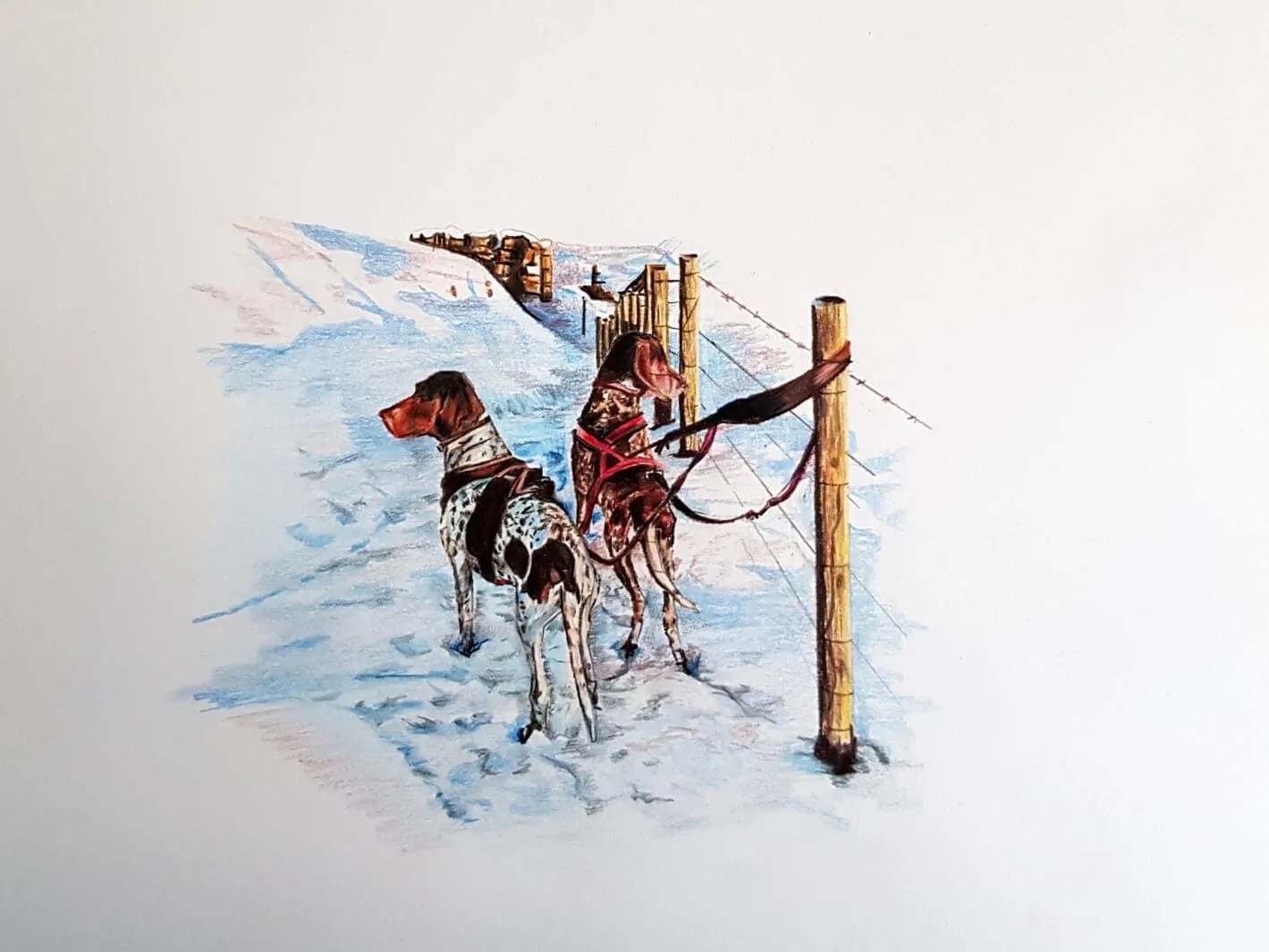
Two dogs in a snowy scene by a fence post, drawn in coloured pencil. Drawing by Michael Brace.
A daily session in four parts
Set a timer if it helps. This structure runs to about 30 minutes, but each part can be trimmed.
- Warm-up (5 to 10 minutes). Loose gesture drawings or simple contour drawings to wake up your hand and eye. Do not judge them.
- Deliberate exercise (10 to 15 minutes). One targeted task, such as a measured copy, a value study or an upside-down drawing.
- Applied study (5 to 10 minutes). Draw something real, using what you just practised.
- One-line review (1 minute). Write a sentence at the edge of the page: what went wrong, or what worked. Over weeks this becomes a map of your weaknesses.
The building blocks
Gesture drawing
Gesture drawings capture the movement and energy of a subject in seconds, using long, flowing lines instead of detail. They loosen the hand, teach you to see the big action of a pose and stop you fussing too early.
Try 30-second to 2-minute poses from a live model, a pet, people in a cafe or photographs. Focus on the main line of action and the overall weight, not the outline. Nicolaides’ The Natural Way to Draw, listed in our best books to improve your drawing, builds a whole method on this habit.
Contour drawing
Contour drawing trains the connection between eye and hand. Draw the edges of an object slowly, looking mostly at the subject, not the paper, letting the pencil follow what the eye traces. Results are often wobbly, and that is fine. What you are training is close observation. Five minutes on a shoe, a hand or a pot plant is plenty.
Value studies
Values, the pattern of light and dark, carry realism more than outline or colour does. A simple exercise is to draw a subject using only three or four tones: light, mid, dark and, if you like, a very dark accent. Squint to see the big shapes. You can check your reading with the value study tool, which converts a photo to a small number of tones, and our guide to value in drawing explains the theory. If you draw in graphite, the pencil grade chart helps you choose pencils for each tone.
Timed studies
Set a limit, such as 10, 20 or 45 minutes, and complete a whole small drawing within it. Time limits force decisions, teach you which details matter and cure the habit of polishing one corner for an hour. Increase the time as your skills grow. Timed studies are the closest thing to a test in practice: repeat the same subject after a few weeks and compare.
Copying and master studies
One session a week spent copying a master drawing teaches how experienced artists build form. Choose one drawing, copy it, then write what you noticed. Our guide to master draughtsmen to study explains the copy, analyse and thumbnail method.
A sample week
| Day | Focus | Time |
|---|---|---|
| Monday | Gesture warm-up, then contour of an everyday object | 30 min |
| Tuesday | Value study from a photo (3 to 4 tones) | 30 min |
| Wednesday | Measured drawing of a simple object, checking with plumb lines | 30 min |
| Thursday | Rest or a quick sketchbook doodle | 10 min |
| Friday | Timed study, 20 to 30 minutes, of a new subject | 30 min |
| Saturday | Master copy plus analysis | 45 to 60 min |
| Sunday | Longer personal drawing or review of the week | Free |
Adjust to your life. A shorter routine you actually complete outweighs an ambitious one you abandon.
The sketchbook habit
A sketchbook lowers the stakes. Nothing in it has to be good, and that freedom is exactly why you can try things.
- Keep it with you. A small book and a pencil turn waiting time into practice.
- Draw ordinary things. Mugs, hands, shoes, plants, your own face.
- Do not tear pages out. The bad ones tell you as much as the good.
- Date each page. You will be glad in six months.
- Use it for experiments with materials and techniques before trying them on serious work.
If you want to know which sketchbooks suit coloured pencil, see best sketchbooks for coloured pencil.
Track your progress
Progress in drawing is slow enough that you will not notice it day to day, which is why so many people quit thinking they have stalled. Fix that by keeping evidence.
- Repeat a benchmark drawing. Draw the same simple subject, such as a cup or a face from a photo, every two or three months, and file the results together.
- Keep dated pages. Flip back through them.
- Compare like with like. A hard subject today against a hard subject then.
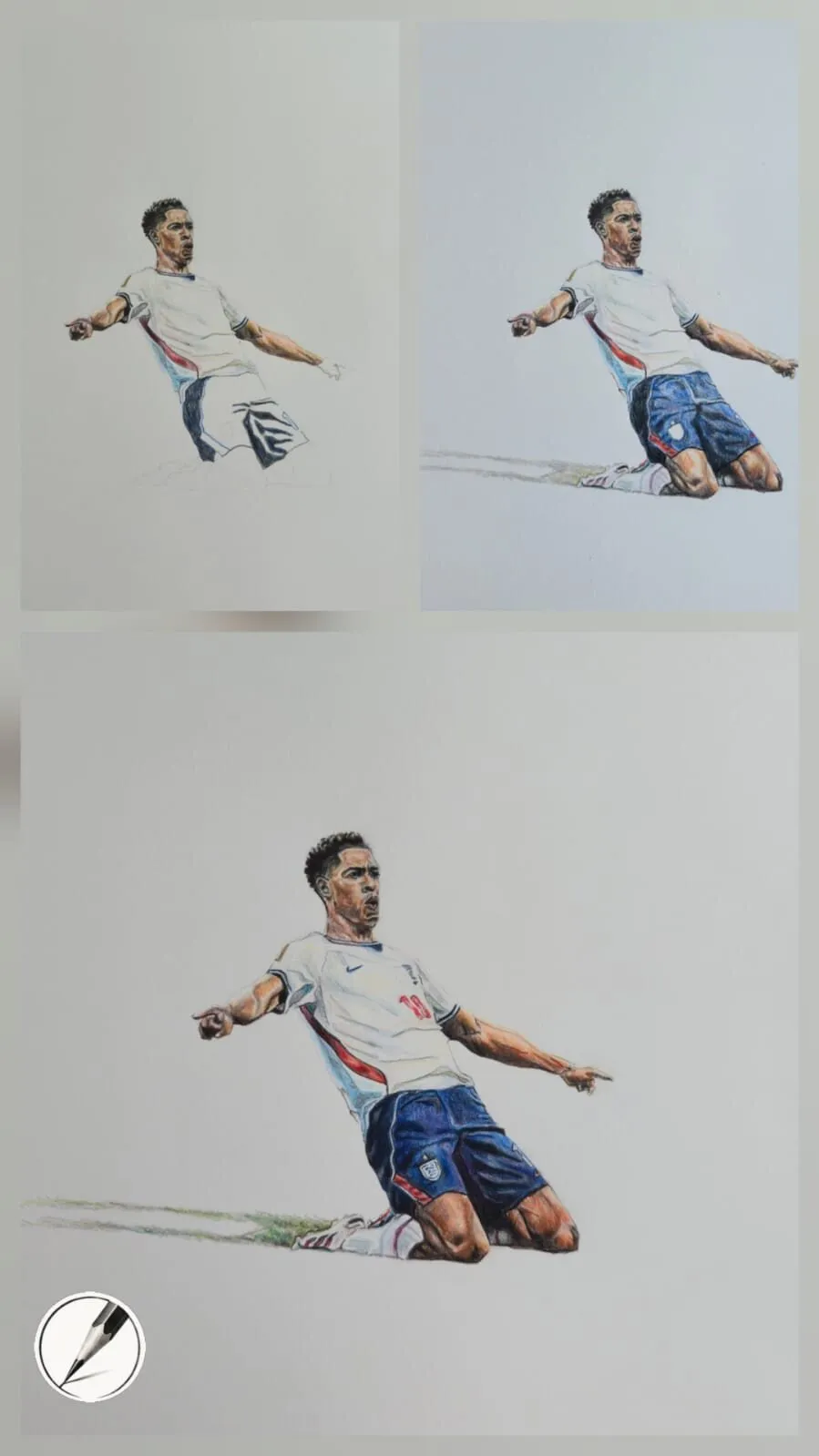
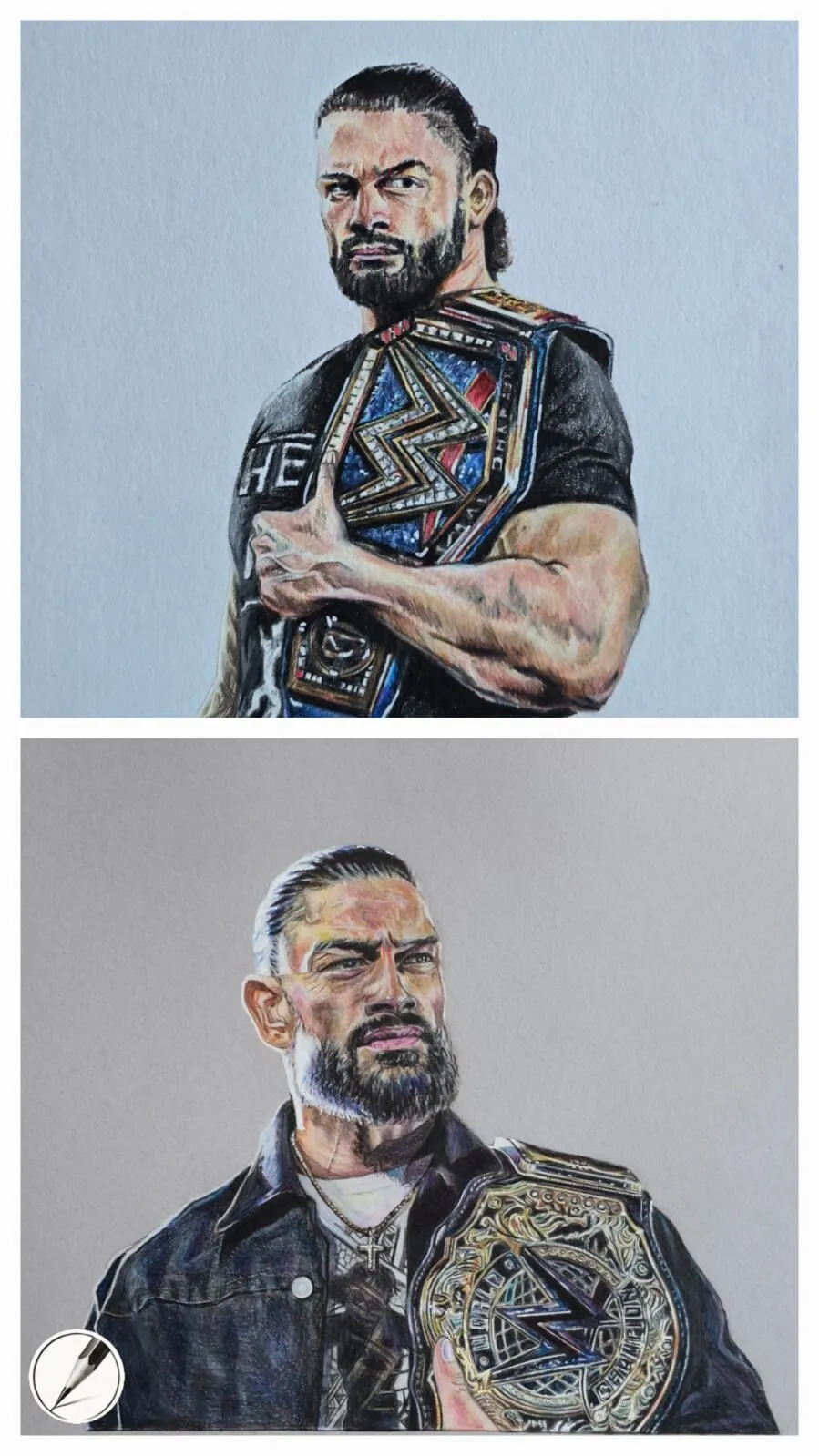
Michael’s paired drawings of the same subject, made at different times, show why this works: the difference in accuracy, tone and confidence is obvious side by side and would have been invisible week to week.
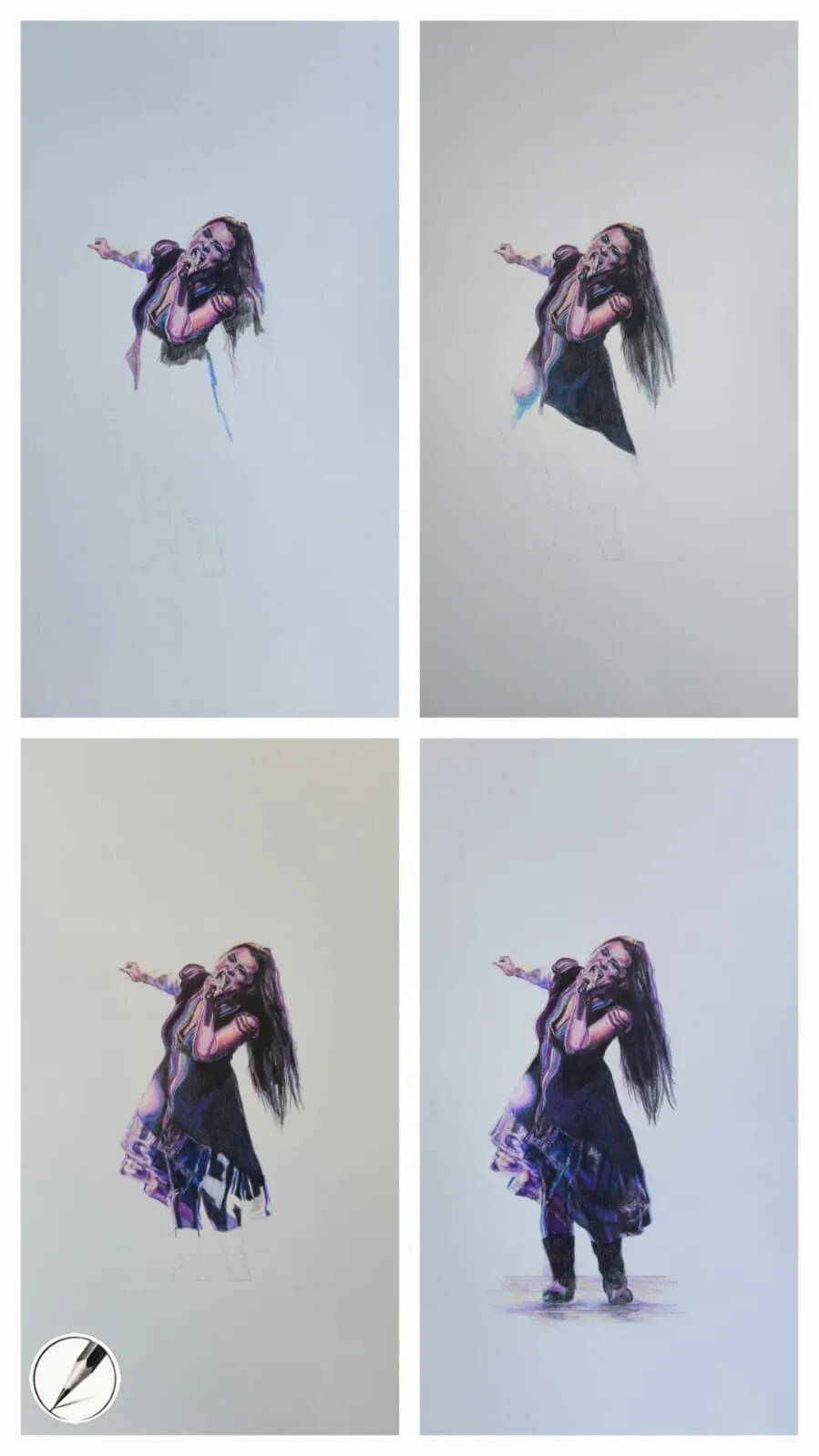
A drawing built in stages. Keeping dated pages, like keeping stages, lets you see how a piece and your skills develop.
Avoiding plateaus
Every artist hits flat stretches. Some causes and fixes:
- You are repeating comfortable subjects. Choose something you avoid, whether hands, foreshortening or a new material.
- You are only copying photographs. Add drawing from life, which teaches edges and depth photographs flatten. See how to draw what you see.
- You have no feedback. Show work to a tutor, a group or an online community, or take a drawing course.
- You keep switching materials. Stay with one pencil range and one paper for a while.
- You are chasing finish. Insert quick studies between long pieces.
- You need new input. Work through a book such as those in our figure drawing list.
Start small this week
If you are new to a routine, begin with just 15 minutes: five of gesture, ten of a contour drawing of something on your desk. Do it for a week. Then add a value study. If you are at the very beginning, our drawing for beginners guide has a full 30-day plan.
The short version
Practise most days for 20 to 30 minutes with a warm-up, one deliberate exercise and a short applied study. Rotate gesture, contour, value, timed and copy exercises through the week. Keep a dated sketchbook, repeat a benchmark drawing every few months and break plateaus by changing what you practise, not how hard you try.
Quick answers
Frequently asked questions
How long should I practise drawing each day?+
Twenty to thirty focused minutes is enough for steady progress and is easier to sustain than long sessions. On days with more time, extend the deliberate exercise or do a longer study. Consistency matters more than length, because perceptual and motor skills consolidate through frequent repetition.
Do I need to draw every single day?+
No. Most days works well, and a day off does no harm. What matters is regularity and making sessions purposeful. Some artists prefer five days a week with a longer session at the weekend. Choose a rhythm you can keep for months, not one you will abandon in a fortnight.
What should I draw when I have no ideas?+
Use a rotating menu: gesture sketches, a contour drawing of an object on your desk, a value study of a photo, a timed portrait or a copy of a master drawing. Everyday objects are ideal because they are always available, and simple subjects let you concentrate on skill.
Why is my drawing not improving?+
Usually because practice has become comfortable. You are repeating what you already do well. Identify your weakest area, such as proportion, edges or values, and design a short exercise that targets it. Also compare your work with something from three months ago; progress is often larger than it feels.