Books & Courses
Best Books to Improve Your Drawing
The ten drawing books worth owning, from Betty Edwards to Loomis, with who each suits, why it matters and quick picks for beginners, realism and portraits.
This guide contains affiliate links. If you buy through them we may earn a small commission at no cost to you. How this works.
Jump to recommended products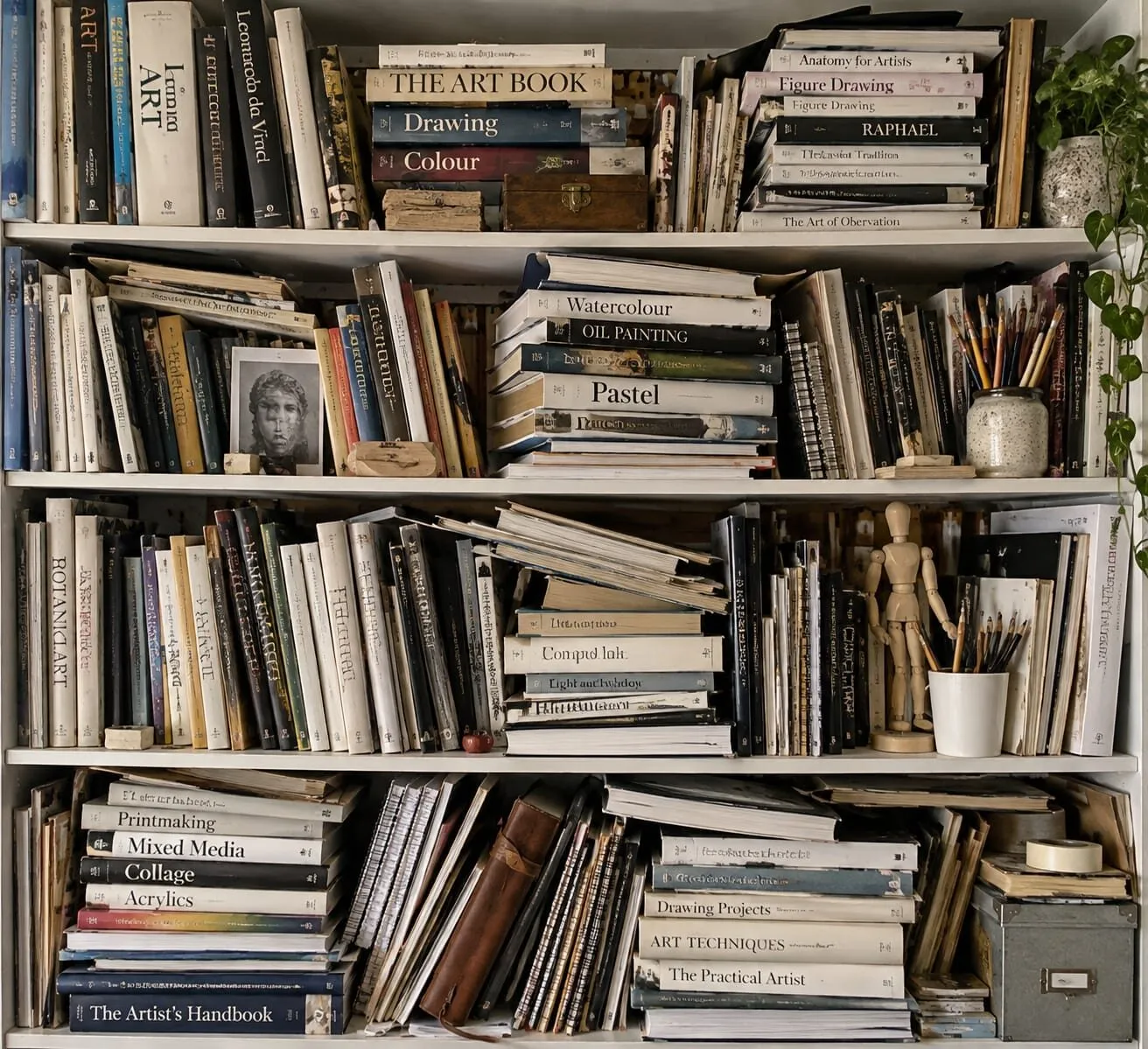
Key takeaways
- ◆Start with an observation book - Keys to Drawing or Drawing on the Right Side of the Brain - before specialising.
- ◆For coloured pencil realism, Colored Pencil Painting Bible and Super Realism are the strongest technical guides.
- ◆Loomis and Maughan are the go-to pair for portraits: structure from Loomis, tonal realism from Maughan.
- ◆The Natural Way to Draw is demanding but excellent for gesture and building a daily practice habit.
- ◆Work through one book properly before buying the next; the exercises are the value, not the pictures.
Improving your drawing is a long project, and the right book can shorten it considerably. A good instructional title gives you something a video rarely does: a sequence of exercises you can repeat, at your own pace, for years. The difficulty is choosing. Shelves of drawing books cover everything from cartoon characters to architectural perspective.
This list narrows it to ten that consistently prove their worth for people who want to draw more accurately and realistically. Each entry says who it suits and why it matters, with quick picks by goal further down. If you are still working out where to begin, the pillar guide on how to get better at drawing puts books in the context of practice, courses and study.
Books work best alongside practice. Pair them with a lesson such as how to draw basic forms and shading or how to draw in perspective, and if you are still choosing kit, see the best drawing supplies for beginners, which also serves anyone starting out in colored pencil.
The ten books at a glance
| Book | Author | Best for | Focus |
|---|---|---|---|
| Drawing on the Right Side of the Brain | Betty Edwards | Proportion and “seeing” problems | Perception |
| Keys to Drawing | Bert Dodson | Loosening up, accuracy | Observation and line |
| You Can Draw | Leonardo Pereznieto | Learning realism | Shading, highlights, texture |
| Colored Pencil Painting Bible | Alyona Nickelsen | Professional coloured pencil realism | Layering, glazing, colour |
| Super Realism | Sarah Evans | Still life, reflective objects | Glass, metal, food |
| Drawing Realistic Textures in Pencil | J.D. Hillberry | Texture in graphite | Wood, metal, fabric, skin |
| Figure Drawing for All It’s Worth | Andrew Loomis | Figure and portrait structure | Anatomy, proportion |
| The Natural Way to Draw | Kimon Nicolaides | Gesture, expressive drawing | Daily practice, contour |
| Drawing the Head and Hands | Andrew Loomis | Portrait artists | Heads and hands |
| The Artist’s Complete Guide to Drawing the Head | William Maughan | Tonal portrait realism | Value structure |
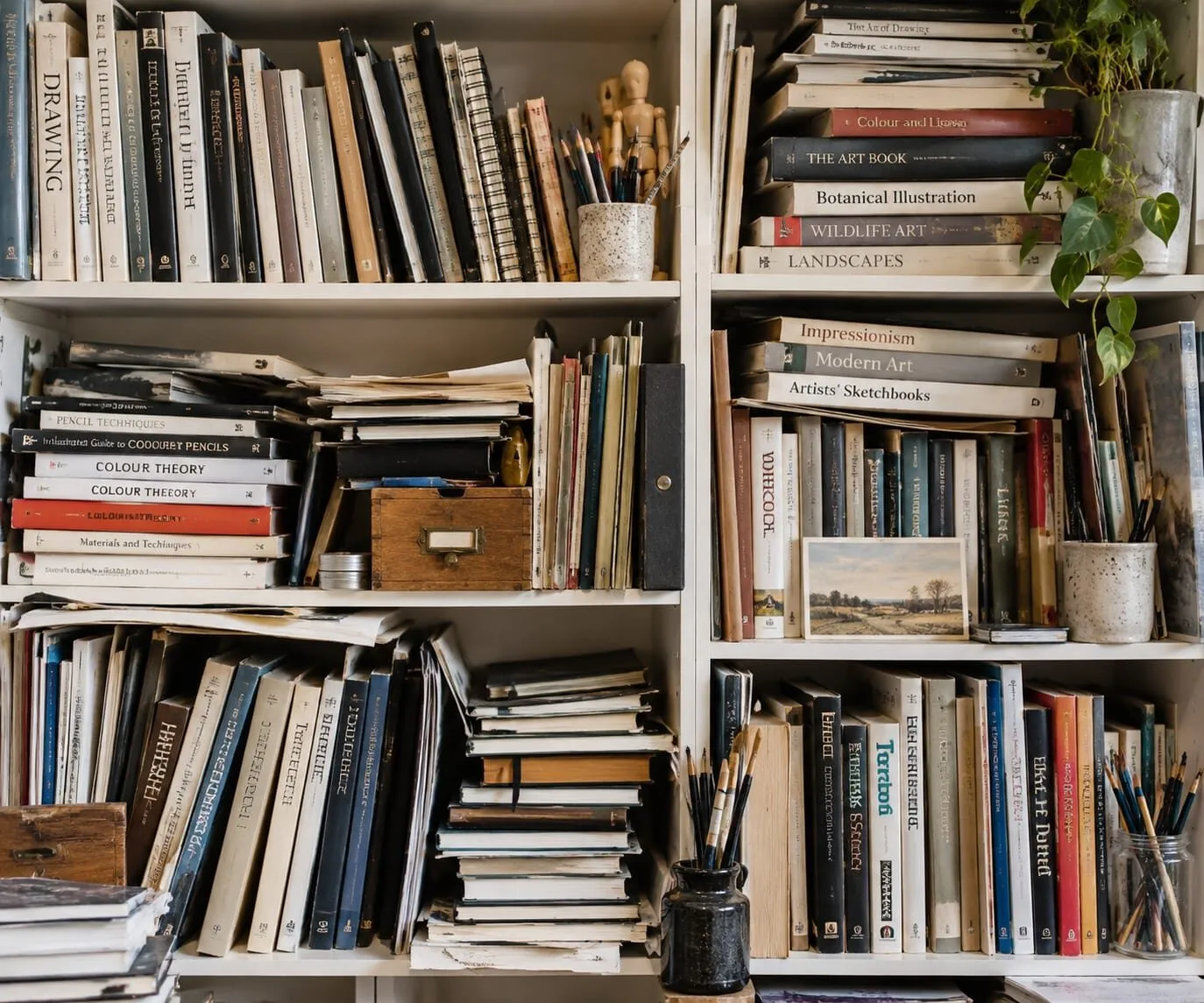
A studio bookshelf of art books, sketchbooks and brushes.
1. Drawing on the Right Side of the Brain - Betty Edwards
The classic that most artists meet at some point. Edwards is concerned with teaching you to see like an artist rather than simply look. Her exercises train you to recognise shapes, negative space, proportion and perspective, and many people find them almost meditative.
Best for: artists who struggle with proportion or accuracy, and experienced artists who want to refresh their foundations.
Why it matters: if you have ever hit the “it doesn’t look like what I’m drawing” stage, this book explains why and gives you a route out. It is especially good at breaking bad habits. Our guide to how to draw what you see draws on the same ideas.
2. Keys to Drawing - Bert Dodson
Practical, gentle and encouraging. Dodson builds confidence through observation, line control and simple exercises that increase gradually in complexity. The message is to draw what you see rather than what you think you see, with a healthy balance of technique and creativity and plenty of encouragement to experiment.
Best for: artists who want to improve accuracy and loosen their style.
Why it matters: the approach helps you relax into drawing, which suits people who overthink. If Edwards feels too clinical, start here.
3. You Can Draw: Simple Techniques for Realistic Drawings - Leonardo Pereznieto
Ideal for artists who want realism but feel intimidated by it. Pereznieto breaks realistic drawing into approachable steps, concentrating on shading, highlights and texture, with clear demonstrations and a friendly tone. It is particularly good on reflective surfaces.
Best for: amateurs learning realism, and more experienced artists refining shading and texture.
Why it matters: it is one of the most accessible realism books available, and makes a good bridge between the observation books and the specialist titles below.
4. Colored Pencil Painting Bible - Alyona Nickelsen
Nickelsen is one of the most respected coloured pencil educators, and this book is a masterclass in realism. It covers layering, glazing, solvents, burnishing and colour theory specifically for coloured pencil, with excellent demonstrations of how to make the medium look like paint.
Best for: artists aiming for professional realism, and amateurs ready to level up.
Why it matters: if you want hyperrealism in coloured pencil, this book is essential. Pair it with our technique guides on layering and burnishing.
5. Super Realism: How to Draw Amazingly Lifelike Objects with Coloured Pencils - Sarah Evans
Evans focuses on everyday objects - glass, metal, food, plastic - and shows how to make them convincingly real. Her approach is methodical but friendly, with step-by-step guidance and clear breakdowns of complicated surfaces.
Best for: still life enthusiasts and anyone who wants better texture rendering.
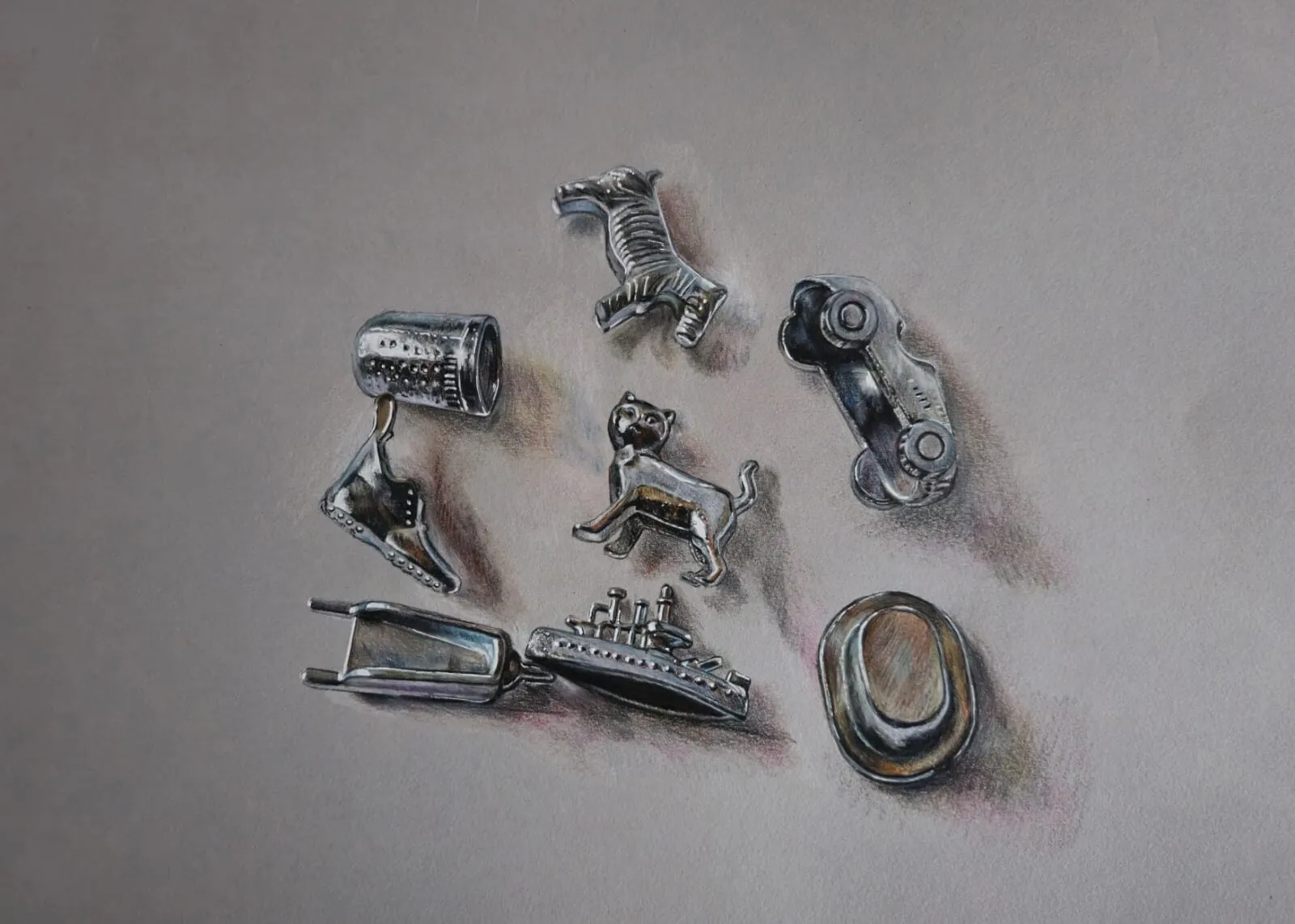
Why it matters: it is among the best books for learning how light behaves on different materials, particularly reflective objects. Our guides on glossy surfaces and shiny metal and reflections cover related territory.
6. Drawing Realistic Textures in Pencil - J.D. Hillberry
Hillberry is the master of graphite texture. His book shows how to create wood, metal, fabric, skin, glass and more using graphite alone, with a deep focus on subtle shading.
Best for: artists who want more convincing textures, and those refining graphite technique or moving from graphite to coloured pencil.
Why it matters: texture is often the missing piece in realism, and this book fills that gap. See also how to draw realistic textures in graphite.
7. Figure Drawing for All It’s Worth - Andrew Loomis
Loomis is legendary, and his figure drawing system is still used by professionals. The book teaches proportion, anatomy, gesture and structure in a way that feels timeless, with clear anatomical guidance and beautiful illustrations.
Best for: artists who want to improve their portrait or figure work.
Why it matters: if you draw people, Loomis is essential. For a wider set of figure titles, see our list of the best books for figure drawing.
8. The Natural Way to Draw - Kimon Nicolaides
Nicolaides focuses on gesture, movement and expressive drawing. The exercises are intense - daily practice, timed sketches and contour drawing - but effective.
Best for: artists who want to loosen their style or improve gesture.
Why it matters: gesture is the soul of drawing, and this book teaches you how to find it. It also encourages the daily habit that underpins every other improvement; our guide to practising drawing daily turns the idea into a manageable routine.
9. Drawing the Head and Hands - Andrew Loomis
A companion to Figure Drawing for All It’s Worth, this volume concentrates on the most demanding parts of portraiture: heads and hands. It gives a clear breakdown of facial structure, excellent hand anatomy and practical exercises.
Best for: portrait artists at any stage.
Why it matters: if you can draw heads and hands well, everything else becomes easier. It is a natural pairing with our advice on drawing portraits in coloured pencil.
10. The Artist’s Complete Guide to Drawing the Head - William Maughan
Maughan teaches a tonal approach to portrait drawing, concentrating on light, shadow and form. His method is structured, with excellent shading guidance and clear demonstrations, and it centres on value structure.
Best for: artists refining portrait realism, and amateurs ready to deepen their understanding of light.
Why it matters: portrait realism depends on value, and Maughan teaches it beautifully. Read it alongside our guide to value in drawing.
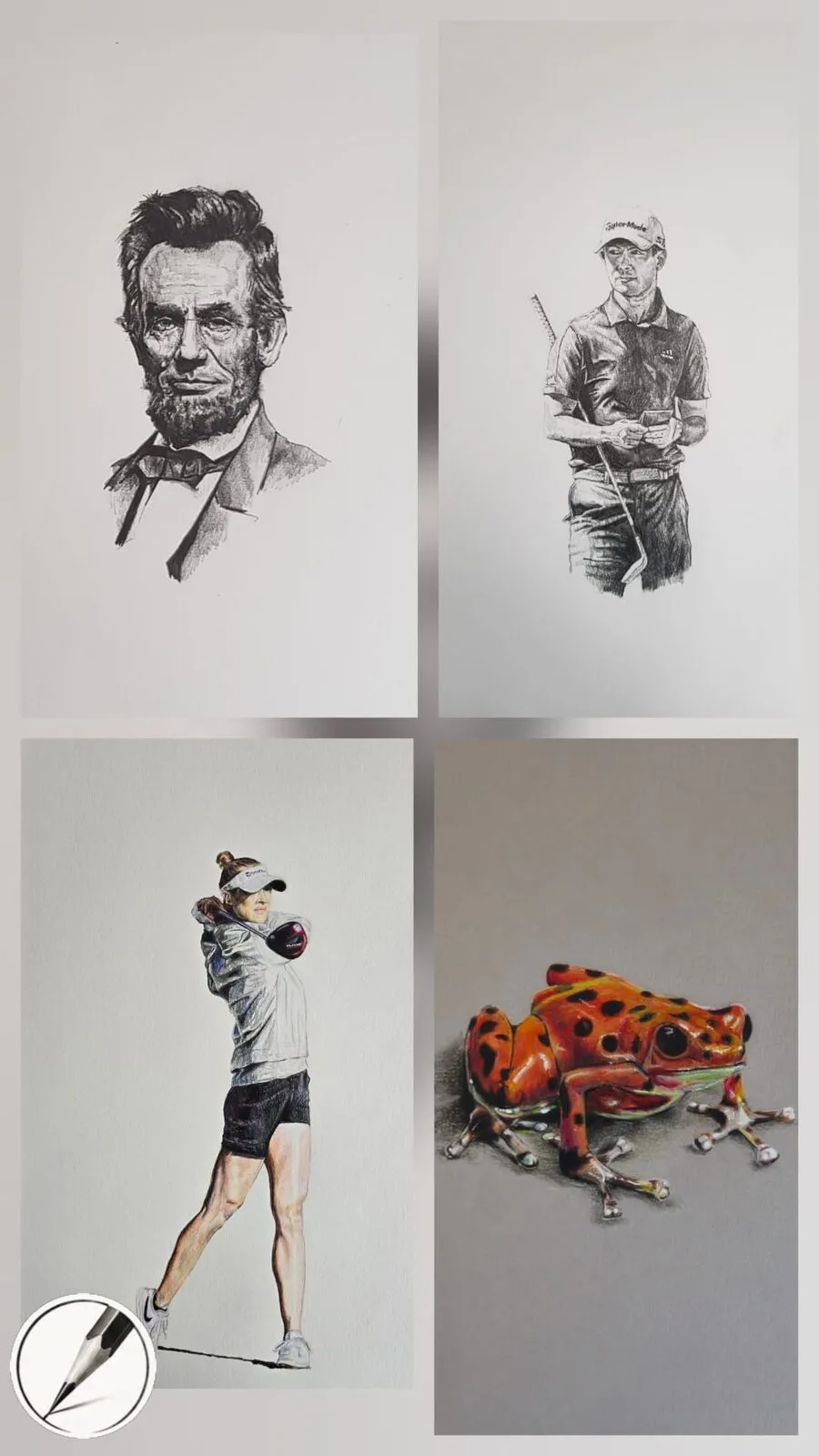
Graphite portraits and animal studies: form is built almost entirely from carefully controlled values.
Quick recommendations
| If you are… | Start with |
|---|---|
| A beginner | Keys to Drawing, Drawing on the Right Side of the Brain, You Can Draw |
| Aiming for realism | Colored Pencil Painting Bible, Super Realism, Drawing Realistic Textures in Pencil |
| A portrait artist | Loomis’ Drawing the Head and Hands, Maughan’s Guide to Drawing the Head |
| Chasing expressive drawing | The Natural Way to Draw |
| Focused on the figure | Figure Drawing for All It’s Worth |
How to get the most out of any drawing book
- Do the exercises, do not just read them. A book read but not drawn from is decoration.
- Work in order at first. The early exercises usually install the habits that later chapters assume.
- Repeat the ones that hurt. Discomfort tends to mark a real gap.
- Date your pages. Coming back in three months and comparing shows progress you cannot feel.
- Pair a book with one master study a week. See master draughtsmen to study for who to copy.
Where to go next
The ten titles above give general coverage. For a specific subject, use the specialist lists: animals, botanical drawing and coloured pencil. If you would rather learn with a teacher, see the best drawing courses, and for the full improvement pathway return to how to get better at drawing.
The short version
Buy an observation book first - Keys to Drawing if you want gentle, Drawing on the Right Side of the Brain if you want structured. Add Colored Pencil Painting Bible and Super Realism for realism, Loomis and Maughan for people, and Nicolaides for gesture. Work through one at a time.
Where to buy
Recommended products
Affiliate links. We may earn a small commission if you buy, at no extra cost to you. Why?
Book · Betty Edwards
Drawing on the Right Side of the Brain
The classic on learning to see - shapes, negative space and proportion.
Book · Bert Dodson
Keys to Drawing
Practical, encouraging exercises for accuracy and confidence.
Buy on AmazonAffiliate link · opens Amazon
Book · Leonardo Pereznieto
You Can Draw: Simple Techniques for Realistic Drawings
An approachable route into shading, highlights and texture.
Buy on AmazonAffiliate link · opens Amazon
Book · Alyona Nickelsen
Colored Pencil Painting Bible
A deep technical guide to layering, glazing, solvents and colour for coloured pencil.
Buy on AmazonAffiliate link · opens Amazon
Book · Sarah Evans
Super Realism: How to Draw Amazingly Lifelike Objects with Coloured Pencils
Step-by-step lessons on rendering glass, metal, food and plastic.
Book · J.D. Hillberry
Drawing Realistic Textures in Pencil
A graphite master's guide to wood, metal, fabric, skin and glass.
Buy on AmazonAffiliate link · opens Amazon
Book · Andrew Loomis
Figure Drawing for All It's Worth
A classic system for proportion, anatomy and structure.
Buy on AmazonAffiliate link · opens Amazon
Book · Kimon Nicolaides
The Natural Way to Draw
Gesture, contour and daily practice - an intensive, proven method.
Buy on AmazonAffiliate link · opens Amazon
Book · Andrew Loomis
Drawing the Head and Hands
Focused training on the two hardest parts of the figure.
Buy on AmazonAffiliate link · opens Amazon
Book · William Maughan
The Artist's Complete Guide to Drawing the Head
A tonal, structured approach to realistic portrait drawing.
Buy on AmazonAffiliate link · opens Amazon
Quick answers
Frequently asked questions
What is the best drawing book for beginners?+
Keys to Drawing by Bert Dodson and Drawing on the Right Side of the Brain by Betty Edwards are the strongest starting points. Both teach you to observe rather than draw symbols, and both use exercises that build confidence. You Can Draw is a good third option if realism is your goal.
Are drawing books better than online courses?+
They do different jobs. Books are cheap, dense and can be repeated at your own pace, which suits structured exercises. Courses and classes add feedback from a teacher. Many artists use a book for the fundamentals and add a class or group when they want their work critiqued.
Which book should I read first for realistic drawing?+
Read an observation book first, then move to a realism specialist. For coloured pencil, Colored Pencil Painting Bible covers layering, glazing, burnishing and colour theory. For graphite, Drawing Realistic Textures in Pencil is the best route into convincing surfaces.
Do I need to read a drawing book cover to cover?+
No. Treat instructional books as exercise programmes. Read the introduction, then work through the early exercises in order and repeat the ones that expose your weaknesses. You can dip into later chapters as your needs change, and return to the book years later.