Paper & Surfaces
Best Paper for Realistic Drawing in Coloured Pencil and Graphite
Realism needs paper that survives dozens of layers. Stonehenge, Arches Hot Press and Canson grey compared for coloured (colored) pencil and graphite realism.
This guide contains affiliate links. If you buy through them we may earn a small commission at no cost to you. How this works.
Jump to recommended products
Key takeaways
- ◆Realism means many thin layers, so choose paper that stays flat, keeps accepting pigment and does not pill.
- ◆Stonehenge White gives deep, velvety layering; Arches Hot Press gives smooth, controlled detail; Canson Mixed Media grey gives grip and glowing highlights.
- ◆Match the surface to the subject: smooth for skin and fine detail, more tooth for reflective surfaces and texture.
- ◆Pressure control and planning matter as much as the paper; pilling usually means the surface is full or you pressed too hard too soon.
- ◆Test any paper for at least five layers plus a lift before you start a long drawing.
Realistic drawing is a game of accumulation. A convincing portrait or glossy still life is rarely made in a handful of passes; it is built from many thin layers, each nudging value and colour a little closer to the reference. That puts unusual stress on the sheet. Cheap or lightweight paper fills up, pills or tears long before the drawing is finished.
This guide covers the three papers that best survive that stress: Stonehenge White, Arches Hot Press and Canson Mixed Media grey. It explains why realism is hard on paper, how surface should relate to subject, how to avoid pilling and how to plan a drawing so the paper lasts. For broader recommendations, start with the best paper for coloured pencils or the paper pillar guide. Realistic work in coloured pencils (colored pencils in the US) also rewards sound shading habits, so see how to draw basic forms and shading and how to draw shadows and light.
Why realism is hard on paper
Realism asks four things of a surface at once.
- It must accept many layers. Every layer needs tooth to grip. When the tooth fills, pigment slides and colour stops building.
- It must survive correction. Realists erase, lift and rework. A soft, thin sheet scuffs, dents or tears.
- It must stay flat. Heavy layering can make lightweight paper buckle, which distorts proportions and shading.
- It must resist pilling. Pilling is when wax or pigment clumps and lifts instead of settling.
Heavier paper handles all four better. Papers of around 250 to 300 gsm give the strength for multiple layers without the surface pilling, while lighter sheets of roughly 120 to 180 gsm are flexible and good for sketching but can buckle or wear down. Our guide to paper weight explained covers the numbers.
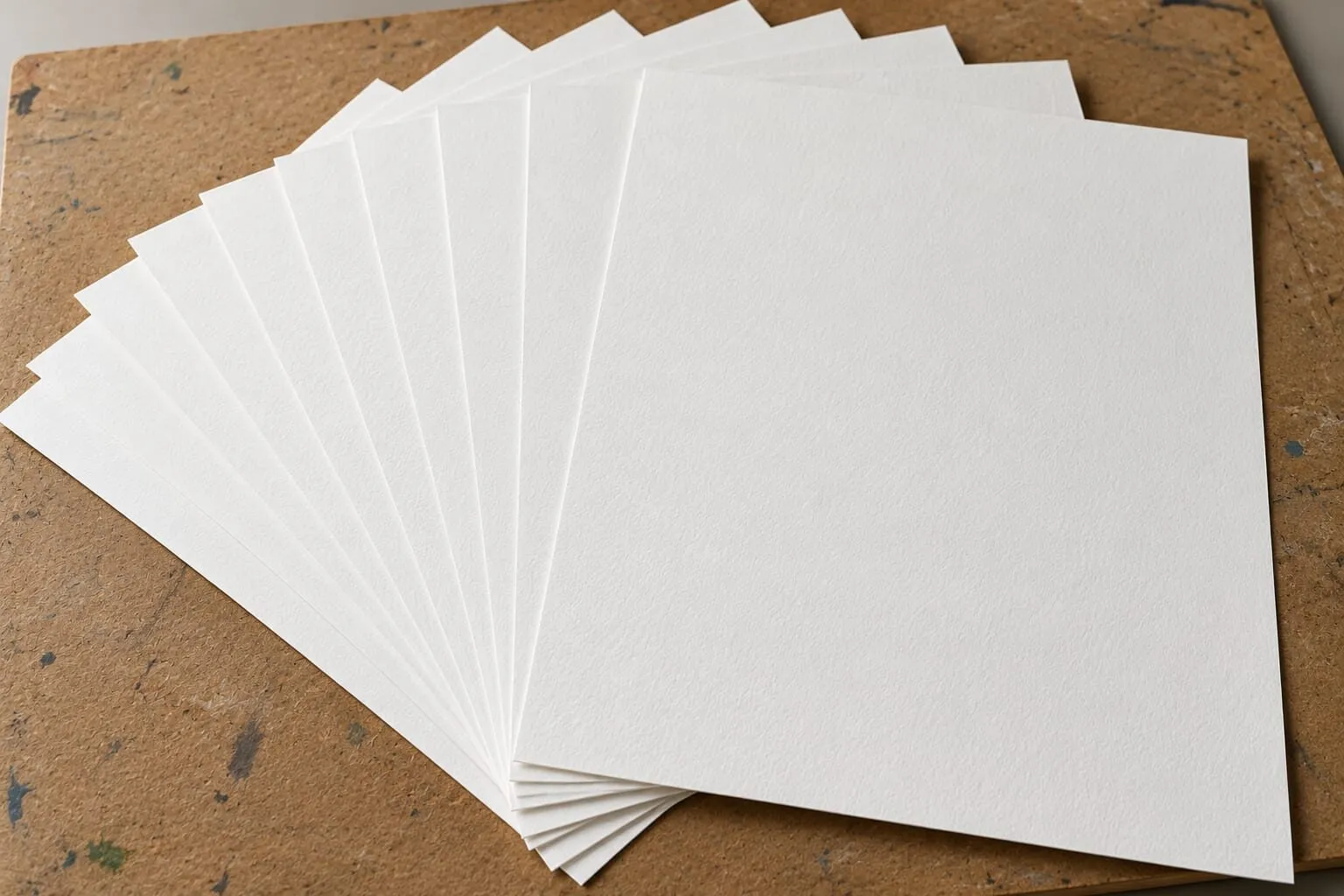
A stack of white drawing paper sheets on a wooden board.
The three papers that survive dozens of layers
Stonehenge White: depth without scratchiness
Stonehenge is soft, velvety and forgiving. It allows deep layering without feeling scratchy, and colour sinks into the fibres to create a natural, painterly softness. That is why it suits skin, fur, feathers and botanical work. It lifts gently without damaging the fibres, which helps with subtle highlights, and it burnishes smoothly without streaking. It is fully archival. Its softer feel means gentle layering works best, and it is not the paper to punish with an aggressive eraser.
Arches Hot Press: control and fine detail
Arches Hot Press is smooth and refined, strong enough for heavy layering yet smooth enough for fine detail. It suits portraits because it allows subtle transitions and delicate shading. It burnishes softly and copes with solvents. The compromise is that pigment sinks into the smooth surface, so it is harder to lift from, and pressure must be gentle. That makes planning essential, and our guide to hot press versus cold press paper explains the surface.
Canson Mixed Media grey: grip and glowing highlights
Canson has heavy tooth, so it grabs pigment and lets you draw over and over without losing grip. Colour lifts well, and because it is a mid-tone paper, white and light pencils build glowing highlights on top. It suits realism where the subject is glossy or metallic. It is durable but not always fully archival, and its texture is less suited to very fine skin work. See why use grey paper for coloured pencil.
Surface versus subject
The rule of thumb is that the subject should choose the surface.
| Subject | Surface that helps | Why |
|---|---|---|
| Skin, portraits | Smooth (Arches Hot Press) | Subtle transitions, fine detail |
| Fur, feathers | Soft (Stonehenge White) | Velvety layering, gentle lifting |
| Metal, glass, icing | Toothy grey (Canson) | Crisp highlights, strong contrast |
| Botanical work | Soft or smooth | Clean edges, gradual colour |
| Graphite realism | Some tooth | Holds deep shadows |
Avoiding pilling
Pilling is the common failure of long realistic drawings. To reduce it:
- Start light. Early layers should be applied with gentle pressure so tooth remains for later.
- Build many thin layers rather than a few heavy ones.
- Keep points sharp. Blunt pencils force pigment into the tooth.
- Do not burnish early. Burnishing flattens tooth, so save it for the finish. See how to burnish coloured pencils.
- Choose paper with the tooth for your layer count. Low-tooth papers need patience and gentle pressure.
Planning a realistic drawing
Because the paper is committed from the first mark, planning pays off.
- Transfer the layout accurately. A grid saves time and correction; the grid drawing tool helps.
- Work out your values first. The value study tool shows the lights and darks before you commit.
- Decide where highlights live. On smooth paper they must be planned, since lifting is difficult.
- Build top down and light to dark with restraint, as described in how a realistic drawing comes together.
Graphite realism
Graphite depends on tooth to hold rich shadows and crosshatching. Michael points to Arches Cold Press and Winsor & Newton cartridge paper for graphite. Our best paper for graphite drawing guide goes into it, and the pencil grade chart helps match grades to a surface.
How many layers is “dozens”?
Realism does not mean every area carries dozens of layers, but the deepest darks, the richest skin tones and the smoothest glossy surfaces usually do. Michael describes heavier paper as the kind that lets you build up dozens of layers without the surface breaking down. The practical point is that paper is used up as you draw: each layer fills a little more of the tooth, and the last layers in an area have the least tooth to work with. That is why the choice of paper is really a choice about how much capacity you need.
A useful way to think about it is capacity versus finish:
- High capacity, textured finish: Canson Mixed Media grey. The heavy tooth keeps accepting layers, and the texture is part of the look.
- High capacity, soft finish: Stonehenge White. Deep, velvety layering without harsh texture.
- Lower capacity, very smooth finish: Arches Hot Press. You can build many layers, but pressure must stay gentle, and you reach deep colour more slowly.
Working methods that protect the paper
The way you draw matters as much as the sheet. A few habits extend the life of any paper.
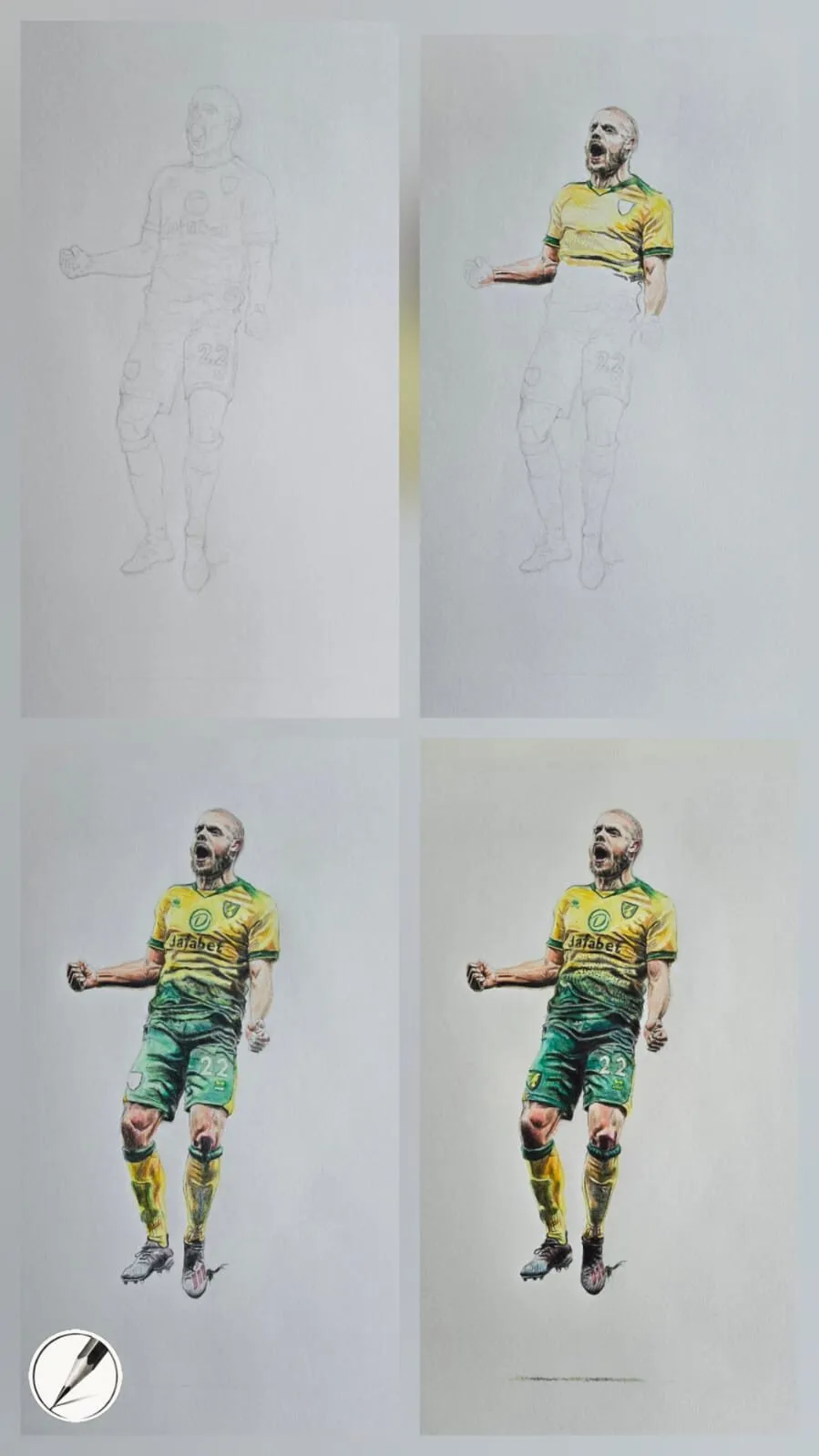
Layer in stages, not in one push. Build the whole drawing lightly first, then deepen it. This keeps tooth available everywhere for longer. A four-stage progression, from layout through base colours to final detail, is the working pattern behind many of Michael’s drawings.
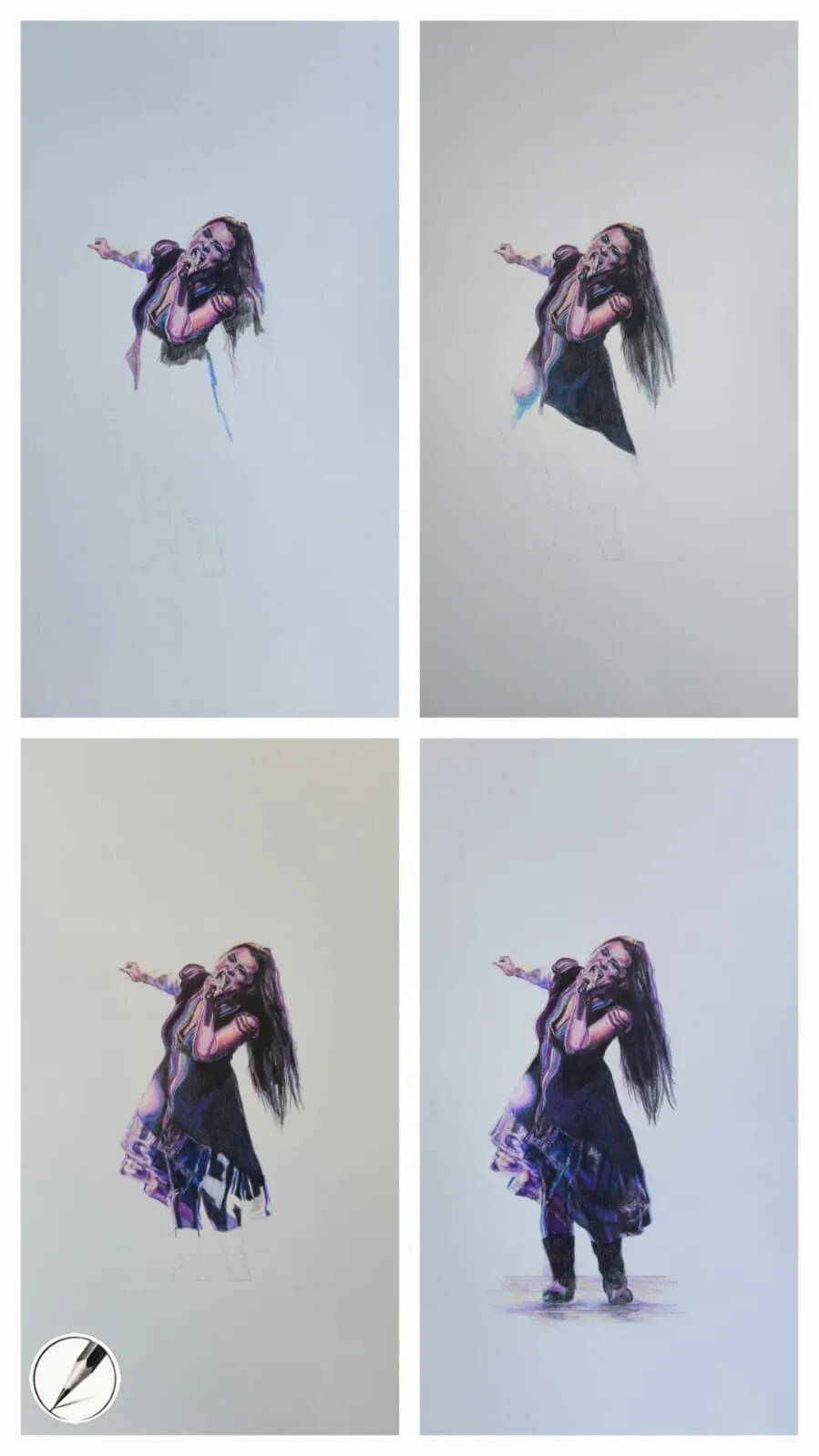
A drawing in four stages: the surface is spent gradually, so detail arrives last.
Change direction and pencil hardness between layers. Alternating stroke direction spreads pigment more evenly across the tooth instead of packing it into the same grooves.
Save fixing for late. Burnishing, solvents and heavy pressure permanently change the surface, so treat them as final steps, not early ones. Arches Hot Press in particular handles solvents and burnishing well, which suits a polished finish.
Test corrections on an offcut. Before you lift a highlight in a portrait, know how your paper responds. Canson lifts excellently, Stonehenge lifts gently, Clairefontaine lifts well but may stain slightly with heavy pigment, and Arches Hot Press is the hardest to lift from.
Matching paper to how you work
Some artists build colour slowly and correct often; they benefit from robust, toothy paper that forgives. Others plan carefully, apply light pressure and value a refined finish; they suit smooth paper and its extra layers. If you are not sure which type you are, start with a paper that forgives and move towards smoother surfaces as your control improves. Our how to layer coloured pencils guide shows the pressure and stroke habits that go with each.
Which should you choose?
- Mostly people: Arches Hot Press, with Stonehenge as a softer alternative.
- Animals, fur, feathers: Stonehenge White.
- Shiny objects and food: Canson Mixed Media grey.
- Undecided: buy a single sheet of each and run the five-layer test.
The short version
Realism needs paper that is heavy, flat, forgiving of correction and resistant to pilling. Stonehenge gives depth, Arches gives control and Canson gives grip and highlights. Match the surface to the subject, start with light pressure, plan your highlights and test first.
Where to buy
Recommended products
Affiliate links. We may earn a small commission if you buy, at no extra cost to you. Why?
Paper · Canson
Canson Mixed Media Grey Paper
A toothy mid-tone grey paper that grips pigment and makes highlights glow.
Paper · Arches
Arches Hot Press Paper
Smooth, archival paper prized for portraits, fine detail and subtle blending.
Paper · Stonehenge
Stonehenge Paper
Soft, velvety, forgiving paper loved for realism and deep layering.
Quick answers
Frequently asked questions
What is the best paper for realistic coloured pencil drawing?+
For soft realism such as skin, fur and feathers, Stonehenge White is a strong choice because it layers deeply and lifts gently. Arches Hot Press suits fine detail and portraits, and Canson Mixed Media grey suits reflective, glossy subjects. Choose by subject and how many layers you plan.
Why does my paper pill or stop taking pencil?+
Pilling and slick, refusing surfaces usually mean the tooth is full of wax or you pressed too hard too early. Start with light pressure, use a heavier paper with enough tooth, and build colour gradually in many thin layers instead of a few heavy ones.
Does realistic drawing need smooth paper?+
Not always. Smooth paper such as Arches Hot Press suits skin and fine detail, but textured paper such as Canson Mixed Media grey helps metal, icing and reflective surfaces where crisp highlights and strong contrast matter. The right surface depends on the subject.
Can I use the same paper for graphite realism?+
Graphite realism often wants a little more tooth than coloured pencil to hold rich shadows. Arches Cold Press and Winsor and Newton cartridge paper are Michael's picks for graphite, while Arches Hot Press and Stonehenge suit finely blended work.
Are colored pencils and coloured pencils the same?+
Yes. Coloured pencils is the UK spelling and colored pencils is the US spelling, and they are the same product. Realism advice here covers both.