Books & Courses
Best Books for Figure Drawing
Ten figure drawing books compared, from Loomis and Nicolaides to Goldfinger and Winslow, with who each suits and quick picks for gesture, anatomy and imagination.
This guide contains affiliate links. If you buy through them we may earn a small commission at no cost to you. How this works.
Jump to recommended products
Key takeaways
- ◆If you only buy one figure drawing book, make it Loomis' Figure Drawing for All It's Worth.
- ◆Nicolaides and Mattesi's FORCE teach gesture and rhythm, which is where stiff figures usually go wrong.
- ◆Goldfinger, Zarins and Winslow are anatomy references: use them alongside a drawing method, not instead of one.
- ◆Hampton and Tiner suit artists who want to construct figures from imagination.
- ◆Loomis' Drawing the Head and Hands is the specialist pick for the two hardest parts of the figure.
Figure drawing is one of the most transformative skills an artist can build. It sharpens observation, strengthens anatomy, improves gesture and deepens your grasp of form and movement - and it transfers to almost every other subject, from portraits to animals. It is also where many artists feel most exposed, because errors of proportion in a human figure are impossible to hide.
Books cannot replace a live model, but they give you a framework for what you are looking at. This list covers ten of the most respected figure drawing titles, organised from all-round systems to anatomy references, gesture and imagination. Use it with the wider guide to how to get better at drawing and the general best books to improve your drawing.
Pair the reading with practice: start with face proportions, then work on how to draw hands and how to draw hair. For a sketchbook to fill with gesture studies, see the best sketchbooks for drawing.
The ten books at a glance
| Book | Author | Best for | Focus |
|---|---|---|---|
| Figure Drawing for All It’s Worth | Andrew Loomis | Structure, proportion | Complete classical system |
| Figure Drawing: Design and Invention | Michael Hampton | Modern, design-led approach | Shape-based anatomy |
| Figure Drawing: Structure, Anatomy and Expressive Design | Nathan Goldstein | Serious anatomical training | College-level course |
| The Natural Way to Draw | Kimon Nicolaides | Gesture, loosening up | Daily practice |
| Human Anatomy for Artists | Eliot Goldfinger | Anatomical accuracy | Muscle and bone reference |
| Anatomy for Sculptors | Uldis Zarins | Visual learners | Photos, 3D models |
| Figure Drawing Without a Model | Ron Tiner | Imagination | Figure invention |
| Force: Dynamic Life Drawing for Animators | Michael Mattesi | Movement, fluidity | Rhythm and energy |
| Drawing the Head and Hands | Andrew Loomis | Portraits, hands | Facial structure |
| Classic Human Anatomy in Motion | Valerie L. Winslow | Dynamic realism | Anatomy in action |
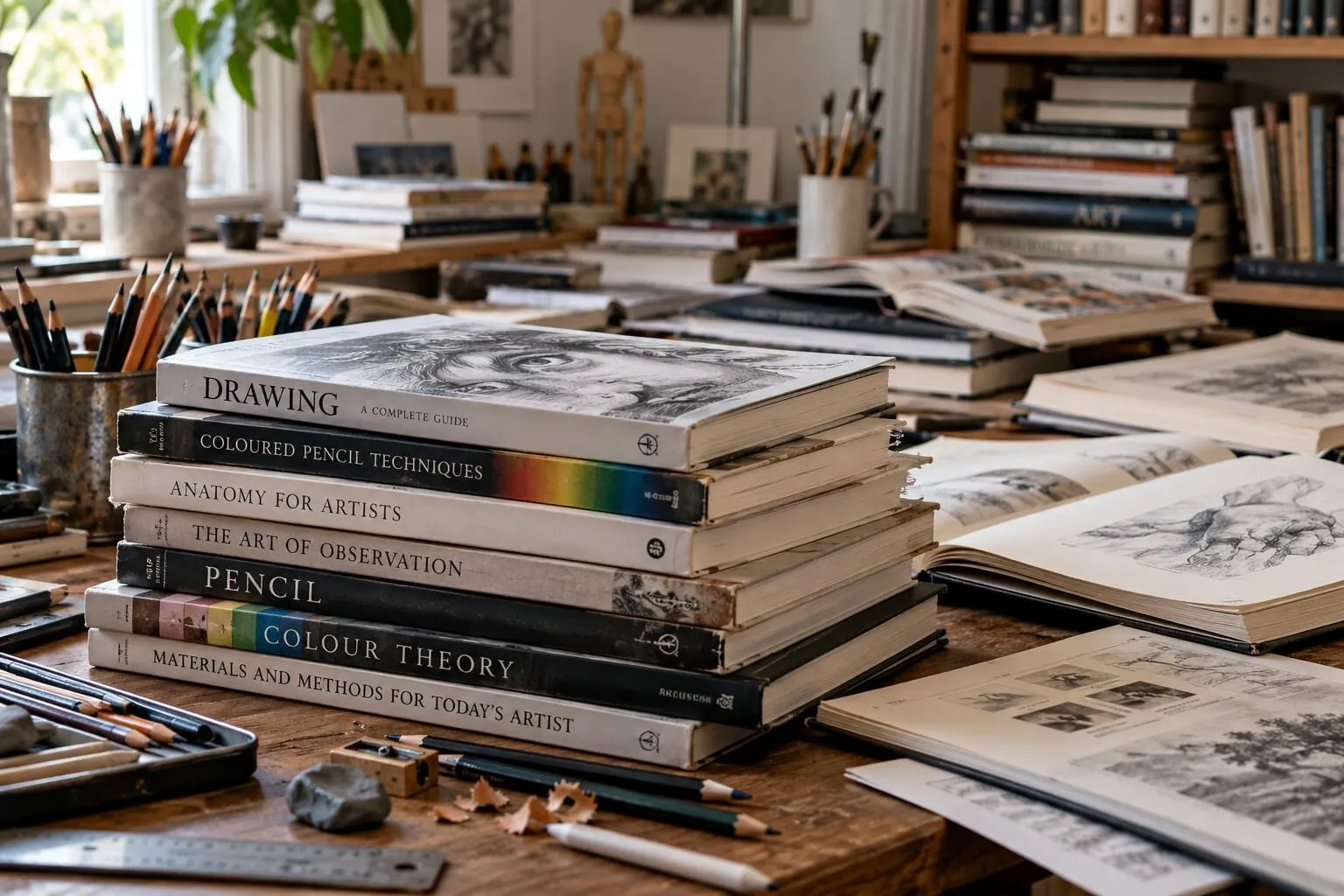
A desk covered with drawing books and sketchbooks beside pencils.
All-round systems
1. Figure Drawing for All It’s Worth - Andrew Loomis
The gold standard of classical figure drawing. Loomis blends anatomy, proportion, gesture and structure into a clear, elegant system that has shaped generations of artists, with an excellent proportion system, beautiful illustrations and teaching that covers both realism and stylisation.
Best for: amateurs learning structure, and experienced artists refining anatomy and proportion.
Why it matters: if you only buy one figure drawing book, this is the one.
2. Figure Drawing: Design and Invention - Michael Hampton
Modern, clean and brilliantly structured. Hampton teaches anatomy through simplified forms and explains why the body moves as it does, with clear shape-based anatomy and strong gesture guidance. It is highly accessible for beginners.
Best for: artists who want a contemporary, design-focused approach - useful for animation, illustration and realism alike.
Why it matters: it is one of the best books for learning to construct the figure from imagination.
3. Figure Drawing: The Structure, Anatomy, and Expressive Design of the Human Form - Nathan Goldstein
Deep, academic and thorough - effectively a college-level course in figure drawing covering anatomy, structure, gesture and expressive drawing.
Best for: artists wanting serious anatomical training.
Why it matters: it is among the most comprehensive figure drawing books ever written, and rewards long-term study. It is not a quick read, so approach it chapter by chapter.
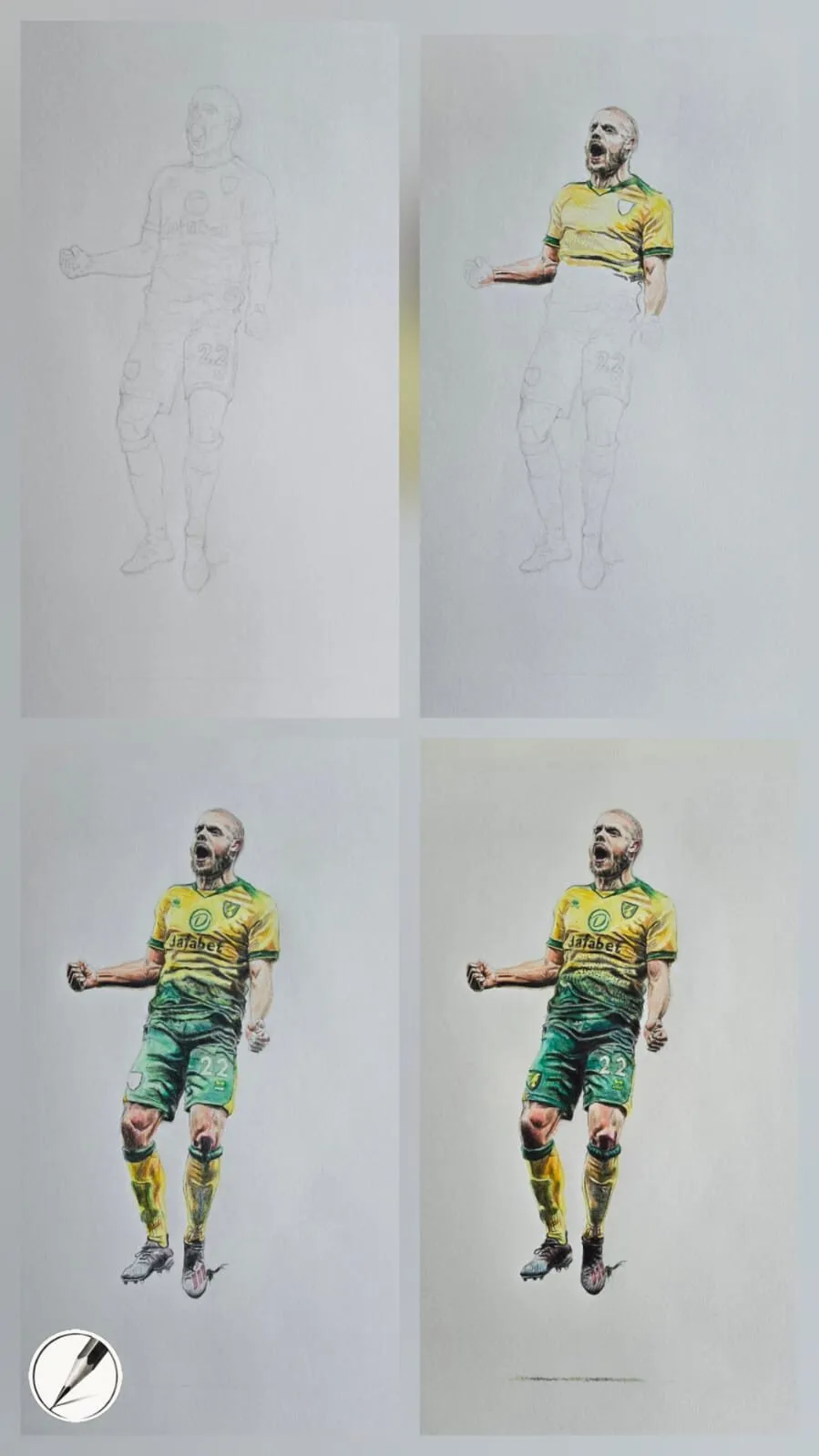
Figure work starts with the underlying layout and gesture, then builds toward finish - the sequence the classic books teach.
Gesture and movement
4. The Natural Way to Draw - Kimon Nicolaides
Nicolaides’ method is intense: daily exercises, timed drawings and contour studies. It concentrates on gesture and expressive movement, and encourages the habit of drawing every day.
Best for: artists who want to loosen up and draw with confidence.
Why it matters: gesture is the heartbeat of figure drawing, and Nicolaides teaches it better than almost anyone. It pairs naturally with our daily practice routine.
5. Force: Dynamic Life Drawing for Animators - Michael Mattesi
Mattesi’s FORCE method teaches how to capture energy, rhythm and flow in the figure. Excellent gesture training that helps break stiff habits. We do not attach a product card to this title, so check current editions with your bookseller.
Best for: artists who want movement and fluidity, including animators.
Why it matters: gesture is often the missing piece in figure drawing, and FORCE fills that gap.
6. Classic Human Anatomy in Motion - Valerie L. Winslow
Winslow’s book explains how anatomy behaves in motion: bending, twisting, stretching and compressing. It has excellent movement diagrams and a clear breakdown of action lines.
Best for: artists who want dynamic realism, particularly for dancers, athletes and expressive poses.
Why it matters: movement is essential for lifelike figures, and it complements Mattesi and Loomis nicely.
Anatomy references
7. Human Anatomy for Artists - Eliot Goldfinger
Goldfinger’s book is a scientific, detailed breakdown of human anatomy. It is not a step-by-step drawing book but a reference that teaches how the body is built, with detailed muscle and bone diagrams and clear explanations of movement.
Best for: artists who want anatomical accuracy.
Why it matters: realistic figure drawing begins with anatomy, and this is the blueprint. It is a perfect companion to Loomis or Hampton.
8. Anatomy for Sculptors: Understanding the Human Figure - Uldis Zarins
Written for sculptors but one of the best anatomy resources for any artist. It uses photographs, 3D models and overlays to make anatomy easy to grasp, and helps with foreshortening and perspective. We do not attach a product card to this title.
Best for: visual learners, from beginners to advanced artists.
Why it matters: it is among the most intuitive anatomy books available.
Imagination and specialist areas
9. Figure Drawing Without a Model - Ron Tiner
Tiner shows how to construct the figure without depending on reference, blending anatomy, gesture and storytelling.
Best for: illustrators, comic artists and imaginative drawers.
Why it matters: drawing from imagination is a skill in itself, and this book teaches it clearly. It is also good for character design.
10. Drawing the Head and Hands - Andrew Loomis
A companion to Loomis’ figure book, concentrating on the two areas artists struggle with most. It gives a clear breakdown of facial structure, excellent hand anatomy and practical exercises.
Best for: portrait artists and anyone struggling with hands.
Why it matters: mastering heads and hands elevates your entire figure drawing, and it is especially useful for coloured pencil portrait artists. See also how to draw portraits in coloured pencil.
Quick recommendations
| Goal | Choose |
|---|---|
| Beginners | Figure Drawing for All It’s Worth, Figure Drawing: Design and Invention, The Natural Way to Draw |
| Realism | Human Anatomy for Artists, Anatomy for Sculptors, Classic Human Anatomy in Motion |
| Gesture and movement | Force: Dynamic Life Drawing, The Natural Way to Draw |
| Portrait artists | Drawing the Head and Hands, Figure Drawing for All It’s Worth |
| Drawing from imagination | Figure Drawing Without a Model, Figure Drawing: Design and Invention |
How to use figure books alongside real practice
Books explain, but the hand only learns by drawing. A sensible loop is: read one section, draw the exercise, then test it on a real pose or a photograph. Local life drawing groups, online timed pose sites and a friend willing to sit for five minutes all give you subjects. If you want structured feedback, see the best drawing courses, where life drawing is one of the most valuable course types.
Studying masters helps too. Michelangelo and Degas are especially rich for anatomy and movement, and our guide to master draughtsmen to study explains how. To check your work, the value study tool shows whether the light and dark pattern of your figure holds together.
A suggested reading order
If you are starting from scratch, a sensible sequence is Loomis for structure, Nicolaides for gesture, then one anatomy reference. Once those are underway, choose by direction: Winslow or FORCE if you want movement, Hampton or Tiner if you want to invent figures, and Goldstein if you want a long, academic course. Avoid buying all ten at once; each one is a course in itself.
The short version
Begin with Loomis. Add Nicolaides or FORCE for gesture, Goldfinger or Zarins when you want anatomy, Hampton or Tiner for imagination and Winslow for movement. Keep Drawing the Head and Hands on the shelf for the day your portraits and hands need attention.
Where to buy
Recommended products
Affiliate links. We may earn a small commission if you buy, at no extra cost to you. Why?
Book · Andrew Loomis
Figure Drawing for All It's Worth
A classic system for proportion, anatomy and structure.
Buy on AmazonAffiliate link · opens Amazon
Book · Michael Hampton
Figure Drawing: Design and Invention
A modern, shape-based approach to constructing the figure.
Buy on AmazonAffiliate link · opens Amazon
Book · Nathan Goldstein
Figure Drawing: The Structure, Anatomy, and Expressive Design of the Human Form
A college-level course in figure drawing.
Buy on AmazonAffiliate link · opens Amazon
Book · Kimon Nicolaides
The Natural Way to Draw
Gesture, contour and daily practice - an intensive, proven method.
Buy on AmazonAffiliate link · opens Amazon
Book · Eliot Goldfinger
Human Anatomy for Artists
A detailed anatomical reference for realism and portraiture.
Buy on AmazonAffiliate link · opens Amazon
Book · Ron Tiner
Figure Drawing Without a Model
Constructing convincing figures from imagination.
Buy on AmazonAffiliate link · opens Amazon
Book · Andrew Loomis
Drawing the Head and Hands
Focused training on the two hardest parts of the figure.
Buy on AmazonAffiliate link · opens Amazon
Book · Valerie L. Winslow
Classic Human Anatomy in Motion
How anatomy behaves when the body bends, twists and stretches.
Buy on AmazonAffiliate link · opens Amazon
Quick answers
Frequently asked questions
What is the best book to learn figure drawing?+
Andrew Loomis' Figure Drawing for All It's Worth is the most widely recommended starting point because it combines proportion, anatomy, gesture and structure in a clear system. Michael Hampton's Figure Drawing: Design and Invention is a strong modern alternative, and Nicolaides' The Natural Way to Draw adds gesture training.
Do I need an anatomy book to draw the figure?+
You do not need one on day one, but it helps as soon as you want realism. Anatomy references explain why forms sit and move as they do. Use them alongside a drawing method such as Loomis or Hampton, and look things up as questions arise instead of memorising every muscle.
How do I get less stiff figures?+
Practise gesture: fast drawings of the whole pose, focused on the flow of the main action line rather than detail. Nicolaides and Mattesi's FORCE both train this, and Winslow's book on anatomy in motion explains how the body bends and twists. Timed daily sketches work better than occasional long studies.
Which figure books help with portraits?+
Loomis' Drawing the Head and Hands is the best specialist companion because it breaks down facial structure and hand anatomy with practical exercises. Figure Drawing for All It's Worth also helps with proportion and structure, and both pair well with a tonal portrait book such as Maughan's.