Coloured Pencils
Derwent Chromaflow Coloured Pencils Reviewed
Derwent Chromaflow coloured (colored) pencils reviewed: vibrant, soft and easy to blend, ideal for learning layering and transitions, plus who it suits and its limits.
This guide contains affiliate links. If you buy through them we may earn a small commission at no cost to you. How this works.
Jump to recommended products
Key takeaways
- ◆Chromaflow is vibrant, soft and easy to blend, which makes it a strong first set for learning.
- ◆It is perfect for practising layering, pressure control and smooth colour transitions.
- ◆Bold pigment gives quick, encouraging results, so beginners see progress early.
- ◆It is a learning pencil rather than an artist-grade lightfast range, so check colour ratings before selling work.
- ◆Move to Coloursoft for richer painterly work or to a professional range when you want detail, permanence and exhibition finish.
Derwent Chromaflow is built for learning. It is vibrant, it is soft and it blends easily, which is the combination a new coloured pencil artist (colored pencil artist in the US) needs to see quick, encouraging progress. Michael’s own summary is that it is perfect for learning layering and colour transitions.
This review explains how Chromaflow feels, what you can learn on it, who it suits and where its limits are. As always, check the current range and specification with the maker, since sets and colours change. For the bigger picture, see the complete coloured pencil guide, our overview of Derwent ranges and the pencil set quiz if you are still choosing.
What Chromaflow is
In the Derwent family, Chromaflow is the vibrant, beginner-friendly range. It is soft and easy to blend, and it gives strong colour without much effort. That description matches the way Michael groups it in his beginner recommendations, alongside Prismacolor Premier and Faber-Castell Goldfaber, as a set that helps new artists understand pressure, layering and blending.
It is not meant to compete with the premium ranges. Think of it as a learning tool that also produces attractive work, a pencil that lets you concentrate on technique rather than fighting the material.
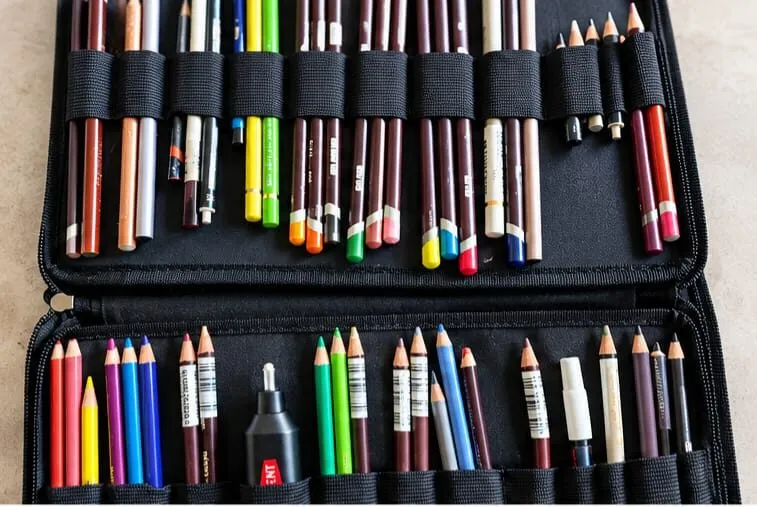
An open pencil case holding coloured pencils, pens and a small bottle.
How it feels and behaves
The core is soft, so colour transfers with light pressure and the marks look bold from the first layer. Blending is easy: one colour softens into the next with little effort, which makes smooth transitions achievable early on.
That has practical benefits for a beginner:
- Quick, encouraging results. Vibrant colour appears fast, which keeps motivation high.
- Visible pressure control. Light pressure gives pale tone, heavier pressure gives depth, so cause and effect are easy to see.
- Easy transitions. Gradients from light to dark, or from one hue to another, blend without harsh edges.
- Forgiving handling. Soft pencils cope with imperfect technique better than firm ones that punish heavy pressure with a filled tooth.
Like any soft pencil, the point dulls quickly, so expect to sharpen often. A good sharpener matters; see best pencil sharpeners for coloured pencils.
What you can learn on Chromaflow
Because it is so easy to read, Chromaflow is a good teacher. A few exercises make the most of it.
- Pressure ladders. Draw a strip and move from the lightest touch to firm pressure in even steps. You will see exactly how much tone one pencil can give.
- Two-colour blends. Overlap two neighbouring hues and let them mix, then reverse the order to see how layering order changes the result.
- Value strips. Build a tone from pale to dark using one colour, then check it in greyscale or with our value study tool.
- Small layered studies. A single fruit, a pastry or a simple object teaches light, mid and dark without overwhelming you.
Keep the early layers light and build slowly. That habit, more than any pencil brand, is what stops colours turning muddy. The full method is in how to layer coloured pencils, and how to blend coloured pencils covers the softening stage. For a structured first project, read coloured pencil drawing for beginners.
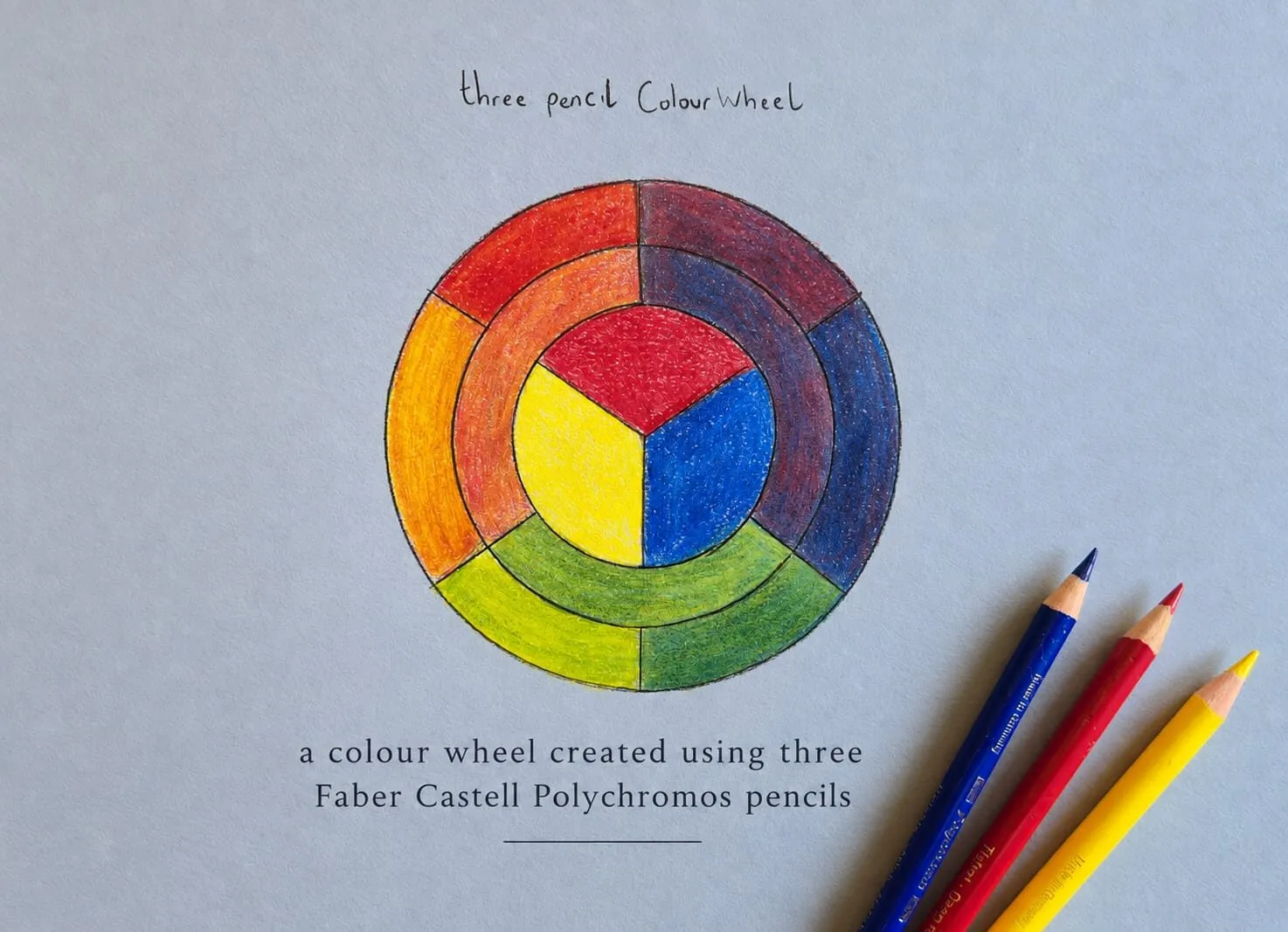
A hand-drawn colour wheel made with three Faber-Castell Polychromos pencils on blue-grey paper. Drawing by Michael Brace.
Who it suits
- Complete beginners who want a forgiving first set with vibrant colour.
- Returning artists who want to rebuild technique without investing in a premium set.
- Hobbyists who draw for enjoyment and value bright, easy results over archival permanence.
- Anyone testing the medium before deciding whether to move to a professional range.
For more beginner options, see best coloured pencils for beginners and best drawing supplies for beginners.
Limits to know about
Honest trade-offs build trust, so here they are.
- Not an artist-grade lightfast range. It is a learning tool. If you plan to sell or exhibit, check each colour’s published lightfastness information and consider a professional range for finished work. Coloured pencil lightfastness explained shows how to read ratings.
- Soft cores dull quickly. Fine detail needs frequent sharpening, and very small marks are easier with a firm pencil.
- Heavy layering has limits. Like other soft pencils, the tooth fills sooner than with firm oil-based pencils, so plan your layers.
- Colour choice depends on the set. Check the current range for the hues you need.
Paper pairings
Soft pencils work well on paper with moderate tooth.
| Paper type | What to expect |
|---|---|
| Smooth hot press | Very smooth blends; fills quickly, so keep pressure light |
| Mixed media, lightly textured | Good tooth for layering; a good all-round choice for learning |
| Toned or grey | Colours and highlights stand out against a midtone |
Start with our best paper for coloured pencils and, if you are buying your first pad, best drawing paper for beginners. The idea of drawing on a midtone is explained in why use grey paper for coloured pencil.
How it compares
Against Coloursoft. Both are soft and blend easily. Chromaflow is vibrant and beginner-friendly; Coloursoft is velvety and rich, leaning toward painterly effects. See Coloursoft vs Chromaflow and the Coloursoft review.
Against Prismacolor Premier. Another soft, creamy pencil Michael recommends for learning blending and soft shading. See the Prismacolor Premier review.
Against Goldfaber. Firmer, with a feel closer to Polychromos; see the Goldfaber review.
Buying advice
Sets come in small, mid and large sizes, and colour counts change, so check the current range. For a first set, small to mid is plenty: a limited palette teaches mixing better than a huge one, and our guide on how many coloured pencils you need explains why. Add a sharpener and a pad of suitable paper, and leave upgrades until you know what you enjoy drawing.
A sensible first project
A small, simple subject makes the best first test of a soft pencil. Choose something with clear light and shade, such as a pastry, a piece of fruit or a scone, and follow a steady routine.
- Sketch lightly in a pale colour rather than graphite, so the outline disappears into the colour later.
- Lay a pale base over the whole shape with the side of the point.
- Add the mid tones in related colours, letting them overlap so they blend on the paper.
- Place the darkest darks last, in the shadow areas, keeping the edges soft.
- Lift or add highlights at the end, leaving paper white or adding a pale layer where the light hits.
Step back every few minutes and squint. If the tones merge into one flat patch, your values are too close together, and the fix is usually a darker dark, not more colour. The lesson on coloured pencil drawing for beginners follows the same idea in more detail, and how to draw food realistically applies it to sweet subjects.
When to move on
There is no shame in outgrowing a learning set, and there is no rush either. Signs that you are ready for something different include wanting finer detail than a soft point allows, noticing that the paper fills up before the drawing is finished, or planning to sell work and needing published lightfastness ratings you can rely on. At that point, best coloured pencils and professional vs student coloured pencils explain the step up. Many artists keep a soft set like this for broad colour and studies even after they buy a professional range, because soft and firm pencils do different jobs.
The short version
Derwent Chromaflow is vibrant, soft and easy to blend, which makes it a sound first set for learning layering and colour transitions. It gives fast, encouraging results and forgives imperfect technique. Its limits are soft-core dulling, tooth that fills with heavy layering and a role as a learning tool rather than a professional lightfast range. Start here, learn the fundamentals, then step up when your work demands it.
Where to buy
Recommended products
Affiliate links. We may earn a small commission if you buy, at no extra cost to you. Why?
Pencils · Derwent
Derwent Chromaflow Pencils
Vibrant, smooth and forgiving - a friendly set for learning layering and blending.
Quick answers
Frequently asked questions
Is Derwent Chromaflow good for beginners?+
Yes. Chromaflow is vibrant, soft and easy to blend, which is exactly what a beginner needs to learn layering and colour transitions. The bold colour gives encouraging results quickly, and the soft feel makes pressure control easy to see. Check the current range for set sizes before you choose.
What is the difference between Chromaflow and Coloursoft?+
Both are soft and blend easily. Chromaflow is vibrant and beginner-friendly, made for learning technique. Coloursoft is velvety and rich, leaning toward painterly effects and expressive work. If you are starting out, Chromaflow is a natural first set; Coloursoft suits artists who want a richer, more painterly feel.
Are Chromaflow pencils lightfast enough to sell work?+
Chromaflow is a learning tool rather than a substitute for artist-grade lightfastness. If you plan to sell or exhibit, check the manufacturer's published lightfastness ratings for each colour you use, and consider a professional range for finished work. Our lightfastness guide explains how to read the ratings.
Are colored pencils and coloured pencils the same thing?+
Yes. Coloured is the UK spelling and colored is the US spelling of the same medium. Derwent Chromaflow pencils are the same product under either spelling, and the advice in this review applies whichever spelling you search with.