Coloured Pencils
Derwent Coloursoft vs Chromaflow
Derwent Coloursoft or Chromaflow? Coloured (colored) pencils compared for beginners, portraits and bold colour, with a clear verdict for each.
This guide contains affiliate links. If you buy through them we may earn a small commission at no cost to you. How this works.
Jump to recommended products
Key takeaways
- ◆Coloursoft is velvety and rich, loved for soft blending and painterly effects; Chromaflow is vibrant, soft and beginner-friendly.
- ◆For a first set and learning layering, Chromaflow is the friendlier choice; for soft, painterly work with rich colour, Coloursoft is the more expressive one.
- ◆For portraits, Coloursoft's soft blending suits skin and gentle transitions, while Chromaflow can carry a portrait once you know how to layer.
- ◆For bold, saturated colour, both deliver, and Chromaflow is described as vibrant by Michael.
- ◆Ranges, set sizes and prices change, so check the current range from Derwent before buying.
Derwent Coloursoft and Chromaflow are both soft, blendable coloured pencils - colored pencils in the US - and they are often placed side by side on the shelf. Deciding between them comes down to who you are as an artist right now: someone learning how layering and blending work, or someone who wants a rich, painterly feel for finished work.
This comparison sets out how each behaves, then gives a verdict for beginners, portraits and bold colour. It builds on our Derwent coloured pencils reviewed overview and belongs to the complete coloured pencil guide. We stick to well-established characteristics and Michael’s descriptions and point you to Derwent for current ranges and prices.
The quick verdict
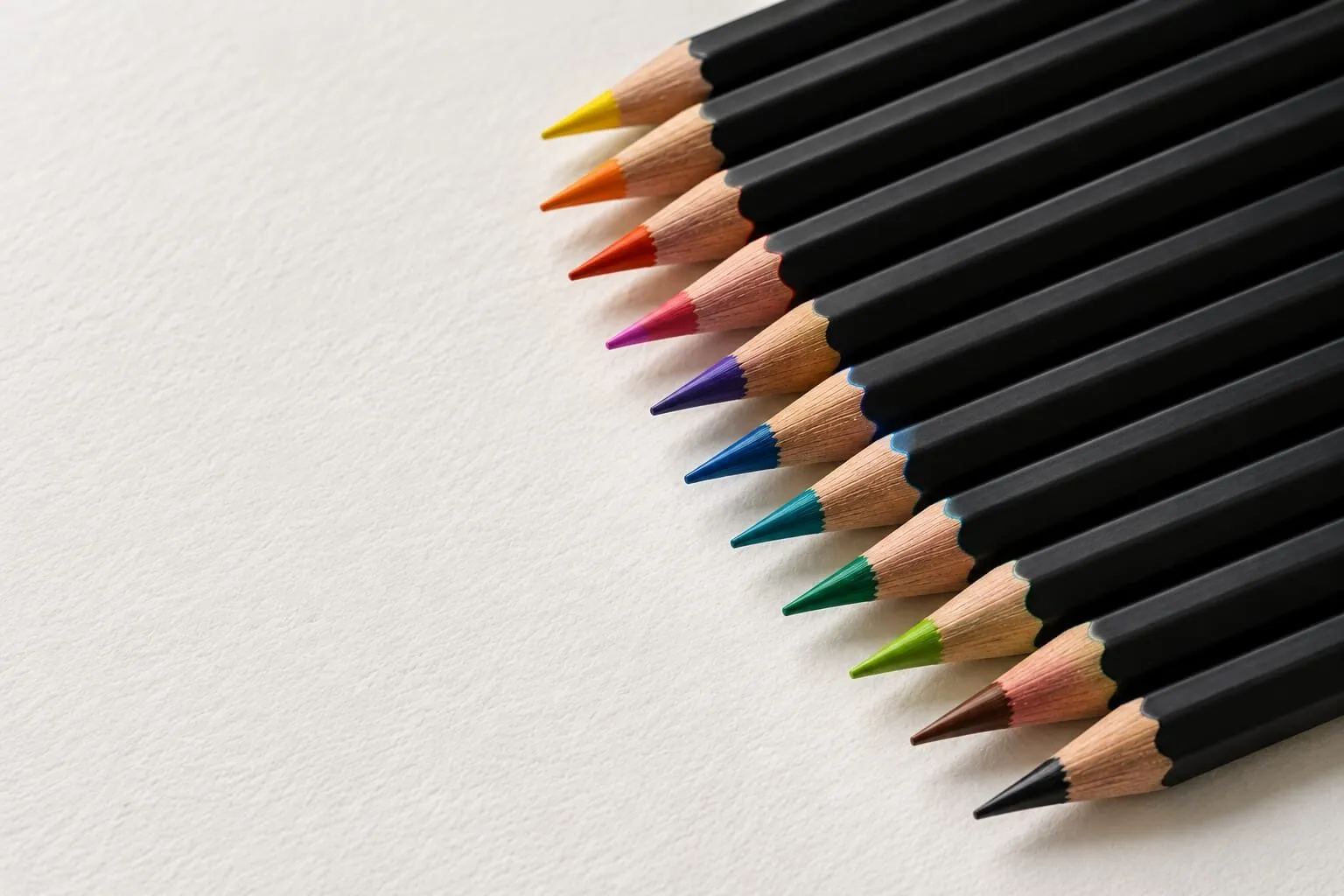
A row of sharpened coloured pencils fanned across white paper.
Side-by-side table
| Feature | Derwent Coloursoft | Derwent Chromaflow |
|---|---|---|
| Character | Velvety, rich | Vibrant, soft |
| Blending | Soft blending, painterly effects | Easy to blend |
| Best for | Painterly work, portraits, soft finishes | Learning layering and transitions |
| Beginner-friendly | Yes, with a little practice | Yes, its main strength |
| Bold colour | Rich | Vibrant |
| Detail | Medium, points dull with use | Medium, points dull with use |
| Colour range | Check the current range | Check the current range |
| Price level | Check current listings | Check current listings |
How they differ in character
Michael’s summary of the two is short and useful. Coloursoft is velvety and rich, great for soft blending and painterly effects. Chromaflow is vibrant and beginner-friendly, perfect for learning technique.
Think of Coloursoft as the pencil you reach for when you want a soft, luxurious finish, with colour that feels dense and smooth. Think of Chromaflow as the pencil that makes learning easy: bright, soft and forgiving while you find out how pressure, layers and blending interact.
Which is better for beginners?
Chromaflow. Michael places it first on his beginner list because it is vibrant, soft and easy to blend, which is exactly what a learner needs. When colour builds easily and transitions come without a fight, you spend your energy on understanding value and layering rather than fighting the pencil.
That said, a beginner who is drawn to soft, painterly work will not be badly served by Coloursoft either. It is friendly and rewarding, and if your goal is smooth, blended drawings from day one it is a fine choice. For a wider beginner shortlist that includes other brands, see best coloured pencils for beginners, and to learn the techniques, how to layer coloured pencils and how to blend coloured pencils.
Which is better for portraits?
Coloursoft has the edge for portraits in the way it handles: velvety, rich, with soft blending that suits skin, gentle shadows and subtle colour shifts. It is the pencil for artists who want a smooth, painterly finish.
Chromaflow can absolutely be used for portraits once you understand layering, and its vibrant colour is useful for warm undertones and reflected colour. If you are still learning the fundamentals, starting with Chromaflow and moving to Coloursoft, or another portrait-friendly range, is a reasonable path.
Neither is the top choice for the finest details such as eyelashes and individual hairs. Soft pencils dull quickly, so add a firmer pencil for those touches. Our shortlist of best coloured pencils for portraits and the guide to how to draw portraits in coloured pencil go further.
Which is better for bold colour?
Both. Chromaflow is described as vibrant, which makes it appealing for bright, saturated subjects and for learners who want colour that pops. Coloursoft is rich, so its colour has depth and density. If you want colour that feels immediate and cheerful, Chromaflow is a strong pick; if you want colour that feels deep and painterly, Coloursoft is the one.
Colour theory can also help any pencil look brighter. Michael made a swatch card on grey paper with Coloursoft, showing how pairing colours changes their brightness: black with deep red for a deeper black, white with cream for a brighter white, red with bright orange for a brilliant red, and bright lilac with yellow ochre for a bright gold.
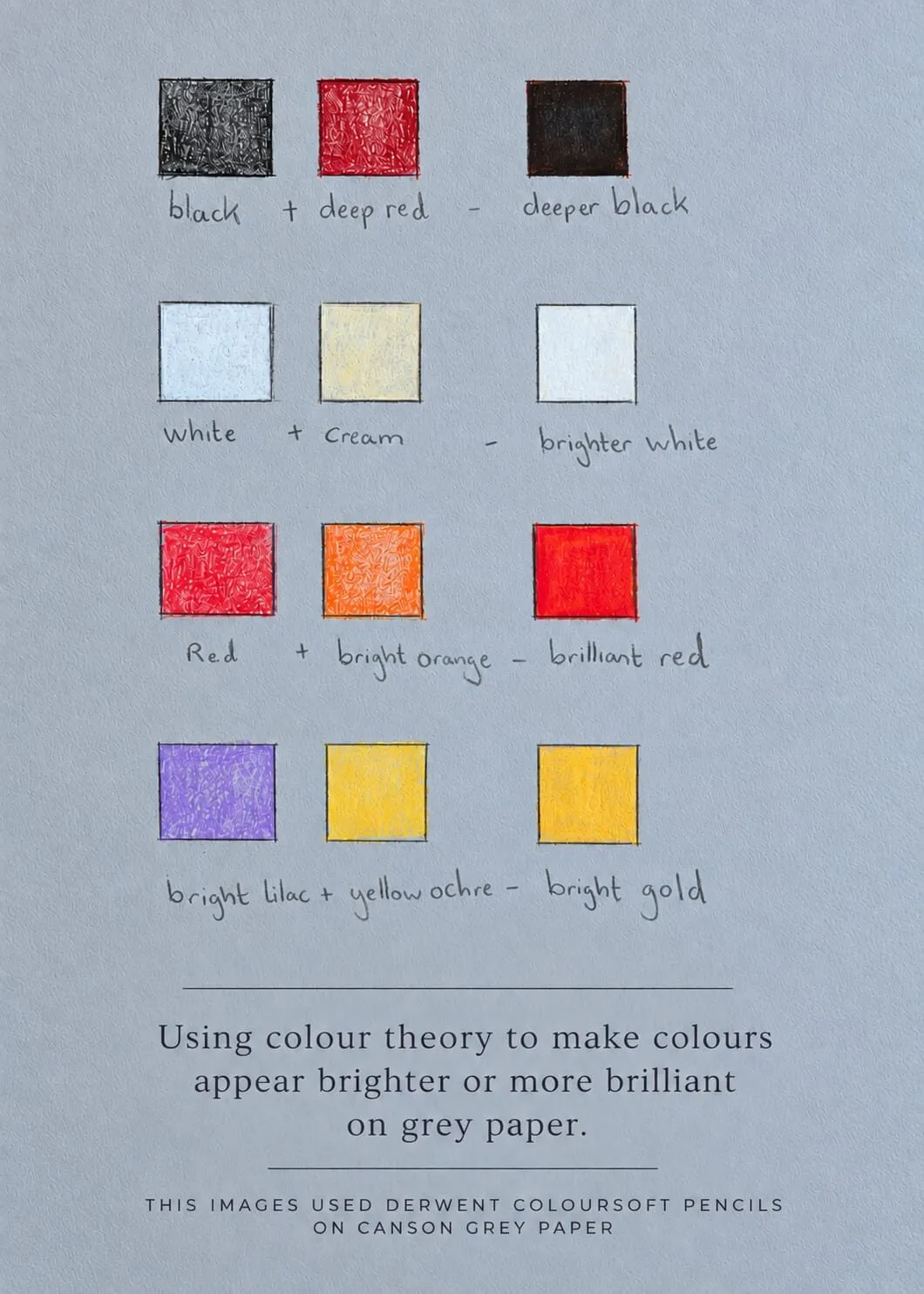
Michael’s Coloursoft swatch card on Canson grey paper: colour pairings that make colours look brighter.
To explore this idea further, read colour theory on grey paper, and use the colour scheme generator to plan a palette.
Layering, handling and paper
Both are soft, so the same handling advice applies. Start with light pressure and build gradually. Soft pencils fill the tooth of the paper quickly, so choose a paper with enough tooth and weight; our best paper for coloured pencils guide will help. Store soft pencils carefully, because a hard knock can crack the core inside the wood, and sharpen with a sharp blade.
We do not claim differences in breakage or bloom between the two beyond this general behaviour of soft pencils; check Derwent’s guidance and your own experience.
A simple exercise to compare them
If you can get a few pencils of each, draw a small sphere in one colour with each range, on the same paper. First, shade it from light to dark with a single pencil and light pressure. Then blend the transition by adding a second, lighter colour over the top. Finally, add a cast shadow and a small highlight.
Notice how easily each pencil builds a smooth gradient, how quickly the paper stops accepting more colour, and how each colour looks next to the paper. That ten-minute test tells you more about which suits your hand than any description. If you enjoy the gradient from one and find the other fussy, you have your answer.
Mixing Derwent ranges
Because both are Derwent soft pencils, many artists build a kit from more than one range. A beginner set of Chromaflow can be topped up with a few Coloursoft pencils in colours the first set lacks, such as a rich brown or a deep red. Check the current range for overlaps before buying, and test each new pencil against your existing colours on a scrap of your chosen paper.
Be patient with the first results. Soft pencils reward a light touch, and most disappointment with them comes from pressing too hard too early. Give either range a few drawings before you judge it.
Which one should you buy first?
| If you are… | Start with | Why |
|---|---|---|
| A complete beginner | Chromaflow | Vibrant, soft, easy to blend for learning |
| Learning but drawn to soft, painterly work | Coloursoft | Velvety, rich blending |
| Drawing portraits | Coloursoft (with a firm pencil for detail) | Soft blending for skin |
| After bold, bright colour | Chromaflow | Vibrant colour |
| Moving beyond beginner sets | Coloursoft, then consider professional ranges | Richer finish |
Recommendation by budget and experience
- Lower budget, first set: a smaller Chromaflow set gives you a friendly way to learn without a big outlay.
- Medium budget: Coloursoft for a richer, painterly finish, especially if you like smooth blending.
- Higher budget or serious realism: consider Derwent’s premium range or other professional pencils; read Derwent coloured pencils reviewed and professional versus student coloured pencils.
Set sizes and contents change, so check the current range before you decide.
The short version
Chromaflow is the vibrant, easy-to-blend pencil that makes learning enjoyable. Coloursoft is the velvety, rich pencil for soft blending and painterly effects. Beginners should lean toward Chromaflow, portrait artists toward Coloursoft, and anyone after bold colour can happily use either. Add a firmer pencil for fine detail, and check current ranges before buying.
Where to buy
Recommended products
Affiliate links. We may earn a small commission if you buy, at no extra cost to you. Why?
Pencils · Derwent
Derwent Coloursoft Pencils
Soft, velvety and richly pigmented - excellent for painterly blending and bold colour.
Pencils · Derwent
Derwent Chromaflow Pencils
Vibrant, smooth and forgiving - a friendly set for learning layering and blending.
Quick answers
Frequently asked questions
Which is better for beginners, Coloursoft or Chromaflow?+
Chromaflow is generally the better first choice. Michael describes it as vibrant, soft and easy to blend, perfect for learning layering and colour transitions. Coloursoft is also friendly, but it is better appreciated once you want a velvety, painterly finish and richer blending.
Are Coloursoft and Chromaflow both soft pencils?+
Both are soft, blendable pencils by Derwent. Coloursoft is described as velvety and rich, while Chromaflow is vibrant and easy to blend. They are closer to each other than to firm, oil-based pencils, which suit detail more than soft blending.
Are colored pencils and coloured pencils the same?+
Yes. Colored is the US spelling and coloured the UK spelling of the same product. Derwent sells Coloursoft and Chromaflow under their brand names worldwide, so you will see either spelling in shops and search results for these ranges.
Can I use Coloursoft and Chromaflow together?+
Yes, both are Derwent soft pencils and can be layered in the same drawing. Test the combination on scrap paper first, as every pencil has its own feel. A common approach is to use one range for the base and the other for accents, checking the result as you go.