The Art World
How to Build an Art Portfolio
Curate a cohesive drawing portfolio: choose work, build series, write your statement and bio, set up a website and submit to galleries and competitions.
Key takeaways
- ◆A portfolio is a short, deliberate selection of your strongest work, not an archive of everything you have made.
- ◆Consistency of subject, technique and quality shows a gallery or juror that you can produce more work like it.
- ◆Series and clear groupings make a portfolio easier to understand than a mix of unrelated pieces.
- ◆A short artist statement, a plain bio and a simple website matter more than elaborate design.
- ◆Process images, such as a drawing shown from layout to completion, build trust and answer the question every viewer has.
Most artists have too much work and not enough of a portfolio. A folder of every drawing you have made, from the first attempt to last month’s finished piece, tells a viewer nothing about who you are. A portfolio is different: a short, deliberate selection that shows a clear voice and proves you can deliver it again.
This guide covers how to curate a body of work, build series and consistency, present the portfolio, write an artist statement and bio, set up a simple website, document your process and submit to galleries and competitions. It works alongside the rest of our art world guides, because good photography, honest pricing and the right competitions all depend on a coherent portfolio.
A strong portfolio grows out of regular practice, so lean on the how to draw hub and the 30-day drawing challenge to build series. Colored pencil artists can also explore the beginner’s guide to coloured pencil drawing for technique ideas.
What a portfolio is for
Different audiences use a portfolio differently, but they all want the same thing: a quick, reliable sense of what you do and how well.
- Competition jurors compare hundreds of entries and look for strength and coherence in a small number of images.
- Galleries and curators want to know whether you have a consistent body of work that can be shown, sold and repeated.
- Buyers and commissioners want evidence that you can deliver the style, subject and quality they are looking for.
- You need a portfolio to see your own work clearly and decide what to make next.
A portfolio does not need to show everything you can do. It should show what you do best.
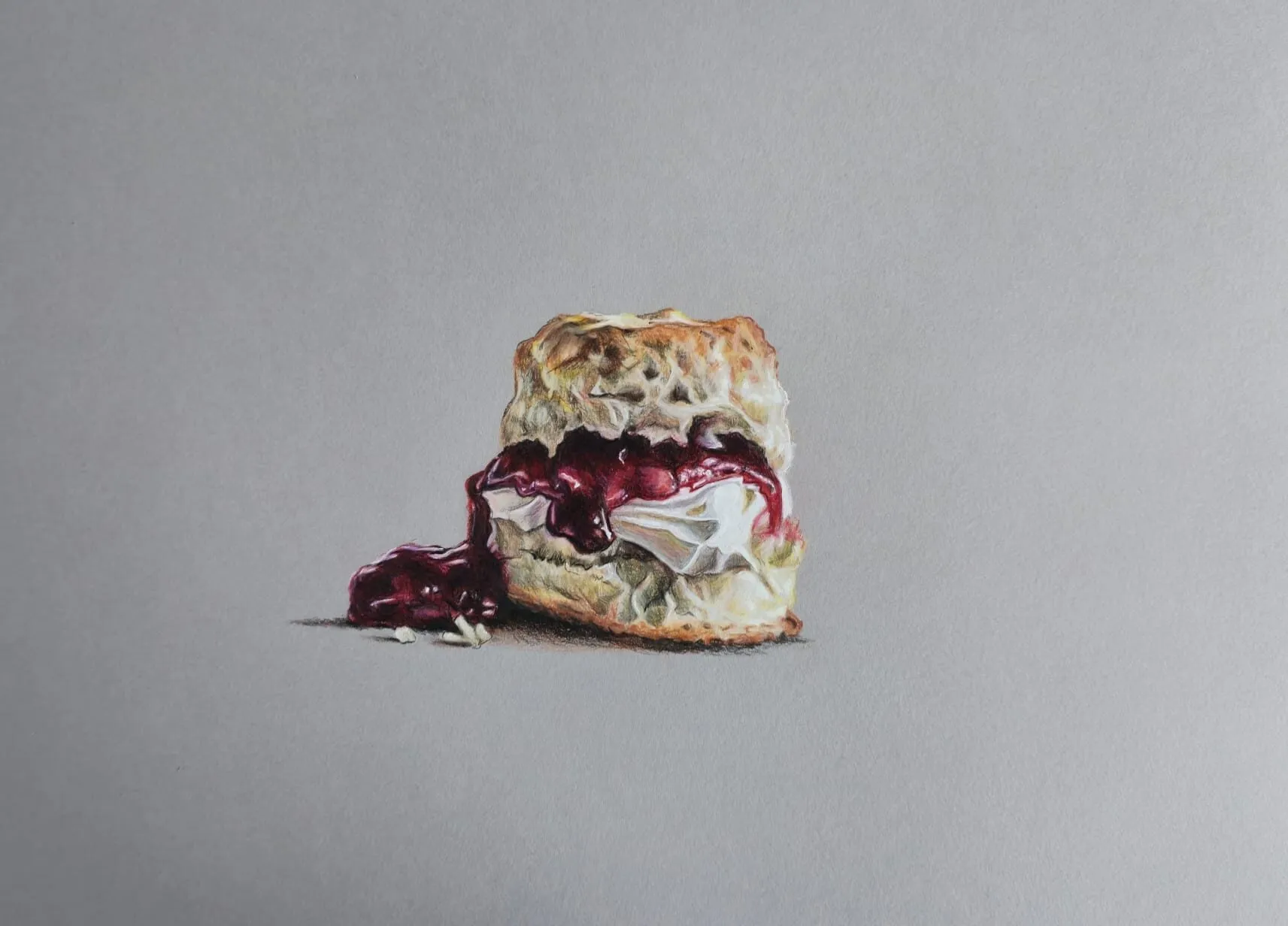
A scone with cream and jam drawn in coloured pencil on grey paper. Drawing by Michael Brace.
Curate: select, cut and sequence
Choose your strongest work
Start with a long list of candidates, then cut. Judge each piece against three questions:
- Is it among your best technically? Skilled handling, convincing form and clean finish.
- Does it belong with the others? Does it share a subject, palette, scale or approach?
- Would I be happy to be known for it? If not, leave it out.
Be strict. One weak piece can lower a viewer’s opinion of the rest. If a piece is good but different from the rest, save it for a separate group.
Let time help
Work made in the last year or two usually represents you better than older work, unless an earlier piece is exceptionally strong. Compare old and new pieces of similar subjects. Michael’s drawing-skills progress figure, which shows two drawings of the same subject made at different times, is a reminder that improvement is often clear across a longer span, and that a portfolio should reflect where you are now.
Sequence it
Order matters. Lead with a strong piece, end with a strong piece, and group similar work together so the eye can settle. Avoid jarring jumps in scale, palette or subject unless it is deliberate. On a website, the first row of images decides whether a visitor keeps scrolling.
Series and consistency
Consistency is the single feature curators and jurors mention most. It does not mean making the same drawing repeatedly. It means the work clearly comes from one artist, with a recognisable approach.
Consistency can be built through:
- Subject: a theme such as animals, portraits, food, reflective objects or landscapes.
- Technique: a way of layering, blending or building tone that shows across the pieces.
- Palette and paper: a limited range of colours or a preferred surface, for example grey paper for glossy subjects. Our guides to why grey paper works for coloured pencil and limited palette drawing explain why such choices give a body of work cohesion.
- Scale and format: works of a similar size and orientation that hang well together.
- Presentation: matching mounts and frames.
Working in series
A series is a group of works with a shared idea, treated with a shared approach, and it is an excellent way to develop a portfolio. Five drawings of reflective objects, three horse portraits in winter light or a set of desserts on grey paper each tell a viewer more than five unrelated pieces do. A series also gives you a clear plan for what to make next, which helps if you are working towards a competition or an exhibition.
Present the work
Photography first
A portfolio is only as good as its photographs. Use even light, a parallel camera and accurate colour, and keep a full-size master file for each piece. Our guide to photographing your drawings explains the method and the file versions you will need for web, competitions and print.
Consistent formatting
Present images in a consistent way: similar cropping, similar background, similar image sizes. Include a caption for each piece: title, medium, paper, size and year. Where relevant, add the price or “sold”. Use the same titles across your website, competition entries and price lists.
Print and PDF versions
Some galleries and open calls ask for a PDF portfolio. Build a clean version with a title page, a short statement, a selection of images with captions, a brief bio and contact details. Keep the file size reasonable and follow any stated length. If you present a physical portfolio at an interview or portfolio review, use a simple folder or box with clean prints or original drawings protected by tissue. Original drawings should be stored and carried carefully, and framing and storage advice is in how to frame and mount a drawing.
Artist statement and bio
Artist statement
An artist statement is a short piece of writing that explains what you make and why. It should be plain, specific and honest.
- Say what you make. For example, “I draw in coloured pencil on grey paper, focusing on reflective and glossy subjects.”
- Say how you make it. Media, process and any distinctive method.
- Say why. What draws you to your subjects, in your own words.
- Keep it short. A few sentences or a brief paragraph is usually enough, unless an application asks for more.
- Avoid jargon and inflated claims. Viewers trust clear, modest writing more than grand language.
Read it aloud. If it does not sound like you, rewrite it.
Bio
The bio is a short factual summary in the third person. Include where you are based, your medium and subject, relevant training, and verified achievements such as exhibitions, publications and competition results. Only include things you can verify. As an example of the format, Michael’s credits include a shortlisting for the Derwent Art Prize 2026 and the British Art Prize 2025, a shortlisting for the CCA Galleries Emerging Artist Award and a longlisting for the Visual Arts Open 2025. List real results precisely, and be exact about “shortlisted”, “longlisted” and “exhibited”. Prepare a short version of about fifty words and a longer version for when more space is available.
Website basics
A simple website is the most flexible way to show a portfolio, and it is often the first place a curator or buyer looks you up.
- Keep it clean. Neutral background, large images, easy navigation.
- Include the essentials: a portfolio or gallery page, an about page with statement and bio, contact details and, if you sell, a shop or enquiry route.
- Organise by series rather than a single endless page.
- Use good file sizes. Images should be sharp but load quickly, so save web versions at appropriate size.
- Caption everything with title, medium, size and year.
- Make it mobile friendly, because many visitors will see it on a phone.
- Keep it current. Remove weaker or outdated pieces as your work improves.
- Use your name consistently so you can be found, and keep social media profiles aligned.
Do not let the website become a project that delays showing your work. A modest, well-photographed site beats an elaborate one that never launches.
Document your process
Finished drawings show the result. Process images show the skill. A sequence of a drawing from layout to completion answers the question every viewer has, which is how it was made, and it demonstrates that the work is genuinely yours.
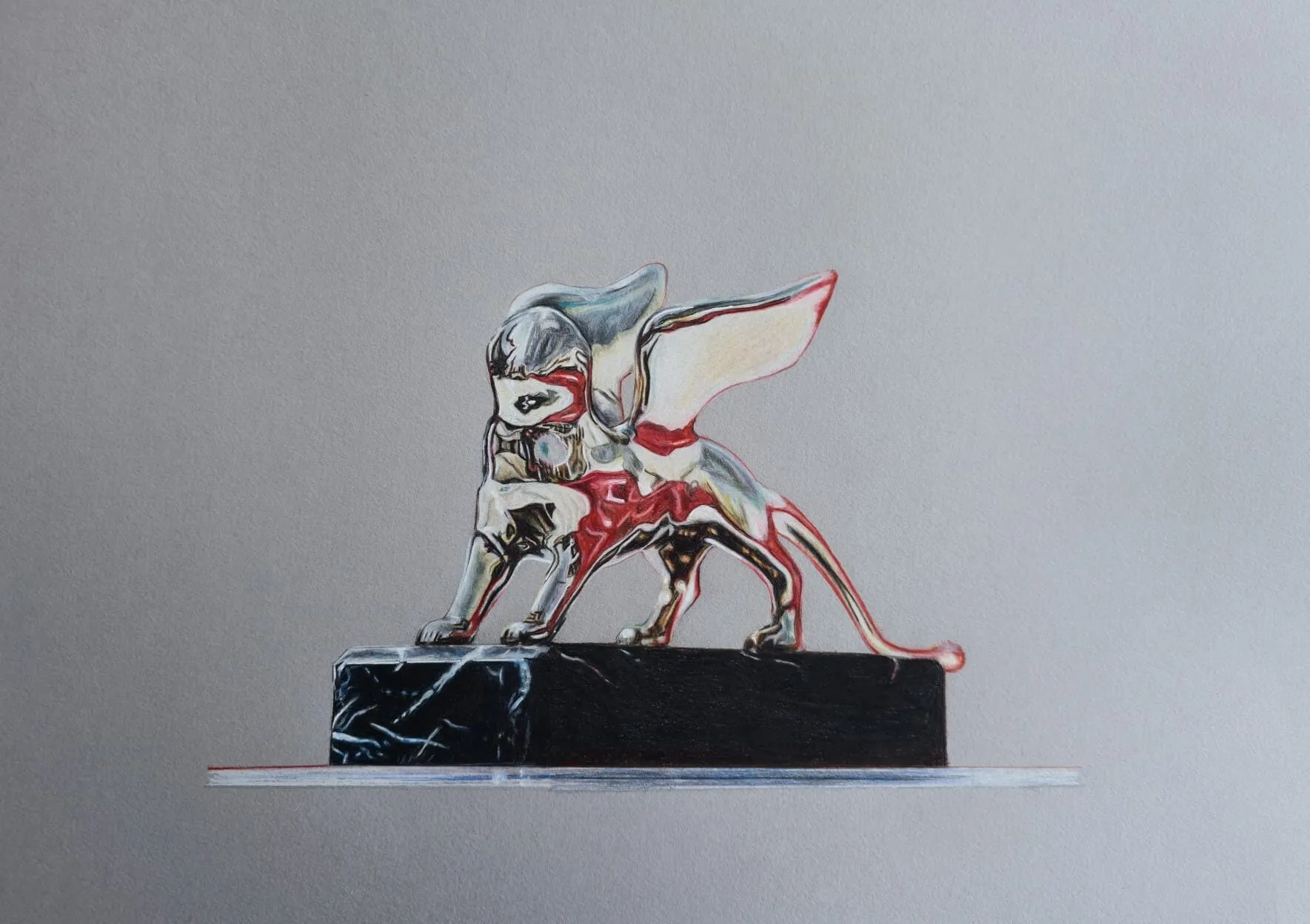
Michael’s progress figures are a good example: a four-stage image of a figure drawing, built from the top down with colour added in layers, shows the reader the whole journey in a single picture. Others show a chocolate dessert building shine through layering, a footballer moving from pencil layout to completion and a silver trophy developing on grey paper.
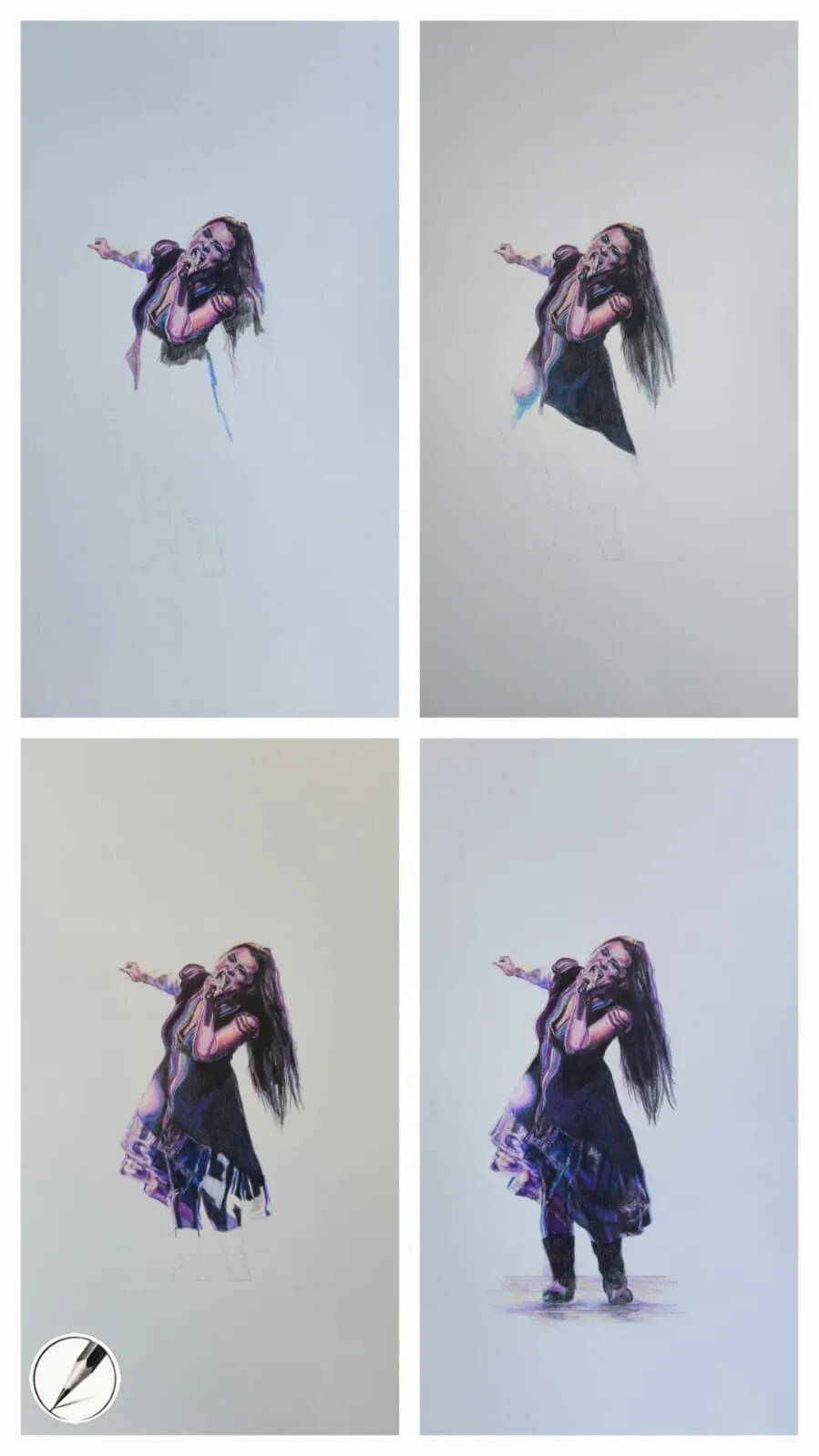
A progress figure shows layout, base colour and final detail in one image, which explains the method and builds trust in the finished piece.
To document your own process:
- Photograph at set stages: layout, base tones, mid-stage and final.
- Keep the same position and light, so the images line up.
- Label the stages clearly.
- Combine them into a single graphic or a short sequence for your website and social media.
- Add a caption with paper, materials and any key decisions.
Process images also help with competitions that ask for supporting material, and they give your website and social media something to say beyond “new piece”. If you want to understand what such stages involve, how a realistic drawing comes together explains each one.
Submit to galleries and competitions
Competitions
A strong portfolio makes competition entry far easier, because you already have selected images, statements and a bio. Start with the best drawing competitions, choose those that suit your medium and stage, and follow the process in how to enter an art competition. Choose the piece or pieces that best fit each competition, not the same set every time.
Galleries and open calls
When approaching a gallery, do your research first. Look at the artists they show, their style and their submission policy. Follow their instructions exactly, which may specify a form, a number of images or a PDF. Send a short, polite message with a link to your website, a few carefully chosen images, a brief statement and your bio. Do not send unsolicited large files or repeated follow-ups. If a gallery does not respond, move on and try others, and do not take silence personally.
Be ready to discuss pricing. Know your prices, and be aware that galleries usually take a commission on sales. Our guide to how to price your drawings helps you set prices you can defend.
Keep learning from other artists
It helps to see how experienced draughtsmen present and sustain a body of work. Visiting collections, as suggested in our guide to museums and galleries for drawings, shows what has lasted and why.
The short version
Select fewer, stronger pieces, group them into series with a consistent voice, photograph them properly and present them with clear captions. Write a short, plain statement and a factual bio, build a simple website, and show your process. Then use the portfolio to enter competitions and approach galleries, tailoring each submission to the audience. The art world pillar links to every step.
Quick answers
Frequently asked questions
How many pieces should be in an art portfolio?+
Fewer than you think. A tight selection of roughly ten to twenty of your best, most consistent pieces is enough for most purposes, and submission guidelines often set limits. Quality and coherence matter more than volume. Always follow any specific instructions from a gallery or competition.
What should an artist statement include?+
A short, plain description of what you make, how you make it and what drives your subject choices. Keep it to a few sentences or a short paragraph, avoid jargon and be accurate about media. It should sound like you and match the work in your portfolio.
Do I need a website to be taken seriously?+
It is not strictly required, but a simple website is the most useful way to present a portfolio. It gives galleries, buyers and jurors somewhere to look you up. Keep it clean, with good images, a short bio, contact details and up-to-date work.
How do I show my drawing process?+
Photograph the drawing at consistent stages, from layout to finish, in the same light and position, then present them side by side or in sequence. A short caption helps. Process images build trust, show technique and give viewers a reason to look closely at the final piece.