The Art World
How to Enter an Art Competition
Choose the right competition, read the rules, prepare images, statements and framing, handle rejection and avoid pay-to-play schemes.
Key takeaways
- ◆Choose competitions by medium, stage and what the entry gives you, not by prestige alone.
- ◆Read the full rules at least a fortnight before the deadline: size, framing, eligibility and image requirements decide many entries.
- ◆Judging usually starts from your photograph, so accurate, well-cropped images are the most important part of an entry.
- ◆Keep titles, statements and pricing simple and consistent, and understand insurance and shipping before work is selected.
- ◆Track every entry and treat rejection as normal: most artists are declined far more often than they are accepted.
Most rejected competition entries are not rejected because the drawing is poor. They fall over on something avoidable: a dull photograph, work outside the size limit, a mismatch with the competition’s focus, or a title and statement that say nothing. The good news is that entering is a skill, and every part of it can be practised.
This guide takes you from choosing a competition through to handling the result. It covers reading the rules, selecting and preparing images, writing a short statement, thinking about pricing and insurance, framing, tracking entries and avoiding pay-to-play traps. It stays general on money and rules because every competition sets its own, so always confirm details on the official website. For ideas on where to enter, see the best drawing competitions, and for the wider picture start at the art world pillar.
Before you submit, make sure the piece is photographed well and framed for the rules. Our how to draw lessons can help you build entries, and colored pencil artists should double check that the medium is accepted. For sizing and frames, the paper sizes pages list common formats.
1. Choose the right competition
Prestige is a poor filter. A famous competition that rarely selects your kind of work costs a fee and returns nothing. Ask instead:
- Does it accept your medium? Coloured pencil and graphite are natural fits for some drawing prizes and marginal in others. Look at recent winners, shortlisted work and any exhibition images.
- Does your work fit its taste? Some competitions lean towards photorealism, others towards contemporary, conceptual or experimental drawing.
- What does an entry give you? Exhibition, publication, feedback, mentoring, sales opportunities and CV credit are different outcomes. Decide which you need this year.
- Is your stage right? An accessible competition with a strong entry builds a credential you can cite later. Entering only the most famous prizes can leave you with nothing to show for a year.
- Can you afford the full cost? Count the fee, framing, shipping, insurance and your time if work is selected.
A balanced plan is one competition slightly below your ambition, one at your level and one stretch. If you are new, our list highlights approachable options, including the Visual Arts Open and the British Art Prize.
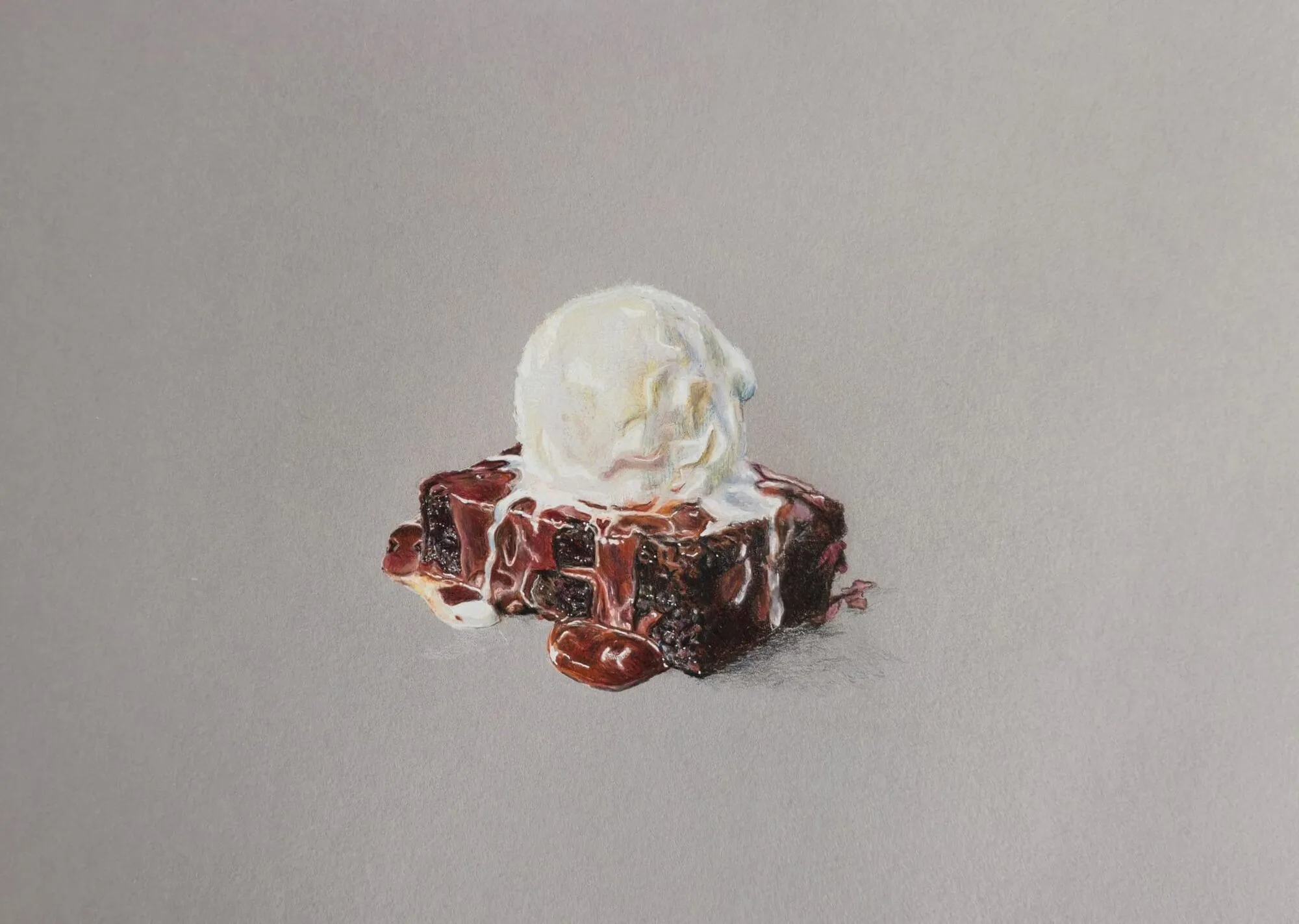
A brownie with ice cream and sauce drawn in coloured pencil on grey paper. Drawing by Michael Brace.
2. Read the rules early and properly
Read the full terms, not the summary. Do it at least a couple of weeks before the deadline so there is time to fix problems. Look for:
- Eligibility. Who can enter, whether age, location or career stage restricts you, and whether work must be recent or previously unexhibited.
- Medium and category. Whether your medium is accepted, and how “drawing” is defined.
- Size and format limits. Maximum dimensions of the artwork and, separately, of the framed piece if selected.
- Image requirements. File type, dimensions, number of images, and whether the artwork’s edges or frame may be shown.
- Originality and rights. Whether reference material must be your own, and what you grant the organiser, such as reproduction for catalogues or promotion.
- Selection stages. Many competitions judge from images first, then ask selected artists to deliver the physical work.
- Sales and commission. Whether work is offered for sale and what percentage, if any, the organiser takes.
Do not assume anything from a previous year. Categories, prices, limits and rights change, and an old memory of the rules is the classic cause of disqualification. If something is unclear, email the organiser and keep the reply.
3. Select the right piece or pieces
Some competitions take a single image; others take several. In either case, pick for impact at small size, because jurors view many entries in a short time.
- Choose your strongest, most finished drawing, not your most recent or your favourite subject.
- Prefer clear focal points. A strong value structure reads well on a screen. If in doubt, check it with the value study tool to see whether the light and dark pattern holds up in greyscale.
- Match the competition. A meticulous coloured pencil realist has a stronger chance with a competition known for skilled technical drawing than with one leaning towards conceptual work.
- Submit a coherent set if several images are allowed. Two or three pieces that clearly come from the same artist beat five unrelated ones. Building an art portfolio explains how to judge consistency.
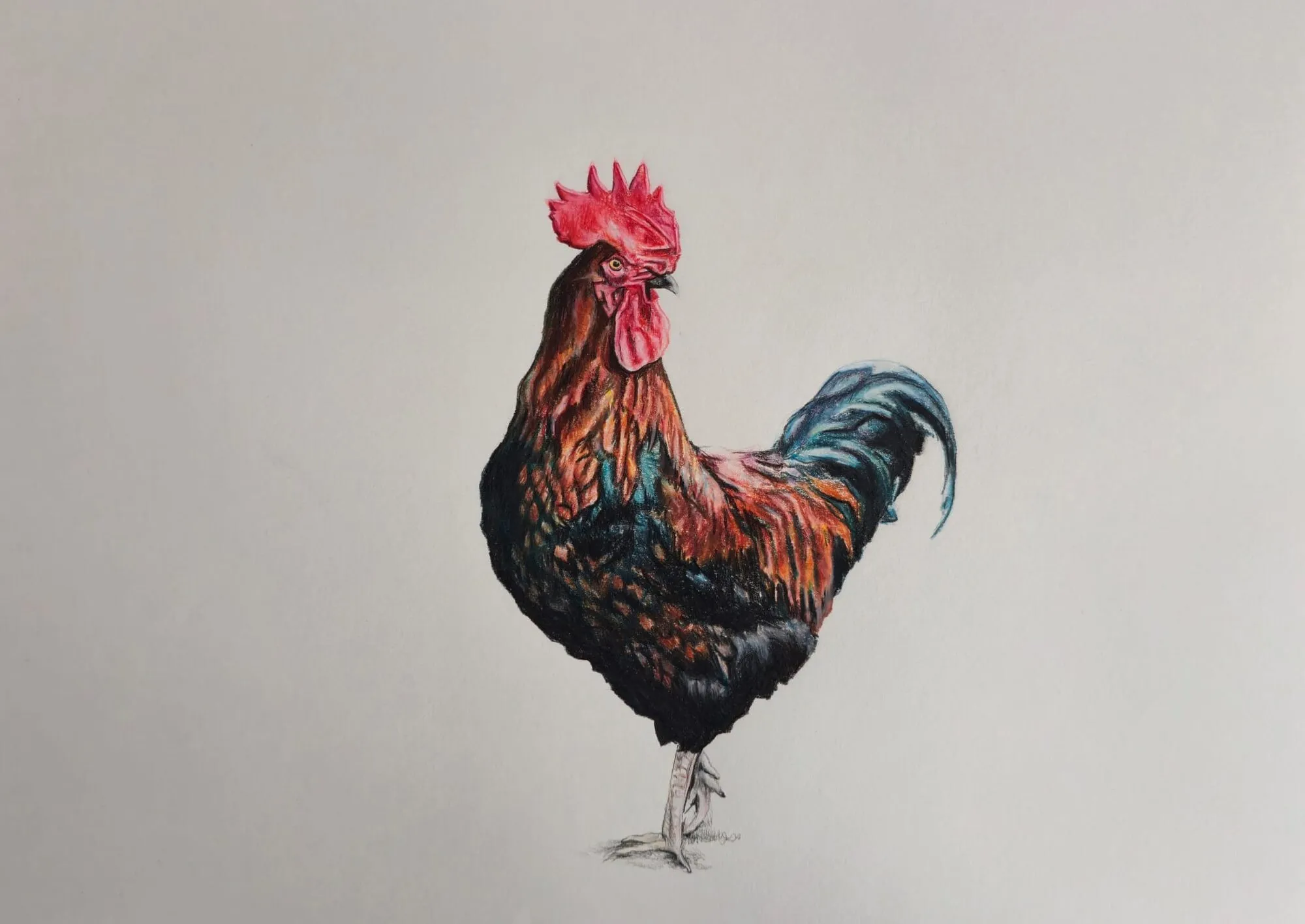
A rooster drawn in coloured pencil. Drawing by Michael Brace.
4. Prepare your images
For many competitions, the image is the entry. Jurors decide whether to look further within seconds, and a flat, tinted or glary photograph can sink an excellent drawing.
- Use even, diffuse light and keep the camera parallel to the sheet.
- Control glare on graphite and burnished coloured pencil by adjusting the angle of your lights.
- Check colour against the original and adjust white balance if needed.
- Crop tightly to the artwork unless the rules ask for the mount or frame to show.
- Save files in the format and size the entry asks for, with a clear file name.
Our full guide to photographing your drawings covers each of these in detail, including file sizes and formats for competitions, web and print. Take the photographs before framing, and keep a clean master file you can resize for other uses.
5. Title, statement and description
Most entries ask for a title and often a short statement or description.
- Titles: keep them short, specific and in keeping with the work. Avoid “Untitled” if the competition uses the title in the catalogue, and avoid long explanations. Use the same title everywhere, including on the back of the work.
- Statements: write two to four plain sentences about what the drawing is, how it was made and why you made it. State the medium and paper accurately, for example “coloured pencil on grey paper”. Do not oversell, and avoid jargon.
- Bio: if asked, use a short third-person paragraph listing relevant education and results. Only include results you can verify. Michael, for example, has been shortlisted for the Derwent Art Prize 2026 and the British Art Prize 2025, shortlisted for the CCA Galleries Emerging Artist Award, and longlisted for the Visual Arts Open 2025. List real credits in the same plain way.
Keep the wording consistent with your website and portfolio so a curator who searches for you sees one artist, not several.
6. Pricing, insurance and sales basics
Many competitions ask you to state a sale price or mark a piece as not for sale. Others take a commission if work sells. Do not improvise.
- Decide your price before you enter, using a method you can explain. Our guide to pricing your drawings sets one out.
- Keep the price consistent with what you charge elsewhere. A large discrepancy between the competition listing and your website looks unprofessional.
- Understand commission and terms before agreeing to list work for sale.
- Ask about insurance. Find out whether the organiser insures work while it is with them, at the venue and in transit, and what value they cover. If you are responsible for cover, confirm what your own policy includes.
- Plan shipping. Work that travels needs proper packaging, and you should know who pays for delivery and return.
If the competition states that insurance is not provided, you may decide whether to cover the work yourself or accept the risk. Ask early rather than after selection.
7. Framing and presentation requirements
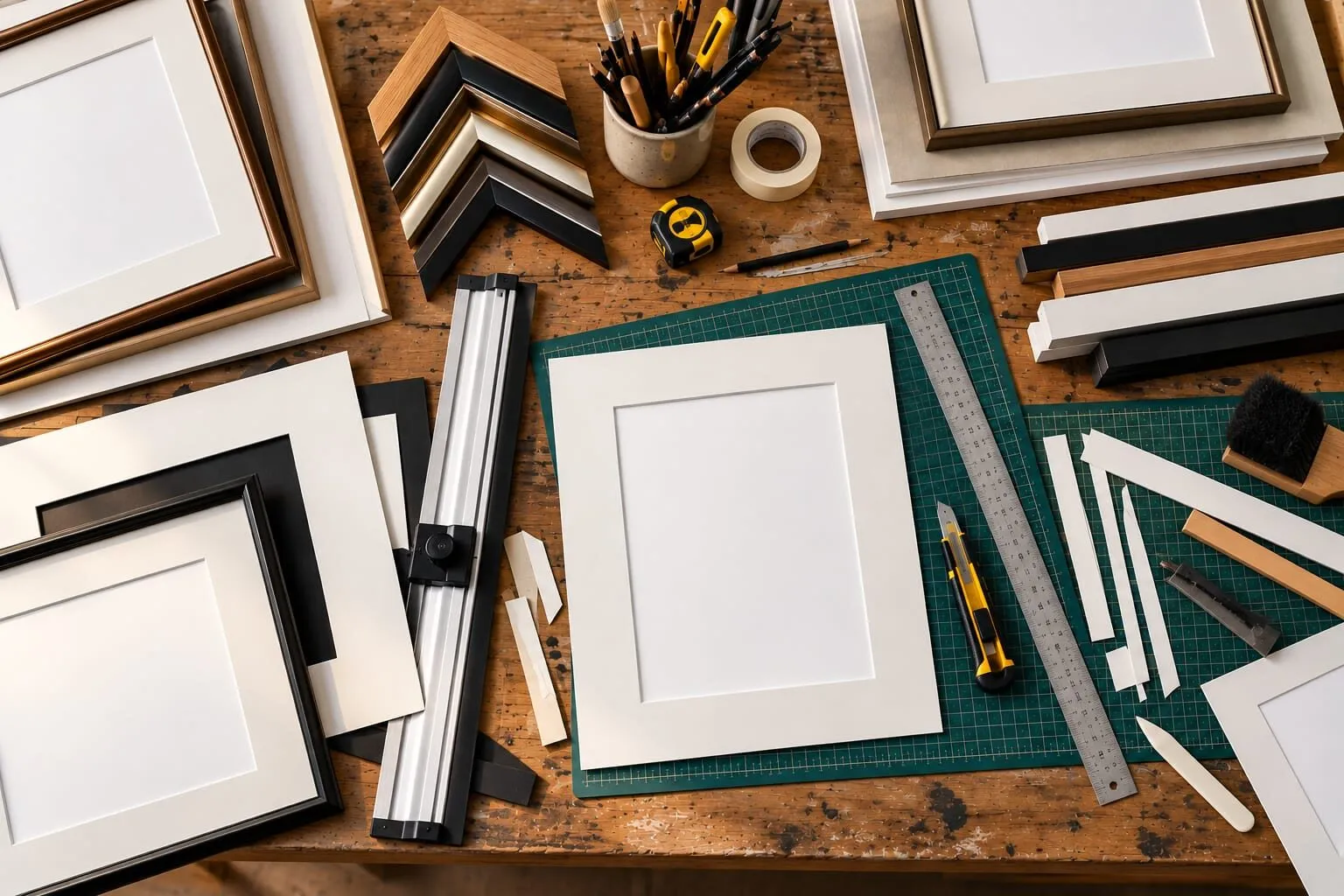
Selected work usually has to arrive ready to hang, and the requirements can be strict: a plain frame, mount board rules, glazing type, fixings, or an unframed submission with the organiser handling display. Read the requirements before you spend money. Framing to a competition standard is usually neat and simple, which suits a drawing well.
Our guide to framing and mounting a drawing explains mounts, apertures, acid-free materials and glazing, and the frame and mount calculator helps you work out sizes. Plan framing time into your schedule: a good framer or your own careful assembly should not be rushed in the final week.
8. Track every entry
A simple spreadsheet is enough. One row per entry, with:
- Competition name and official link
- Deadline and notification date
- Work entered, title and image file used
- Fee paid and any other costs
- Outcome, feedback and next action
Tracking prevents double entries, missed deadlines and repeated mistakes, and it shows you which competitions actually suit your work. It also keeps the facts you need for your CV. Record outcomes exactly: “shortlisted”, “longlisted”, “exhibited” and “selected” mean different things, and precision builds trust.
9. Handle rejection well
Most artists are rejected far more often than they are accepted. Juried selections depend on judges’ taste, the quality of the rest of the entries, the theme of the exhibition and sometimes plain space. Rejection rarely means the drawing is bad.
- Log it and move on within a day or two.
- Check the practical things. Was the photograph accurate? Was the selection right for the competition? Did the piece fit the brief?
- Use any feedback, but do not over-read a form message.
- Enter again where the fit is good, with a different or improved piece if appropriate.
- Keep making work. Your next drawing is worth more than a long post-mortem.
10. Avoid pay-to-play traps
A legitimate competition charges an entry fee to fund judging, administration and exhibition. A pay-to-play scheme profits from the artists, not from the art. Warning signs include:
- Anonymous or vague organisers with no named judges, address or history.
- Very high acceptance rates. If nearly everyone is “selected” or “awarded”, the selection is not meaningful.
- Pressure to buy a catalogue, a certificate, a listing or a package to accept your “prize”.
- Unrealistic promises of gallery representation, guaranteed sales or fame.
- Exhibitions with no real venue, or ones that appear only online with no verifiable audience.
- Rights grabs in the terms, such as broad licences over your images.
- No independent record. Search for the organiser’s name plus “reviews”, check past exhibitions and look for coverage from a credible source.
Well-established competitions publish judges, venues and past winners. When in doubt, check the organiser’s history and speak to artists who have entered. The best drawing competitions list sticks to respected, established options.
The short version
Pick competitions that fit your medium and stage, read every rule early, photograph the work properly, keep text short and honest, price consistently, understand insurance and framing before you commit, and track everything. Expect rejection, learn from it, and never pay for a prize that does not test your work. If you want a starting list, begin with the best drawing competitions.
Quick answers
Frequently asked questions
How do I choose which art competition to enter?+
Match your medium and career stage to the competition's focus, read recent winners and shortlisted work, and check what an entry actually gives you: exhibition, publication, feedback or sales. Work out the full cost including framing and shipping. Confirm current rules on the official website.
What images do I need for an art competition entry?+
Usually one or more high-quality photographs of the finished work, sometimes with a detail shot. Requirements for file type, size and resolution differ, so follow the entry instructions exactly. Use even lighting, a straight-on camera angle and accurate colour, with no frame, table or background visible.
How do I recognise a pay-to-play art competition?+
Warning signs include vague or anonymous organisers, prizes that require you to buy a package, near-universal acceptance, pressure to purchase a catalogue or listing, and no named judges. A genuine competition is clear about its judges, venue and process. Check independent reviews and past exhibitions.
How should I handle a rejection?+
Treat it as information, not a verdict. Most juried competitions accept only a small share of entries and jurors disagree with each other. Log the outcome, review your images and selection, and enter again where it suits. If feedback is offered, use it.