The Art World
Best Drawing Competitions to Enter
Ten respected drawing competitions and open exhibitions that suit graphite and colored pencil artists, and how to choose by medium, career stage and goal.
Key takeaways
- ◆The Derwent Art Prize and the British Art Prize are the most natural first targets for coloured pencil and graphite artists.
- ◆Trinity Buoy Wharf, INDA and the Royal Academy Summer Exhibition suit artists whose drawing leans contemporary or conceptual.
- ◆The Visual Arts Open and the CCA Emerging Artist Award are approachable stepping stones for newer artists.
- ◆Match the competition to your medium and stage rather than entering everything; fit matters more than prestige.
- ◆Fees, deadlines, categories and rules change every year, so always confirm details on the official website before you enter.
Entering competitions is one of the most effective ways to grow a drawing career. Deadlines make you finish work, juried selection gives you a credential, and exhibitions or publications put your drawings in front of people who would never find your website. The difficulty is choice: the competitions differ hugely in medium focus, prestige and how welcoming they are to newer artists.
This list covers ten respected drawing competitions and open exhibitions, what each is known for and who it suits. It deliberately stays general. Entry fees, deadlines, categories, size limits and prizes change from year to year, so treat the official website as the final word before you commit. Once you have a shortlist, how to enter an art competition covers the practical side, and the art world pillar puts it in context.
Many of these prizes accept coloured pencil (colored pencil in the US) as well as graphite, but always check the medium rules. If you need to sharpen your work before entering, the how to draw a portrait from a photo lesson and the 30-day drawing challenge can help you build a stronger body of work.
At a glance
| Competition | Best for | Medium focus |
|---|---|---|
| Derwent Art Prize | Amateur and mid-career coloured pencil and graphite artists | Coloured pencil, graphite, mixed drawing media |
| Trinity Buoy Wharf Drawing Prize | Mid-career artists using drawing as their main medium | Drawing in all forms, traditional to conceptual |
| Royal Drawing School open exhibitions | Artists wanting contemporary drawing exposure | Contemporary drawing |
| Sunday Times Watercolour competition drawing categories | Graphite, ink and water-based drawing | Watercolour, with drawing categories |
| Royal Academy Summer Exhibition | Mid-career artists seeking major exposure | Drawings, prints, paintings, mixed media |
| Lumen Prize | Digital or hybrid drawing | Digital, animation, mixed media |
| Visual Arts Open | Amateur artists entering for the first time | Drawing, painting, mixed media |
| CCA Emerging Artist Award | Emerging and mid-career artists | Drawing, painting, mixed media |
| International Drawing Annual (INDA) | Mid-career artists wanting international exposure | Contemporary drawing, published annual |
| British Art Prize | Amateur and mid-career artists seeking national exposure | Drawing, coloured pencil, graphite, ink, mixed media |
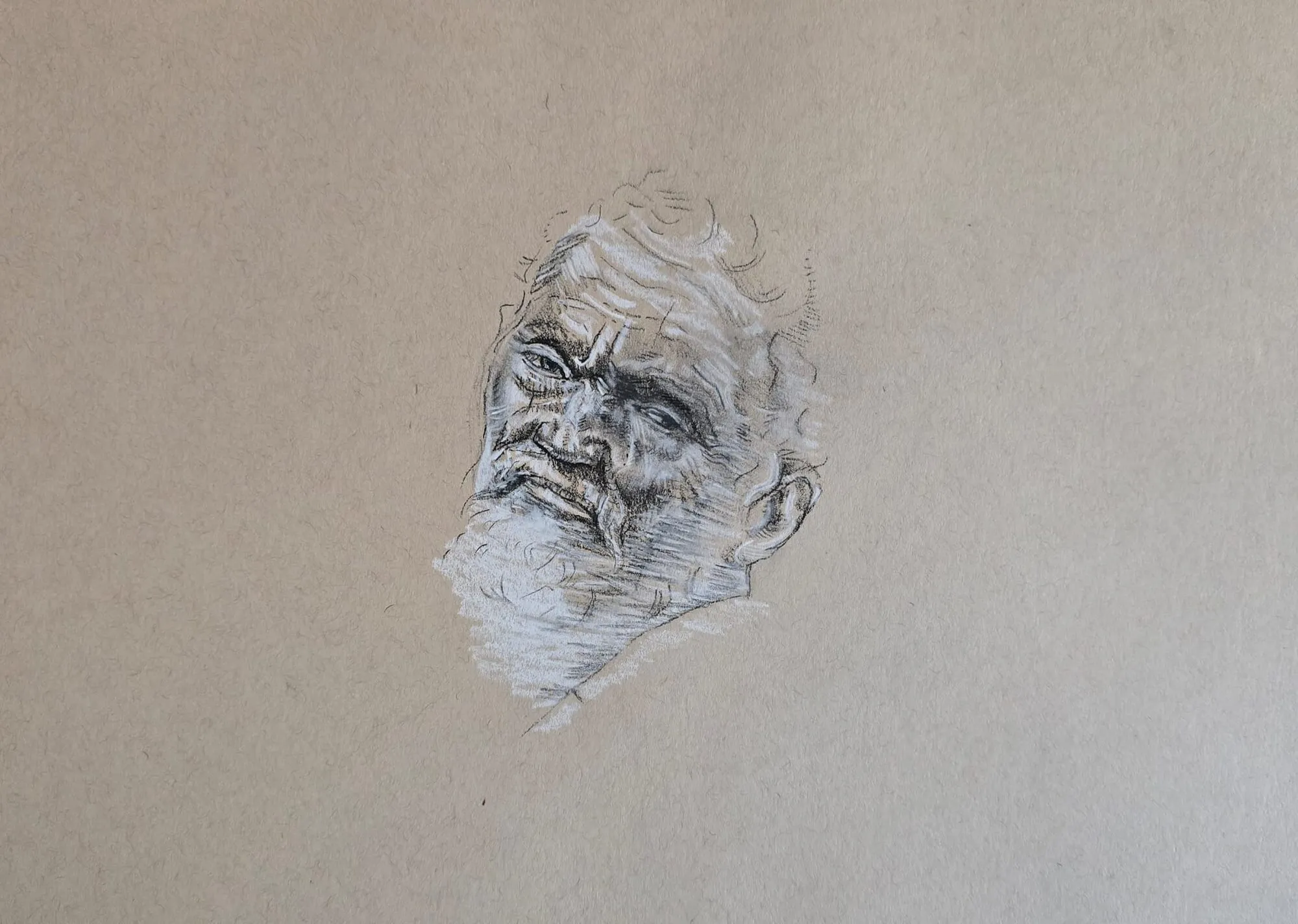
A head study of a bearded man in dark and white pencil on toned paper. Drawing by Michael Brace.
The ten competitions
1. Derwent Art Prize (UK)
One of the world’s leading drawing competitions, and the most natural fit for coloured pencil and graphite artists. It celebrates excellence in drawing, with a strong focus on coloured pencil, graphite and mixed drawing media, and it draws international entries. Exhibitions in major UK venues add to its standing.
Best for: amateur and mid-career artists working in coloured pencil or graphite.
Strengths: international recognition, a strong home for realism and technical drawing, and real coloured pencil representation.
Why it matters: being shortlisted or exhibited can significantly raise your profile. Michael was shortlisted for the Derwent Art Prize 2026, and it remains the competition we would point most coloured pencil realists towards first.
2. Trinity Buoy Wharf Drawing Prize (UK)
Often described as the UK’s most prestigious drawing competition, it celebrates drawing in all its forms: traditional, experimental, digital and conceptual. It is known for rigorous judging and high artistic standards, with touring exhibitions across the UK.
Best for: mid-career artists exploring drawing as a primary medium.
Strengths: high standing in the art world, a broad definition of drawing, and a good home for contemporary and expressive work.
Why it matters: it is one of the more career-defining drawing prizes in Europe. It is less obviously a home for polished photorealism, so read past winners before you decide.
3. Royal Drawing School open exhibitions (UK)
The Royal Drawing School champions contemporary drawing and regularly hosts open calls and exhibitions that show drawing as a standalone art form. Its shows often feature emerging and mid-career artists.
Best for: artists wanting contemporary drawing exposure.
Strengths: a focus on drawing as a primary medium, strong visibility within the UK art community, and a welcome for expressive, gestural or experimental work.
Why it matters: it is one of the few institutions dedicated entirely to drawing. Open calls change, so check the school’s website for what is currently running.
4. Sunday Times Watercolour competition drawing categories (UK)
Known mainly for watercolour, the Sunday Times competition has included drawing categories that often feature graphite, ink and mixed media. As Michael describes it, this is a well-established competition with strong public reach. Categories and formats change, so check the current categories before you plan an entry.
Best for: artists working in graphite, ink or water-based drawing.
Strengths: strong UK visibility, a good showcase for traditional drawing, and a useful stage for artists moving between drawing and painting.
Why it matters: it is well established and reaches a broad public audience.
5. Royal Academy Summer Exhibition (UK)
One of the most famous open exhibitions in the world. It accepts drawings, prints, paintings and mixed media, and drawings often feature strongly, especially in contemporary and experimental categories.
Best for: mid-career artists seeking major exposure.
Strengths: a huge public audience, strong sales potential, a good fit for contemporary drawing, and a prestigious line on any CV.
Why it matters: selection by the Royal Academy is a major milestone. Expect very high competition and study the rules and submission process on the official site well in advance.
6. The Lumen Prize (International)
Focused on digital and contemporary drawing, with categories that include digital drawing, animation and mixed media. It is ideal if you are exploring modern techniques or blending traditional and digital work.
Best for: artists working digitally or combining traditional and digital drawing.
Strengths: international reach, a strong contemporary focus, and a good fit for experimental work.
Why it matters: it positions drawing within the future of art. If you work purely in coloured pencil or graphite, it is probably not your first target.
7. The Visual Arts Open (International)
Known for being friendly to emerging artists, with categories for drawing, painting and mixed media. It is described as offering supportive judging, cash prizes, exhibitions and mentoring.
Best for: amateur artists entering competitions for the first time.
Strengths: supportive judging, clear feedback, a good confidence builder, and strong online visibility.
Why it matters: it is one of the most accessible competitions for new artists. Michael was longlisted for the Visual Arts Open 2025, a reminder that a longlisting is a real, citable result for an early-career artist.
8. The CCA Emerging Artist Award (UK)
This celebrates emerging talent across drawing, painting and mixed media, and suits artists building early-career momentum.
Best for: emerging and mid-career artists seeking recognition.
Strengths: a focus on emerging talent, a good home for realism and contemporary drawing, and useful visibility and networking.
Why it matters: it is a stepping stone into larger competitions. Michael was shortlisted for the CCA Galleries Emerging Artist Award, and that kind of result carries weight when you approach bigger prizes.
9. International Drawing Annual (INDA), Manifest Gallery (USA)
A juried publication showcasing the best contemporary drawing internationally, run by Manifest Gallery. Inclusion is a major achievement and results in a published annual book.
Best for: mid-career artists wanting international exposure.
Strengths: a published annual, strong academic and professional reach, and an excellent fit for contemporary and experimental drawing.
Why it matters: publication in INDA is a powerful CV addition. Because it is US-based, check how submission and any shipping or digital entry arrangements work from the UK before you plan.
10. British Art Prize
A supportive, high-visibility competition ideal for emerging and mid-career artists, run in partnership with Artists & Illustrators. It offers a rare blend of accessibility and prestige and welcomes drawing, coloured pencil, graphite, ink and mixed media.
Best for: amateur and mid-career artists seeking national exposure, especially those working in drawing or mixed media.
Strengths: broad medium acceptance with strong drawing representation, publication opportunities in Artists & Illustrators, a prestigious but approachable feel, and good visibility and professional exhibition.
Why it matters: it is one of the more balanced and encouraging competitions in the UK, and a natural stepping stone for artists building confidence and momentum. Michael was shortlisted for the British Art Prize 2025.
Quick recommendations by goal
- First-time entrants: Visual Arts Open, British Art Prize, Royal Drawing School open calls, and the Sunday Times drawing categories.
- Realism: Derwent Art Prize and CCA Emerging Artist Award. Portrait competitions such as the BP portrait awards are also worth researching if you draw figures.
- Contemporary drawing: Trinity Buoy Wharf Drawing Prize, INDA and the Royal Academy Summer Exhibition.
- Experimental or digital drawing: Lumen Prize and Trinity Buoy Wharf.
- Career visibility: Royal Academy Summer Exhibition and Derwent Art Prize.
If you are not sure where you fall, be honest about your stage. Entering the most famous prize with a body of work that is not yet consistent wastes a fee. Entering an accessible one with a strong, cohesive submission builds a credential you can then cite in the next application.
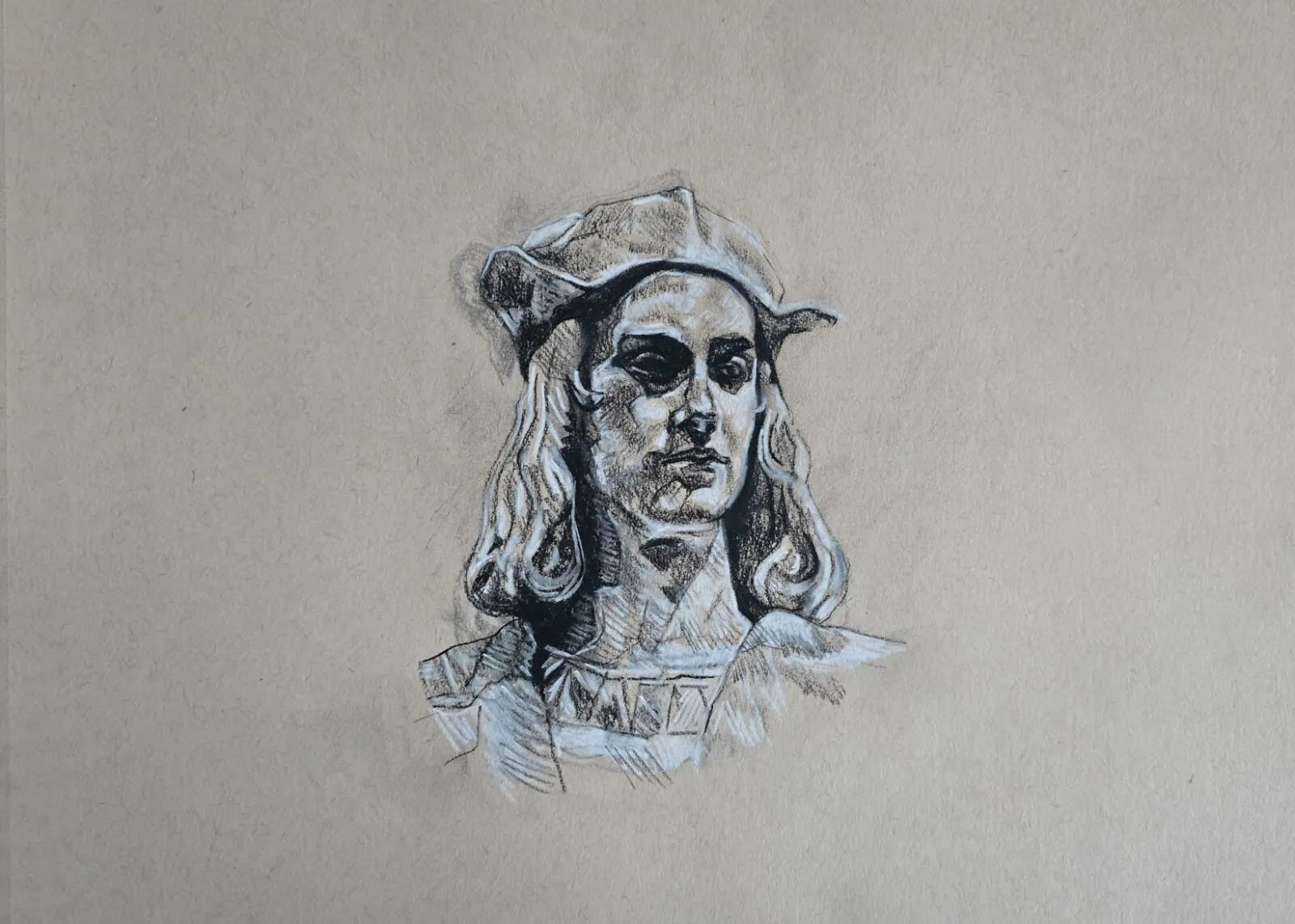
A head study of a figure in a cap in dark and white pencil on toned paper. Drawing by Michael Brace.
How to choose
Four questions narrow the field quickly.
- Does it accept your medium? Coloured pencil and graphite are welcome in some, marginal in others. Read recent winners and exhibited work.
- What does the entry actually give you? Exhibition, publication, feedback, cash prize, mentoring and sales potential are different benefits. Decide which you want.
- What is the full cost? The entry fee is only one part. Framing, shipping, insurance and your time all count if work is selected for exhibition. Our framing guide explains what a competition-standard frame usually involves.
- Is the work ready? Good photographs are essential, because most judging begins from an image. See how to photograph your drawings before you submit anything.
Preparing to enter
A strong entry depends on more than the drawing. Your images need to be sharp and colour-accurate, your title and statement need to be short and clear, and your work needs to be finished on paper you would be happy to sell. If your paper will not survive years of display, read archival paper for selling your drawings before your next major piece.
It also helps to see what a competition-quality piece looks like technically. Our guides to layering coloured pencils and how a realistic drawing comes together show the build-up jurors tend to respond to, and how to build an art portfolio helps you decide which pieces to submit as a coherent group.
The short version
If you draw in coloured pencil or graphite, start with the Derwent Art Prize and the British Art Prize. If you are newer, add the Visual Arts Open or the CCA Emerging Artist Award. If your work is contemporary or conceptual, look at Trinity Buoy Wharf, INDA and the Royal Academy Summer Exhibition. Choose two to four a year, prepare each properly, and use every result, including rejection, to improve the next entry.
Quick answers
Frequently asked questions
What is the best drawing competition for coloured pencil artists?+
The Derwent Art Prize is the obvious first choice because it has a strong focus on coloured pencil, graphite and mixed drawing media, and attracts international entries. The British Art Prize also welcomes coloured pencil and drawing. Check each competition's current categories and rules before entering.
Which drawing competition is best for beginners?+
The Visual Arts Open is known for being friendly to emerging artists, and the British Art Prize is described as supportive and approachable. The Royal Drawing School open calls and Sunday Times drawing categories are also worth a look. Read the official rules to check eligibility and current formats.
Are drawing competitions worth the entry fee?+
They can be, if the venue, jurors and exposure fit your goals. Compare what the entry gets you (exhibition, publication, feedback) with the total cost including framing and shipping. Fees vary and change each year, so check the official site and enter selectively.
How many competitions should I enter each year?+
Fewer, better prepared entries beat scattergun submissions. Two to four well-matched competitions, each with carefully chosen images and a clear statement, is a sensible pace for most artists. Track deadlines in advance so you are not rushing photography and framing.