Coloured Pencils
Derwent Lightfast Coloured Pencils Reviewed
Derwent Lightfast coloured (colored) pencils reviewed: premium, creamy and highly lightfast, a wax-based hybrid between Polychromos and Luminance for realism.
This guide contains affiliate links. If you buy through them we may earn a small commission at no cost to you. How this works.
Jump to recommended products
Key takeaways
- ◆Derwent Lightfast is Derwent's premium coloured range: creamy, smooth to layer and highly lightfast.
- ◆Michael describes it as a wax-based hybrid sitting between Polychromos and Luminance: smoother than the first, firmer than the second.
- ◆It burnishes cleanly and has strong earth tones, which suits portraits, shadows and professional realism.
- ◆It is the choice for artists who want to sell or exhibit, though you should still check each colour's published rating.
- ◆If you want the firmest detail control, Polychromos is better; if you want the softest, most opaque feel, look at Luminance.
Derwent Lightfast is the pencil for artists who want a creamy feel and long-lasting colour in the same tool. It is Derwent’s premium coloured range, described by Michael as creamy, highly lightfast and ideal for professional realism. It is also one of the three professional standards he names alongside Faber-Castell Polychromos and Caran d’Ache Luminance.
This review of Lightfast coloured pencils (colored pencils in the US) explains how it feels, where it sits between its rivals, and which subjects suit it, especially portraits and shadows. Check the current range and specifications with Derwent before buying, since sets change. For context, see the complete coloured pencil guide and the pencil set quiz.
What Lightfast is
In Michael’s comparison notes, Lightfast is a wax-based hybrid. That phrase is useful: it is not as firm as oil-based Polychromos, and not as soft as the very creamy Luminance. It sits between the two, offering balanced softness that gives control and richness together.
That positioning explains its reputation as a versatile professional pencil, one for artists who want a single pencil that does most things well. For a three-way view, read Polychromos vs Luminance vs Lightfast, and for the wax versus oil question, wax vs oil-based coloured pencils.
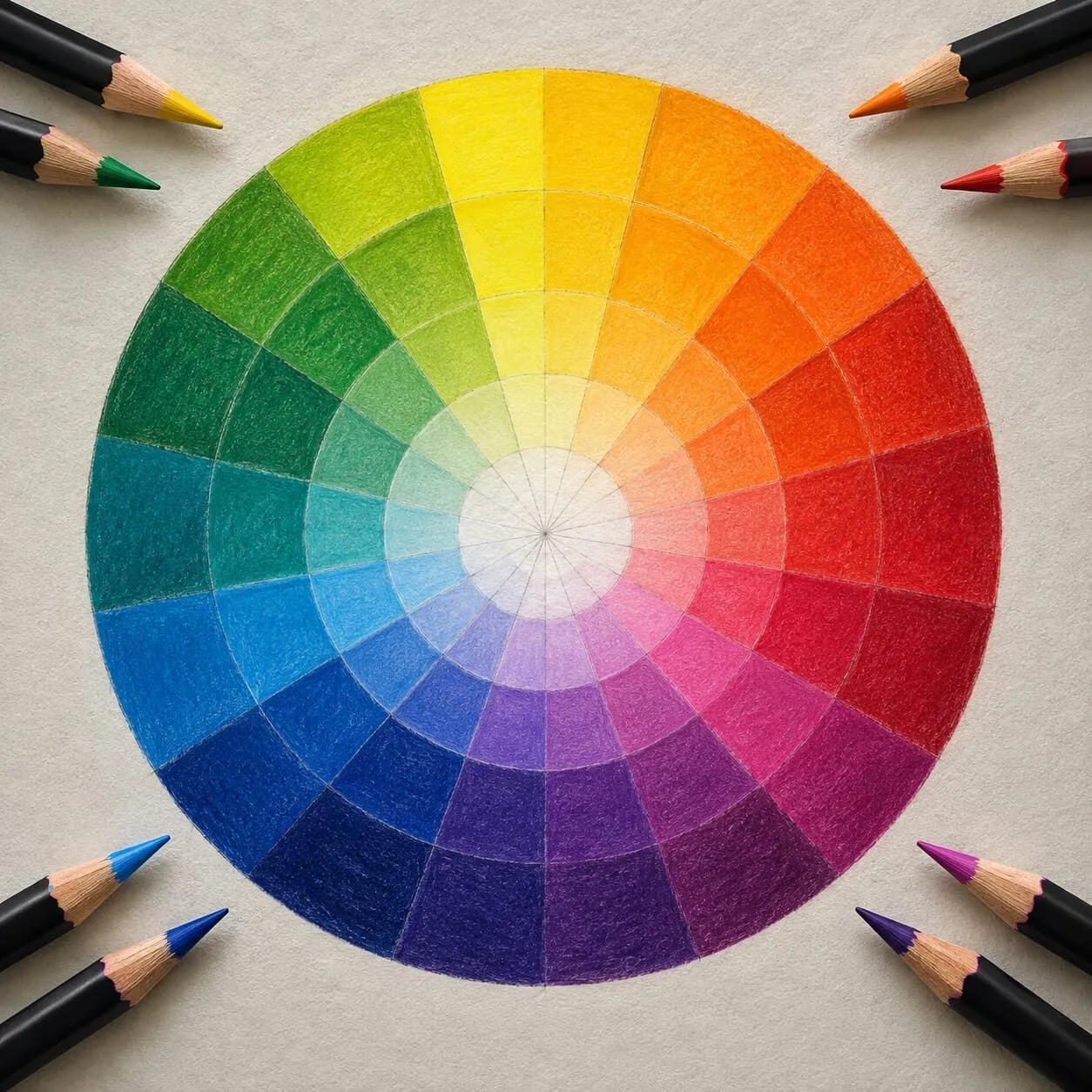
A colour wheel of radiating rings of colour surrounded by sharpened coloured pencils.
How it feels and behaves
Michael’s notes describe Lightfast as moderately soft. It blends smoothly but still allows controlled detail, which is exactly what the hybrid label suggests. In the areas he compares directly:
- Layering. Smooth, controlled layering, sitting between the endless clean layers of Polychromos and the deep, opaque layers of Luminance.
- Burnishing. It burnishes cleanly without streaking, which makes it excellent for a final polish. The method is in how to burnish coloured pencils.
- Colour range. A growing range with balanced colours and strong earth tones and neutrals. Check the current range for the exact number and hues.
- Lightfastness. Top tier, designed for professional artists who exhibit or sell work.
It is not as firm as Polychromos, so the point will not hold quite as long, and it is not as buttery as Luminance, so extremely soft gradients take a little more building. That balance is the point.
Layering, blending and shadows
A sensible approach to a realistic area might run like this:
- Start with a light base layer in a mid colour, using the side of the point.
- Build undertones with related hues rather than stacking unrelated ones.
- Deepen shadows gradually, using darker, slightly cooler or warmer colours chosen to suit the light.
- Blend with overlaid layers rather than smudging, keeping the surface controlled.
- Burnish last for a clean polish in the areas that need it.
Michael’s notes single out rich shadows, undertones and subtle colour shifts as strengths. Shadow work rewards the cleaner, richer darks that a creamy pencil provides. For the method, see how to layer coloured pencils, value in drawing and how to draw shadows and light.
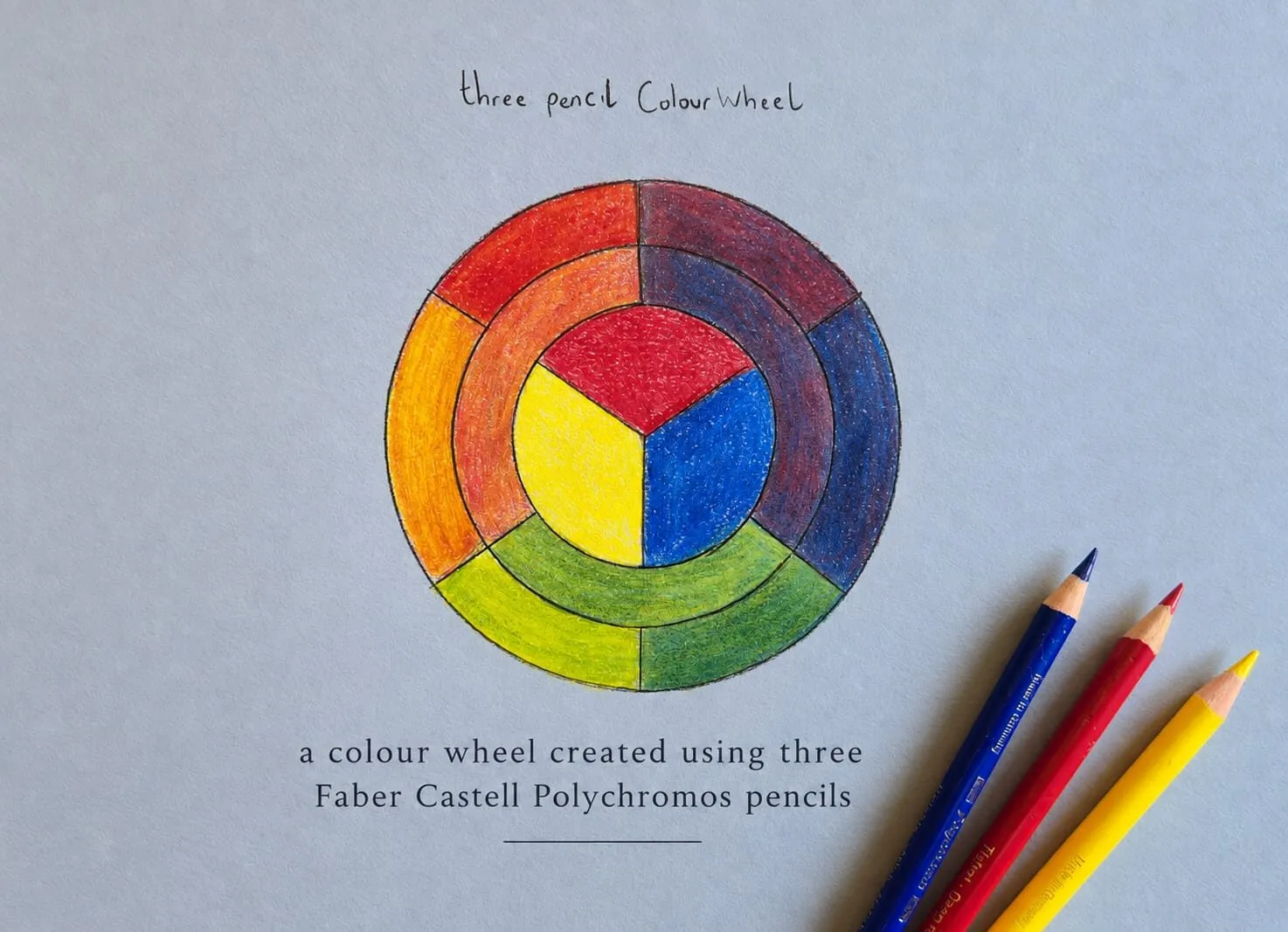
A hand-drawn colour wheel made with three Faber-Castell Polychromos pencils on blue-grey paper. Drawing by Michael Brace.
Best subjects
Portraits. Michael lists Lightfast among his portrait picks: rich, blendable and excellent for shadows, undertones and subtle colour shifts, which are the ingredients of convincing skin. Read best coloured pencils for portraits and how to draw portraits in coloured pencil. For skin tone mixing, see how to mix skin tones with coloured pencils.
Still life with smooth transitions. His notes say it is best for smooth transitions and layered depth in still life.
Mixed subjects. Because it balances detail and softness, it works for wildlife too, particularly when you want both fur detail and soft areas in one piece.
Realism you may sell. With top-tier lightfastness, it suits finished work intended for exhibition.
Paper pairings
Balanced softness means the pencil works across a range of surfaces.
| Paper type | What to expect |
|---|---|
| Smooth hot press | Fine detail and clean, soft skin transitions |
| Lightly textured or cold press | More tooth for many layers, slightly grainier finish |
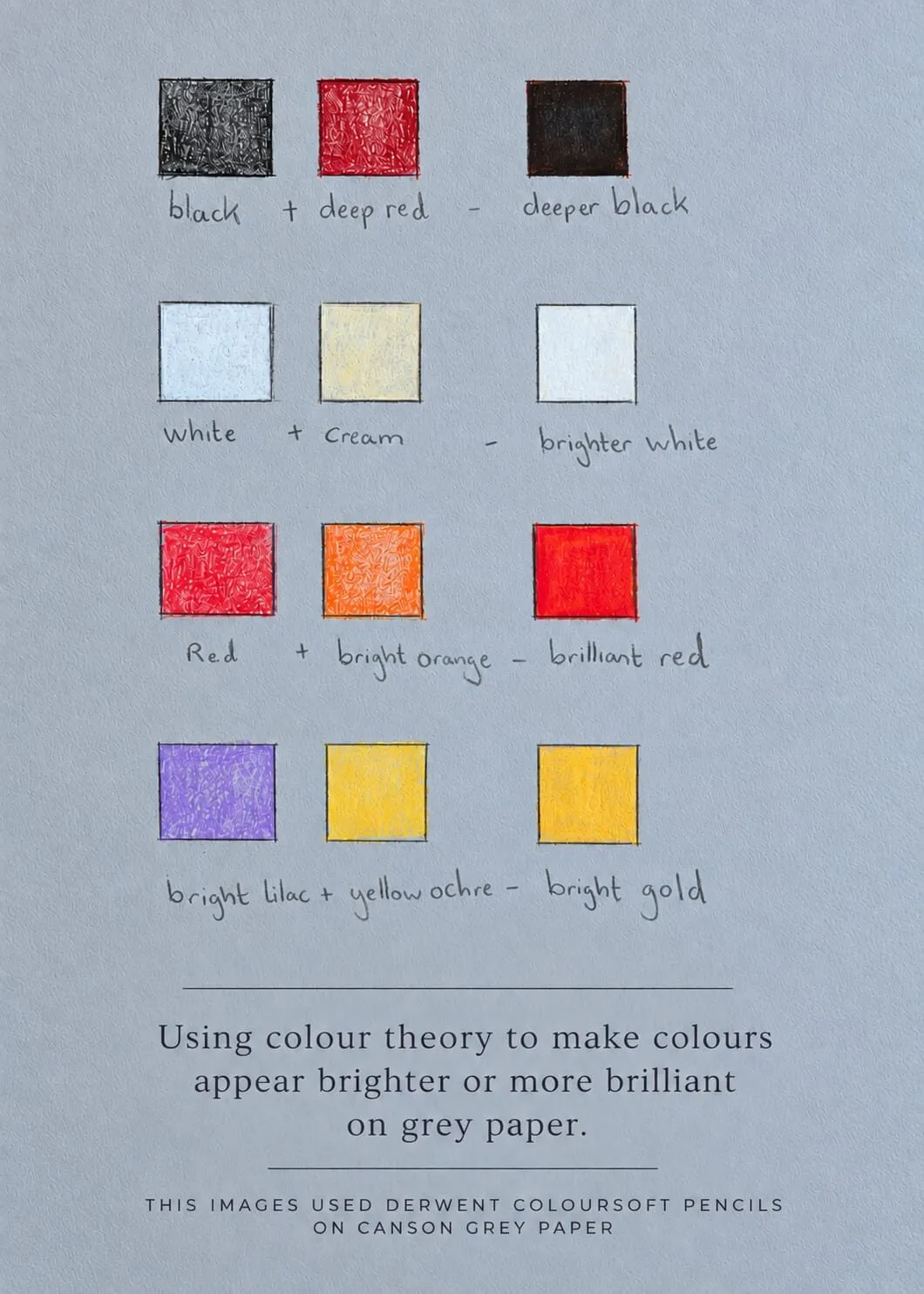
| Toned or grey | Good for highlights and atmosphere; layer to build opacity |
For portraits on smooth surfaces, see Arches hot press and best paper for realistic drawing. For a midtone, why use grey paper for coloured pencil explains the benefits. For general choices, see best paper for coloured pencils. Swatch on a scrap first.
How it compares
| Feature | Polychromos | Lightfast | Luminance |
|---|---|---|---|
| Type | Oil-based | Wax-based hybrid | Wax-based |
| Feel | Firmest | Balanced softness | Softest |
| Best at | Crisp detail | Versatility, shadows | Soft realism, skin |
| Lightfastness | Excellent overall | Top tier | Top tier |
These are from Michael’s comparison notes; the full ten-feature breakdown is in Polychromos vs Luminance vs Lightfast. Individual reviews are at Polychromos and Caran d’Ache Luminance. On price, Michael places Lightfast as mid to high: professional but slightly more accessible than Luminance. Check current pricing with retailers.
Lightfastness in practice
“Highly lightfast” is the headline, but it is worth knowing how to check it. Ratings are given per colour by the maker, and they can differ across a range. Before you sell or exhibit a piece, look up the published rating of each colour you used. Our guide to coloured pencil lightfastness explained covers how to read the ratings and how to test a swatch yourself. For work you plan to sell, also consider archival paper.
Buying advice
Sets come in small, mid and large sizes; check the current range for what is available. If you are moving up from student pencils, a small or mid set in the colours you use most will show you the difference. Open stock, where available, lets you replace whites and darks. Pair the pencils with a sharp sharpener, and check best coloured pencils to see how Lightfast fits a wider kit.
Who should buy it, and who should wait
Lightfast makes most sense for an artist who already understands layering and wants a dependable professional pencil. It rewards patience and a considered approach to colour, and because it is a premium range, the cost of a mistake in pencil choice is higher than with a learning set.
It suits:
- Portrait and figure artists who value smooth transitions, rich shadows and subtle colour shifts.
- Artists who sell or exhibit and need pencils designed for long-lasting colour.
- Artists who want one versatile pencil rather than separate soft and firm sets.
- Derwent users who already know the brand and want to step up within it.
Consider waiting if you are brand new. A soft, forgiving set teaches pressure control and layering at lower cost, and you can move to a professional range when your technique needs it. Our guide to best coloured pencils for beginners and the Chromaflow review cover that path.
Combining Lightfast with other pencils
Few artists use one pencil for everything. A common, practical approach is to use a balanced, creamy pencil for the body of a drawing and keep a firmer pencil for the sharpest edges and finest marks. Because Lightfast sits between firm and very soft, it combines well with either. You might use it for skin, shadow and broad colour, then refine eyes or hair with a firm oil-based pencil. The reverse also works: a firm pencil for early, light layers, then a creamier pencil for richer, more opaque passes at the end.
Mixing wax and oil pencils is widely practised, though it pays to swatch first. Test how the two behave on your paper before committing, and keep your layers thin so each has somewhere to sit. Wax vs oil-based coloured pencils explains the trade-offs in more depth, and how to match and mix colours with pencils shows how to build a colour from layers.
The short version
Derwent Lightfast is a premium, creamy, highly lightfast wax-based hybrid that sits between Polychromos and Luminance. It layers smoothly, burnishes cleanly and handles shadows and undertones well, which suits portraits and professional realism. Choose it when permanence and versatility matter, and use the quiz or the three-way comparison if you are weighing it against firmer or softer rivals.
Where to buy
Recommended products
Affiliate links. We may earn a small commission if you buy, at no extra cost to you. Why?
Pencils · Derwent
Derwent Lightfast Coloured Pencils
Premium, creamy pencils with excellent lightfastness - well suited to professional realism.
Pencils · Caran d'Ache
Caran d'Ache Pencils
Premium artist pencils - Luminance is creamy and opaque for portraits, Pablo is firmer for detail.
Quick answers
Frequently asked questions
Is Derwent Lightfast wax-based or oil-based?+
Michael describes Lightfast as a wax-based hybrid, meaning it leans on a wax feel but is firmer than the softest wax pencils. That puts it between oil-based Polychromos and creamy Luminance. Check the maker's current description for the exact formulation.
Is Derwent Lightfast good for portraits?+
Yes. It is creamy, blends smoothly and makes rich shadows and subtle colour shifts easy to build, which suits skin and undertones. Its balanced firmness still allows controlled detail. Many portrait artists pair it with a firmer pencil for the sharpest edges.
How does Lightfast compare with Polychromos and Luminance?+
Lightfast is smoother than Polychromos but firmer than Luminance, offering both control and richness. Polychromos is firmest and widest in range at 120 colours; Luminance is the softest and most premium. Our three-way comparison sets out the differences feature by feature.
Are colored pencils and coloured pencils the same thing?+
Yes. Coloured is the UK spelling and colored is the US spelling of the same drawing medium. Derwent Lightfast pencils are the same under either spelling, and the advice in this review applies whichever spelling you use.