Paper & Surfaces
Best Sketchbooks for Coloured Pencil
How to choose a sketchbook for coloured pencil (colored pencil in the US): weight, binding, tone and surface, plus why Michael likes grey Art Gecko.
This guide contains affiliate links. If you buy through them we may earn a small commission at no cost to you. How this works.
Jump to recommended products
Key takeaways
- ◆Look at paper weight, surface, tone, binding and size before brand: the paper inside decides how coloured pencil behaves.
- ◆Art Gecko grey sketchbooks are softer, which suits loose, expressive studies and portraits, but are less resilient if you erase heavily.
- ◆Michael places these grey sketchbook papers in the midweight range of around 200 to 250 gsm: flexible and easy to blend on.
- ◆Grey sketchbooks give you a mid-tone for lights and darks; white sketchbooks suit warm, soft subjects.
- ◆Use a sketchbook for studies, colour tests and pencil swatches, and save heavy loose sheets for finished pieces.
A sketchbook is where a drawing starts: a place to test colours, work out values and make mistakes cheaply. For coloured pencil, though, sketchbooks are a compromise. The paper is usually lighter than the sheets you would use for a finished piece, and that lightness affects how many layers it takes, how it blends and how it reacts to an eraser.
This guide explains what to look for, why Michael likes Art Gecko grey sketchbooks for studies and portraits, how grey and white sketchbooks differ, and how to use a sketchbook to build the skills that feed your finished work. This applies to coloured pencils, or colored pencils in the US. For all-round picks see best sketchbooks for drawing, and for page formats see A5 and A4.
What to look for in a sketchbook
Five things matter more than the label on the cover.
Paper weight
Weight (gsm, grams per square metre) describes how thick and sturdy the sheet is. Lighter pages, around 120 to 180 gsm, are flexible and good for sketching, but they can buckle or wear down under heavy coloured pencil layering. Heavier pages behave more like card. In sketchbooks, the mid-range of roughly 200 to 250 gsm is a sweet spot: slightly more flexible and easier to blend on than heavy paper, though less resilient if you erase repeatedly. The full picture is in paper weight explained.
Surface and tooth
Tooth is the texture of the paper, the tiny hills and valleys that catch pigment. A sketchbook page with a little tooth grips coloured pencil and layers well; a very smooth page blends easily but fills up sooner. See paper tooth: smooth vs textured for how surface affects your marks.
Tone
Sketchbooks come in white, cream, grey, tan and black. A mid-tone gives you a head start on values, because you can add both lights and darks. That is the same reasoning behind using grey paper for coloured pencil.
Binding
Binding changes how you use the book:
- Spiral or wire-bound books lie flat and let you fold a page back, which is handy for drawing on your knee or outdoors. The wire can dig into your hand at the edge.
- Hardback sewn or glued books feel durable and give a smooth double-page spread, but the gutter can swallow drawing near the centre.
- Softback pads are cheap and light, and pages can be removed for framing or scanning.
Size
A5 is portable and quick to fill, and A4 gives room for a sizeable study. Larger books give you room to work but are less likely to travel with you. Choose the size you will actually carry.
A black picture frame with a white mount in portrait format.
The pick: Art Gecko grey sketchbook
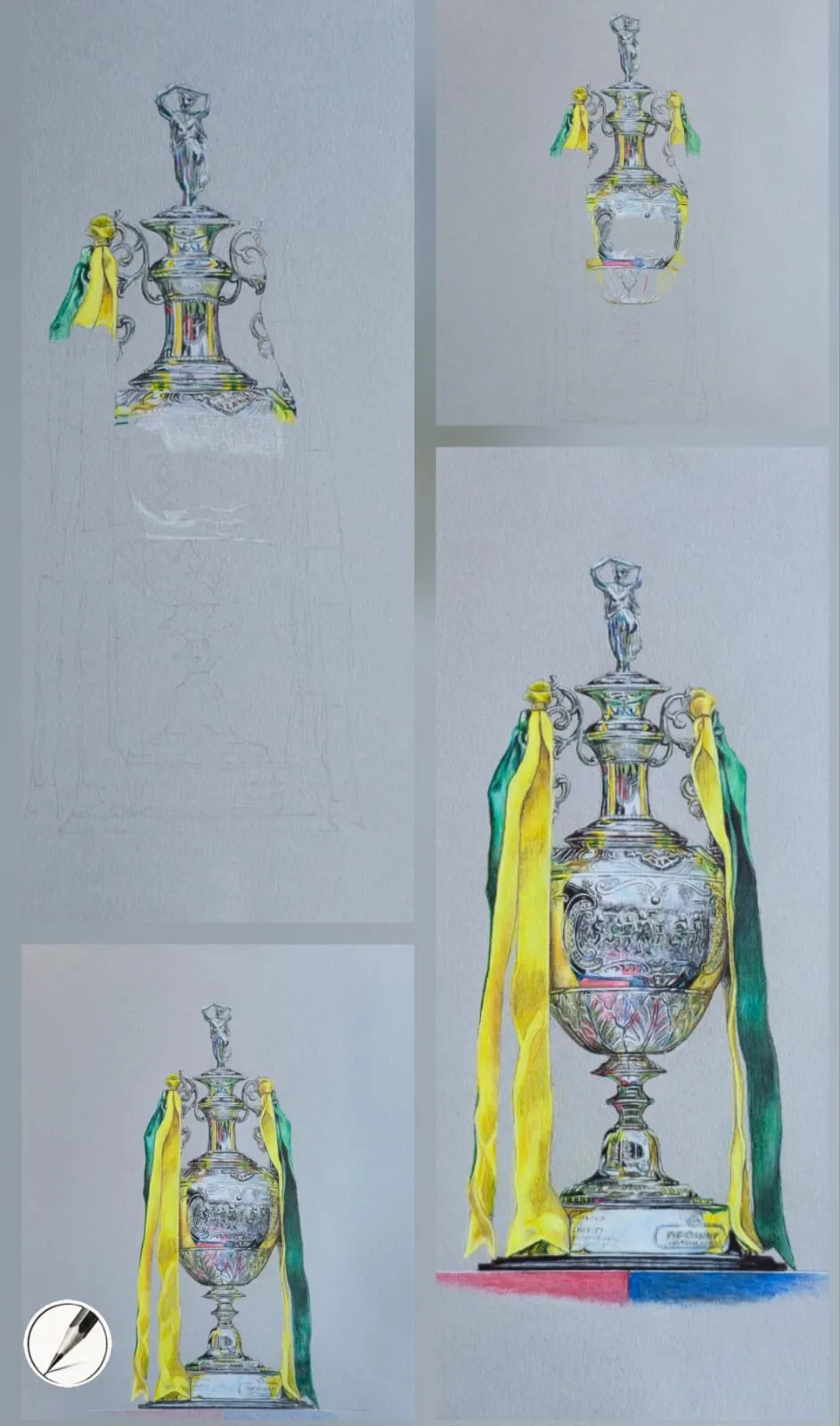
Michael’s recommendation for a coloured pencil sketchbook is the Art Gecko grey sketchbook. The paper is softer than the heavy sheets he uses for finished pieces, which encourages looser, more expressive marks. That makes it a good fit for studies, and for portraits where a paint-like finish works well.
What that means in use:
- Softer paper. Pigment goes on smoothly and blends easily, and the grey mid-tone unifies your colours.
- Midweight. These grey sketchbook papers tend to sit in the range of around 200 to 250 gsm, so they are flexible and comfortable to draw on.
- Less resilient to erasing. The trade-off for softness is that repeated erasing wears the surface. Plan your marks and use light corrections.
Who it suits: artists who want a book for loose, expressive studies, portraits and colour experiments.
Who it does not suit: anyone planning to layer dozens of times, burnish heavily or rework an area repeatedly. For that kind of work, use a heavier loose sheet.
A heavier alternative: Canson Mixed Media grey
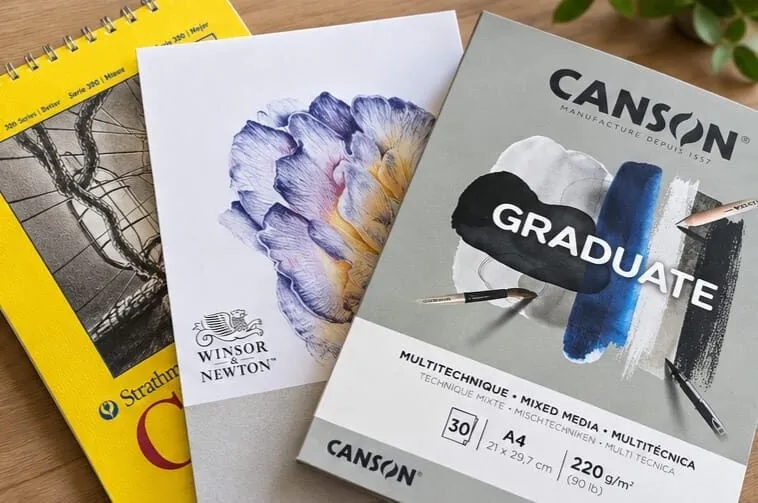
If you want more resilience than a typical sketchbook offers, look at Canson Mixed Media grey. It is textured, durable and has a strong grain that lets pencils layer well and maintain their colour, and Michael uses it at around 300 gsm for finished work. It is not a sketchbook in the strict sense, but you can buy it in pads and cut sheets to size, or bind your own. It is the better choice for studies you intend to develop into full drawings. For a detailed look at the range, see the best paper for coloured pencils.
Grey vs white sketchbooks
| Grey sketchbook | White sketchbook | |
|---|---|---|
| Value range | Mid-tone start; add lights and darks | Paper is your lightest light |
| Highlights | White pencil reads as a real highlight | Leave paper untouched or lift |
| Best subjects | Glossy, reflective, dramatic | Soft, warm, delicate |
| Colour | Grey unifies layers | Colours look truer and lighter |
| Risk | Hides value mistakes | Highlights can be hard to protect |
Neither is superior. If you can only buy one, buy grey if you draw shiny, wet or dramatic subjects, and white if you draw portraits and animals with delicate tones. Many artists carry one of each.
Hardback or spiral?
Choose spiral if you draw away from the desk, want the page to fold flat and value convenience. Choose hardback if you like a single, bound object and often draw across a double page. For coloured pencil, the heavier dents and layering of pencil favour a surface that sits flat on a board, so a spiral book you can fold back on itself is more practical for most studies.
How to use a sketchbook for coloured pencil
A sketchbook does its best work when each page has a job.
- Swatch every pencil. Draw a small block of each colour and layer them, then note the brand and code. Colours behave differently on grey, and some pale pencils barely register.
- Test colour combinations. Try pairs and triples on the page before using them in a finished piece. Michael’s colour theory on grey paper approach is a good place to start.
- Do value studies. Work out lights and darks in a small drawing, or use the value study tool on your reference first.
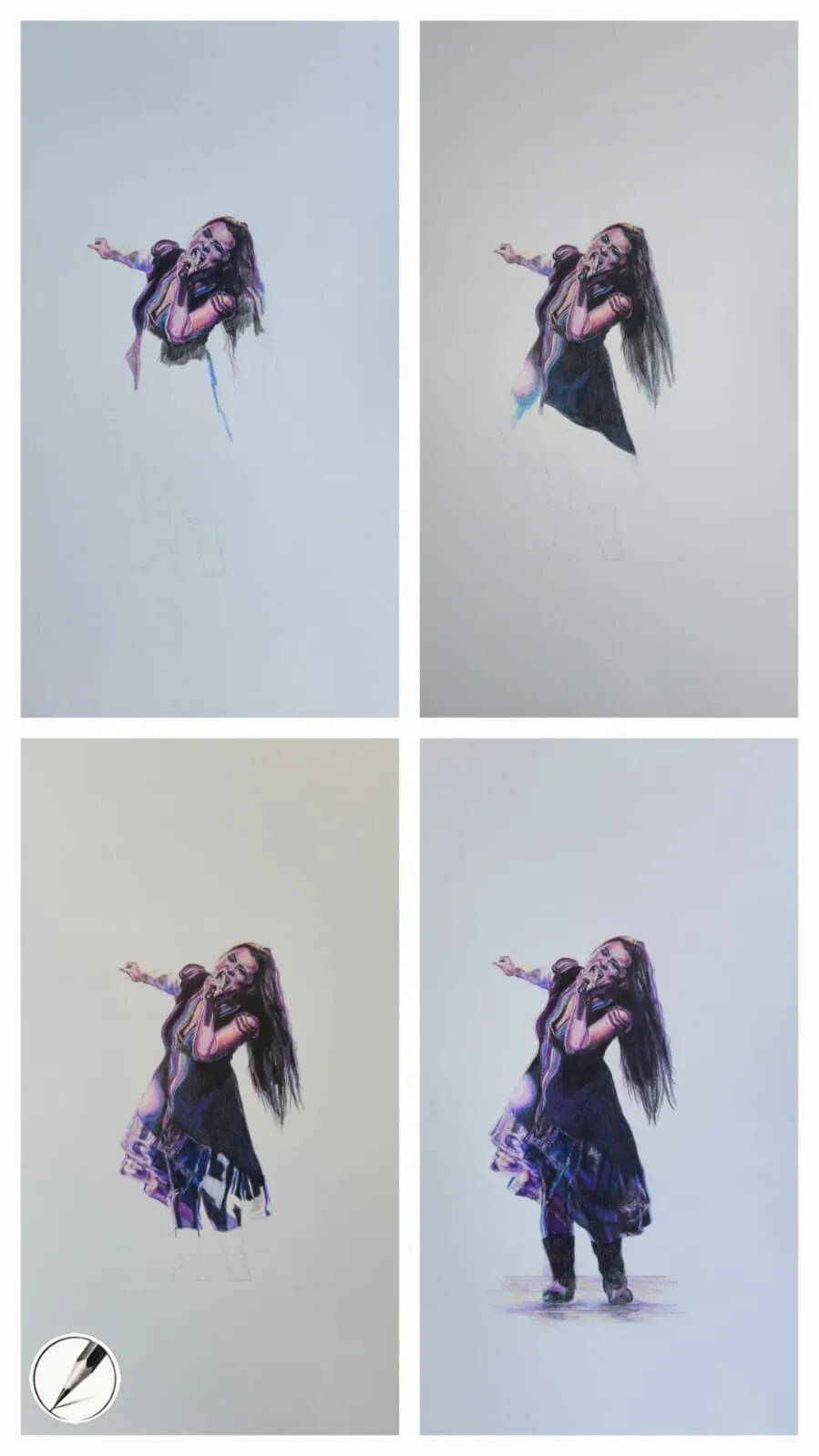
- Make loose portrait and head studies. Grey sketchbooks suit quick studies with a white highlight and a few darks.
- Try techniques in miniature. Practise layering, blending and burnishing on a single page before committing. See how to layer coloured pencils.
- Date the page. A dated record shows progress, which is motivating.
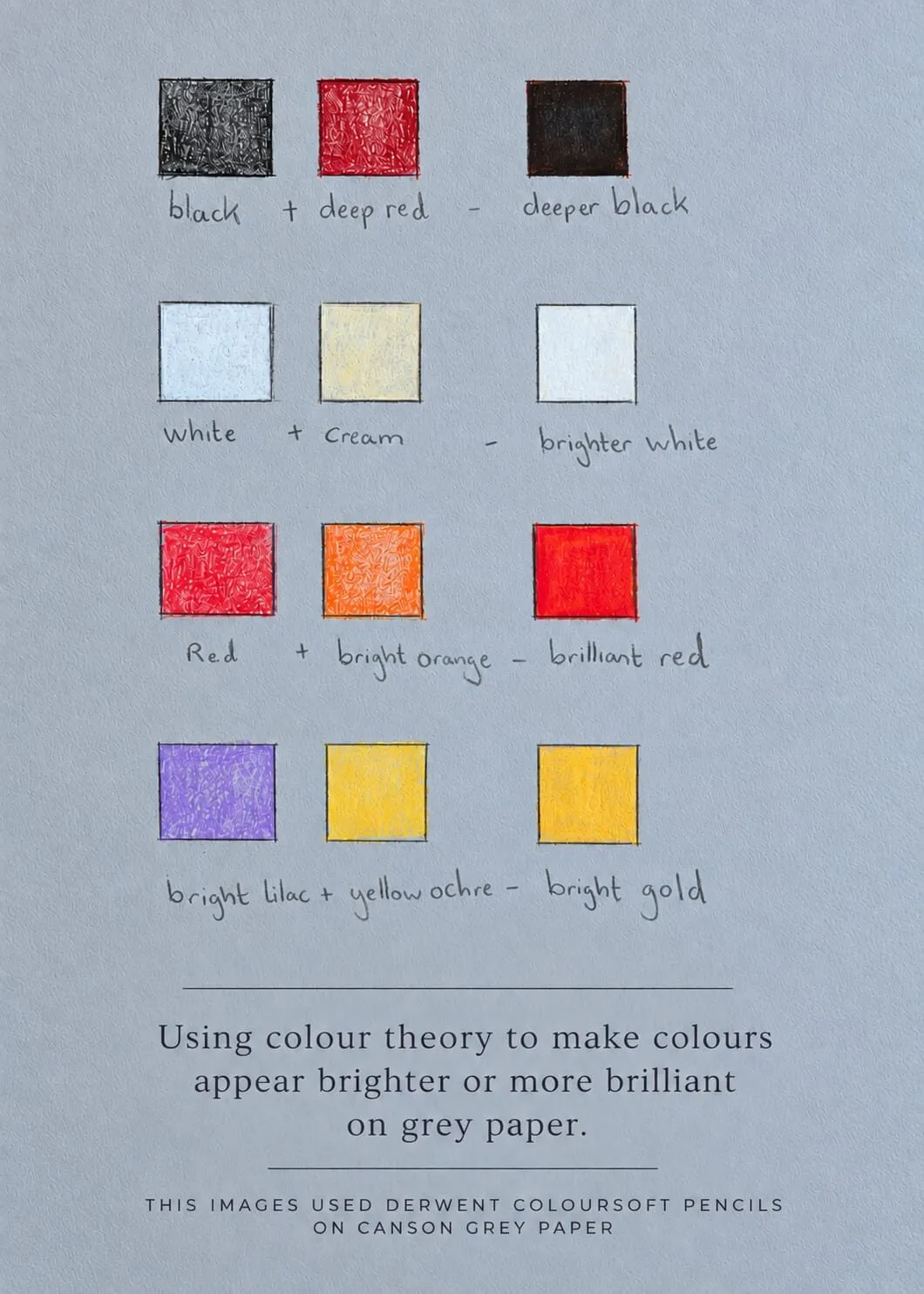
Colour tests on grey paper, made with Derwent Coloursoft on Canson grey.
What to avoid in a coloured pencil sketchbook
Some sketchbook features work against coloured pencil. Very thin, glossy or coated pages resist pigment and do not layer. Pages that are heavily sized for ink can feel slippery under a wax pencil. Cheap, thin pages may also show heavy work through to the reverse, which spoils the facing page. Feel the surface with a fingertip in the shop if you can, and if the book is wrapped, look for a stated gsm and surface description before buying.
Sketchbooks are also a good place to keep a running record of a drawing in progress. A small page of thumbnails, a value study and a colour test alongside the final piece gives you a planning trail you can return to when a later drawing hits the same problem.
Common mistakes
- Buying the lightest book by default. Thin pages buckle and pill under coloured pencil. Check the gsm.
- Layering as if it were heavy paper. Softer sketchbook paper fills quickly. Use lighter pressure.
- Burnishing on sketchbook paper. It flattens the surface faster than on heavy sheets.
- Never testing. Buy a small sketchbook first and put your usual pencils through it.
The short version
Choose a sketchbook by its paper: weight, tooth and tone first, binding and size second. An Art Gecko grey sketchbook is Michael’s pick for loose studies and portraits, with the caveat that it is softer and less forgiving of heavy erasing. For finished work, move to heavier sheets. Browse the paper hub for the full range.
Where to buy
Recommended products
Affiliate links. We may earn a small commission if you buy, at no extra cost to you. Why?
Paper · Art Gecko
Art Gecko Grey Sketchbook
A grey-toned sketchbook that suits looser, expressive studies and portraits.
Buy on AmazonAffiliate link · opens Amazon
Paper · Canson
Canson Mixed Media Grey Paper
A toothy mid-tone grey paper that grips pigment and makes highlights glow.
Quick answers
Frequently asked questions
What is the best sketchbook for coloured pencil?+
A grey Art Gecko sketchbook is a strong choice for studies and portraits: it is soft, flexible and suits loose, expressive marks. For heavier layering, choose a sketchbook with the heaviest paper you can find, or a mixed media grey paper. There is no single best; it depends on how you draw.
What paper weight should a sketchbook have for coloured pencil?+
For light studies, around 100 to 150 gsm is workable. For proper coloured pencil layering, aim for the heavier end of sketchbook weights, roughly 200 to 250 gsm, which is more flexible and easier to blend on. It will be less resilient than 300 gsm paper if you erase repeatedly.
Is a grey or white sketchbook better for coloured pencil?+
Grey suits glossy, reflective and dramatic subjects because white pencil reads as a real highlight on the mid-tone. White suits warm, soft subjects such as skin and fur. Many artists carry both, using grey for studies of light and white for delicate subjects.
Is a hardback or spiral sketchbook better?+
Spiral lies flat and lets you fold pages back, which is convenient for drawing outdoors. Hardback sewn or glued books feel more like a finished object and give a continuous double page spread. For coloured pencil, choose based on comfort and how often you want to work across the gutter.
Are colored pencils and coloured pencils the same?+
Yes. Coloured pencils is the UK spelling and colored pencils is the US spelling, and they are the same product. The sketchbook advice covers both.