Coloured Pencils
Best Coloured Pencils for Adult Colouring
How to choose coloured (colored) pencils for adult colouring books: soft versus firm, set size, paper and bleed-through, sharpening and small-space tips.
This guide contains affiliate links. If you buy through them we may earn a small commission at no cost to you. How this works.
Jump to recommended products
Key takeaways
- ◆Choose soft, blendable pencils for large, smooth areas and firmer pencils for fine detail; many colourists keep a few of each.
- ◆Thin colouring-book paper limits what you can do, so use light layers and avoid heavy burnishing to prevent ghosting and paper damage.
- ◆A set of roughly 24 to 72 pencils suits most colouring books; more than that mainly saves time.
- ◆Keep points sharp for small spaces and borders, and work light to dark so you can control the colour.
- ◆Derwent Chromaflow, Derwent Coloursoft, Faber-Castell Polychromos and Prismacolor Premier each suit a different style of colouring.
Adult colouring books - adult coloring books in the US - turn drawing into a relaxed, finishable activity, but they make particular demands on your pencils. The spaces are small, the paper is often thin, and the pages are usually designed to be filled with smooth, bright, layered colour. The pencil that suits a sketchbook is not always the one that suits a colouring book.
This guide covers how to choose pencils for colouring books, what to expect from different pencil types, and the techniques that give richer, cleaner results on thin pages. If you are choosing your first set generally, our best coloured pencils for beginners is a good companion, and the which pencil set quiz will help you match a set to your style.
The short answer
For most people colouring books, soft, blendable pencils give the most rewarding result: bold colour, smooth gradients and quick coverage. Add a few firmer pencils if your pages have very fine detail.
| Line | Feel | Suits |
|---|---|---|
| Derwent Chromaflow | Vibrant, soft, easy to blend | Beginners and bold, blended colouring |
| Derwent Coloursoft | Velvety, rich and soft | Painterly, saturated colour and smooth blending |
| Prismacolor Premier | Creamy and smooth | Soft shading and blends; watch for point wear and wax bloom |
| Faber-Castell Polychromos | Firm, oil-based, precise | Fine detail, sharp points and clean layering |
Product ranges and colour counts change, so check the current range for the exact set sizes available where you shop.
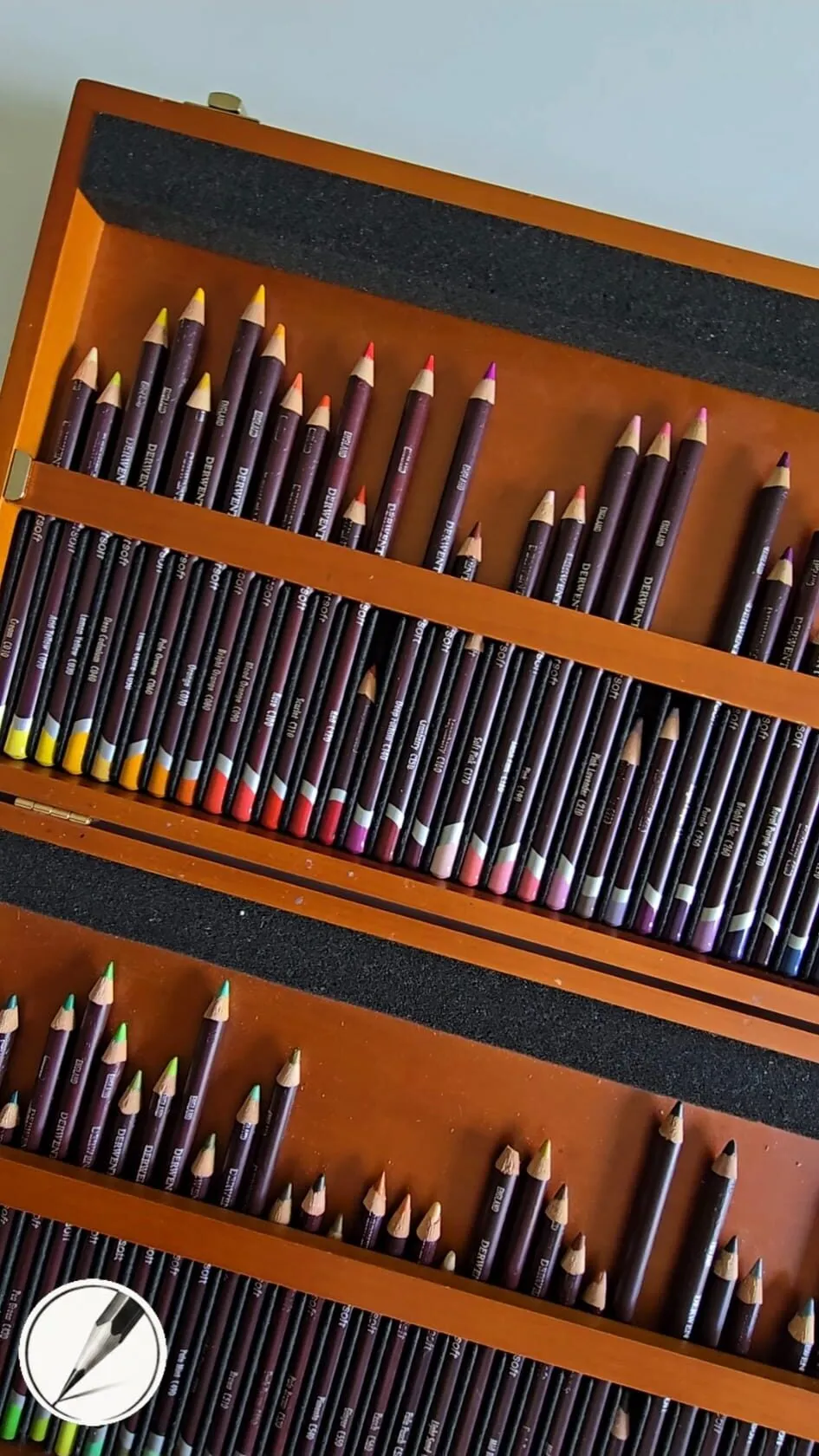
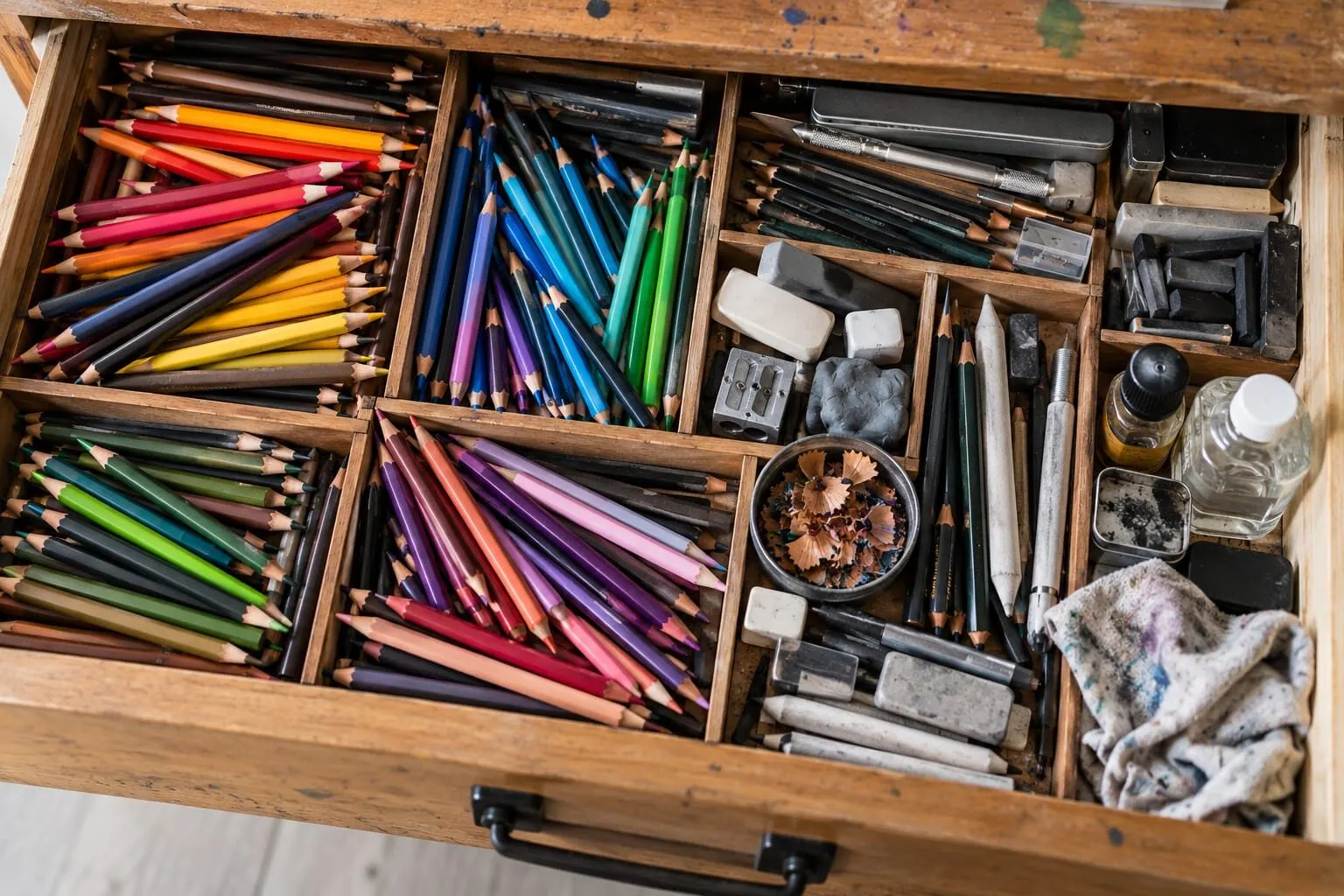
An open wooden box of coloured pencils arranged in tiered trays.
What colouring books ask of a pencil
Small spaces need sharp points
A blunt pencil spills over the lines and fills tiny areas badly. Firmer pencils keep a point longer, while very soft pencils need frequent sharpening. Whatever you choose, sharpen before you start and again whenever the point becomes rounded. A poor sharpener snaps soft cores, so see our sharpener guide and how to sharpen coloured pencils.
Thin paper limits layers
Most colouring books use lightweight paper. It can take a few layers but not the dozens a heavy drawing paper can, and it will burnish, buckle or ghost if pushed too hard. The practical answer is light pressure and fewer layers, described below. The paper weight guide explains why heavier sheets tolerate more work.
Colour needs to sit cleanly
Colouring is about clean edges and even colour, so you need pencils that lay down pigment smoothly without a grainy finish. Softer pencils cover the tooth more easily; firmer pencils give a lighter, more textured layer that suits fine shading.
Soft versus firm pencils
Soft, wax-based pencils are creamy, saturated and blend readily. They cover big shapes quickly and give smooth gradients with less effort. They also wear down faster, can break when dropped and may build wax bloom, a cloudy film, if you layer heavily.
Firm, oil-based pencils keep a sharp point, layer cleanly and allow precise control. They can feel less rich on the page, and large areas take longer to cover.
For most colouring, a soft set as the main pencil and a small firm set for tiny details is a strong combination. The wax versus oil-based guide explains the differences in more depth.
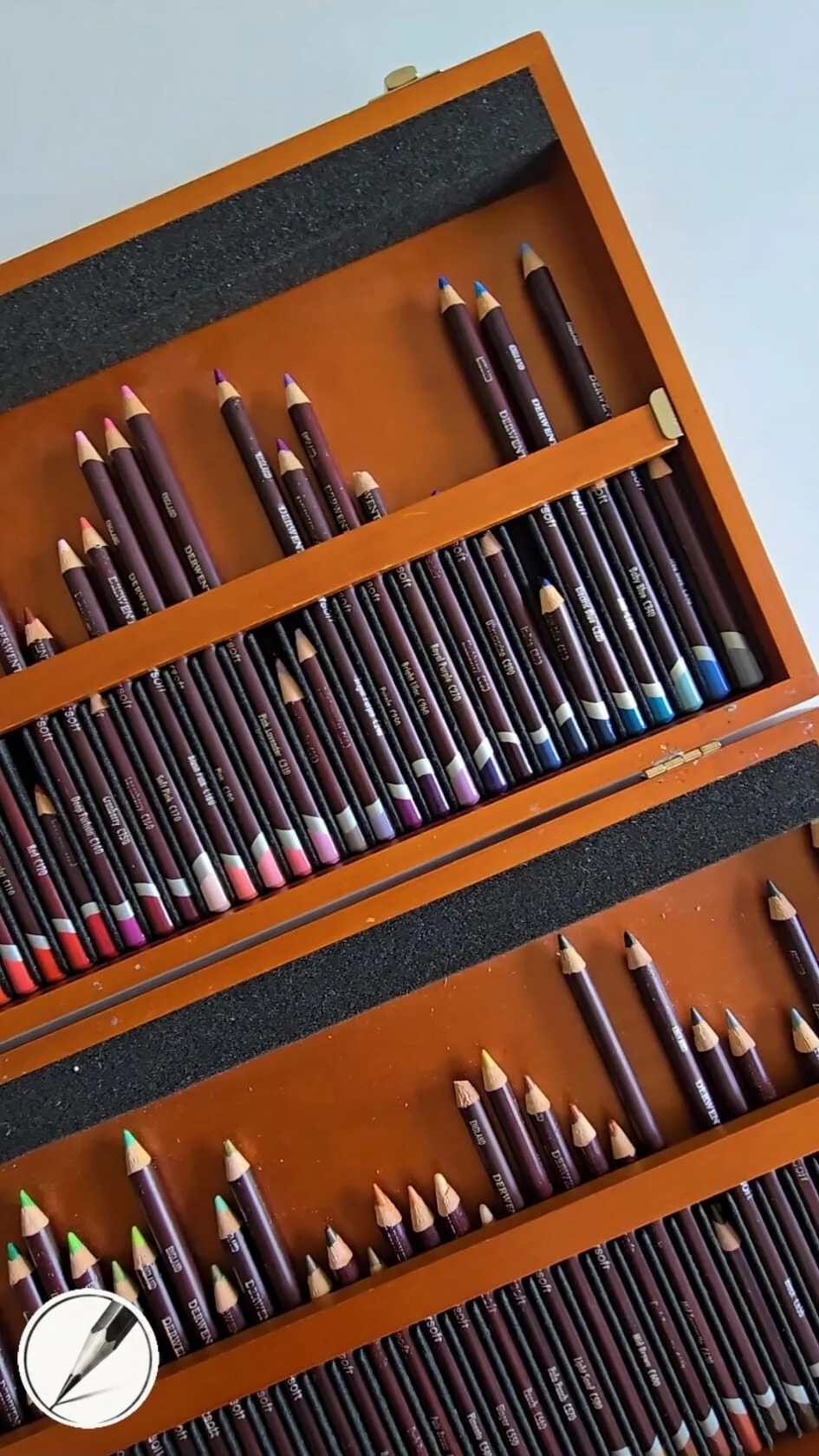
A wooden box of coloured pencils in trays, seen at an angle.
Our picks in more detail
Derwent Chromaflow
Vibrant, soft and easy to blend, Chromaflow is a friendly first choice for colouring books. The colours look encouraging quickly, which keeps the practice enjoyable. It is less suited to extremely fine detail, so keep a sharp point on the pencils you use in small areas. See our Derwent coloured pencils reviewed for the wider range.
Derwent Coloursoft
Velvety, rich and soft, Coloursoft is great for painterly effects and soft blending. It suits large motifs and gradients. Being soft, it will wear down faster and can be more fragile in the case, so sharpen with care.
Prismacolor Premier
Creamy and smooth, Premier is popular for its ease of blending and rich laydown. Known trade-offs are that the softer core can break more easily and heavy layering can cause wax bloom. Keep pressure light on thin paper.
Faber-Castell Polychromos
Firm, oil-based and precise, Polychromos suits highly detailed pages, patterns and borders where crisp lines matter. It is a premium choice, so it is worth it if detail is your priority. It is less buttery than softer sets, so covering large areas takes longer. Read the Polychromos review for more.
Other options
Some artists also colour with Faber-Castell Goldfaber, which is firm enough for detail and soft enough for shading, or with wider artist-grade lines compared in best coloured pencils.
Choosing a set size
Set sizes are convenient categories rather than strict levels. For adult colouring:
- A small set of 12 to 24 is enough to learn layering and blending, and it is portable.
- A mid-size set of 36 to 72 covers most colouring books, with more hues per family so you spend less time mixing.
- A large set of 100 or more saves time on pages with many similar tints, but you may not use every pencil.
Layering can supply colours you do not own, so a smaller quality set plus a few extras often beats a larger cheaper one. Our guide to how many coloured pencils you need covers the logic in detail, and best coloured pencil sets compares complete sets.
Techniques for thin colouring-book pages
Layer lightly
Build colour in several light passes rather than one hard one. Keep the pressure low at the start; you can always add more, but you cannot easily remove heavy pigment from thin paper. The how to layer coloured pencils guide covers the method.
Work light to dark
Start with your palest colours and add darker tones on top. Light colours go over dark ones badly, and starting light lets you correct your colour choices.
Blend with pencils first
Blend by overlapping colours and softening the joins with a light layer of a neighbouring colour, or with a colourless blender or paper stump if you own one. How to blend coloured pencils and best blending tools for coloured pencil list the options.
Burnish only where the paper allows
Burnishing, pressing firmly to create a smooth, glossy layer, gives a rich finish but flattens the tooth and can damage thin paper. Use it sparingly on strong pages and skip it on delicate ones. See how to burnish coloured pencils.
Protect the next page
Slip a sheet of scrap paper or card behind the page. This prevents indentations and stray colour marking the next page, and gives a firmer surface to press against.
Tips for small spaces and borders
- Colour the smallest areas first while your point is sharp, then the larger spaces.
- Outline lightly along the edge, then fill inward. This gives a clean boundary and stops colour crossing the line.
- Use short, controlled strokes in tiny shapes, angled in a single direction for an even finish.
- Rest your hand on a clean sheet to avoid smudging finished areas.
- Borders and patterns benefit from a firm, sharp pencil; switch to your firmest pencil for these.
- Vary a repeating shape with two or three neighbouring tones instead of one flat colour, so patterns look richer.
Colour choices for colouring books
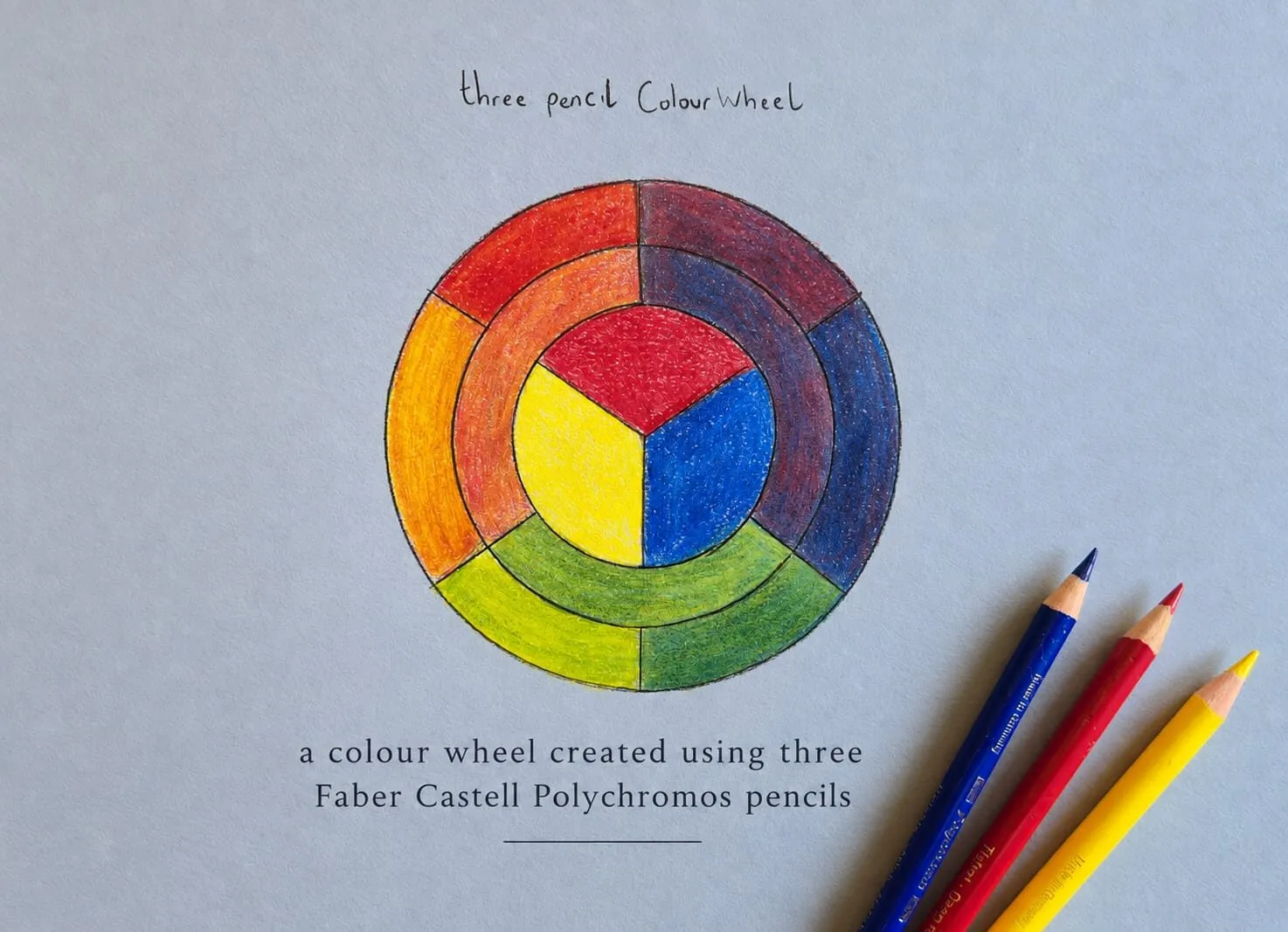
You do not need to match reality. Colouring books reward bold choices, but a plan helps. Pick a limited palette of five or six colours for a page, or use a harmony such as complementary or analogous. The colour harmony schemes and colour wheel guides explain the logic, and the colour scheme generator can suggest palettes. Value matters too: including light, medium and dark tones makes a page look dimensional even in a simple design.
Common mistakes
- Pressing hard on thin paper. It indents and buckles the sheet and limits layers.
- Using blunt points in small spaces. Sharpen more often than you think.
- Choosing by count alone. A large set of weak pencils is less satisfying than a smaller good one.
- Ignoring the reverse of the page. Marker-only books can bleed; test the page and use a backing sheet.
- Never blending. Overlapping and softening colours gives depth that flat fills lack.
The short version
For adult colouring books, choose soft, blendable pencils such as Chromaflow, Coloursoft or Premier for rich, smooth colour, and keep a firmer line such as Polychromos for fine detail. A set of 24 to 72 is enough for most pages. Sharpen often, layer lightly, work light to dark and protect the page behind. If you want a quick recommendation, try the which pencil set quiz.
Where to buy
Recommended products
Affiliate links. We may earn a small commission if you buy, at no extra cost to you. Why?
Pencils · Derwent
Derwent Chromaflow Pencils
Vibrant, smooth and forgiving - a friendly set for learning layering and blending.
Pencils · Derwent
Derwent Coloursoft Pencils
Soft, velvety and richly pigmented - excellent for painterly blending and bold colour.
Pencils · Faber-Castell
Faber-Castell Goldfaber
Firm enough for detail, soft enough for shading - an accessible introduction to the feel of Polychromos.
Pencils · Prismacolor
Prismacolor Premier
Creamy, smooth pencils famous for easy blending and soft shading.
Quick answers
Frequently asked questions
What are the best colored pencils for adult coloring books?+
Soft, blendable pencils such as Derwent Chromaflow, Derwent Coloursoft or Prismacolor Premier give rich colour and smooth blends. Firmer pencils such as Faber-Castell Polychromos keep a sharp point for tiny spaces. Choose by whether you value softness or detail more.
How many coloured pencils do I need for adult colouring?+
A set of 24 to 72 covers most pages. Larger sets mostly save time because colour matches are closer. Layering lets you mix extra shades, so quality matters more than count. Add a few open-stock pencils for any colour you run out of.
Do coloured pencils bleed through colouring book pages?+
Dry pencils rarely bleed through the way markers do, but heavy pressure can indent thin paper, and dark colours may show on the reverse. Slip a spare sheet or card behind the page to protect the next one and to avoid ghost marks.
Are colored pencils and coloured pencils the same thing?+
Yes. Colored is the US spelling and coloured is the UK spelling for the same product. Adult coloring books and adult colouring books are also the same, so look for either spelling when you shop.