Coloured Pencils
Best White Pencils for Drawing on Grey Paper
How to choose a white coloured (colored) pencil for grey and toned paper: opacity, creaminess, wax versus oil, cream versus white, and how to use it.
This guide contains affiliate links. If you buy through them we may earn a small commission at no cost to you. How this works.
Jump to recommended products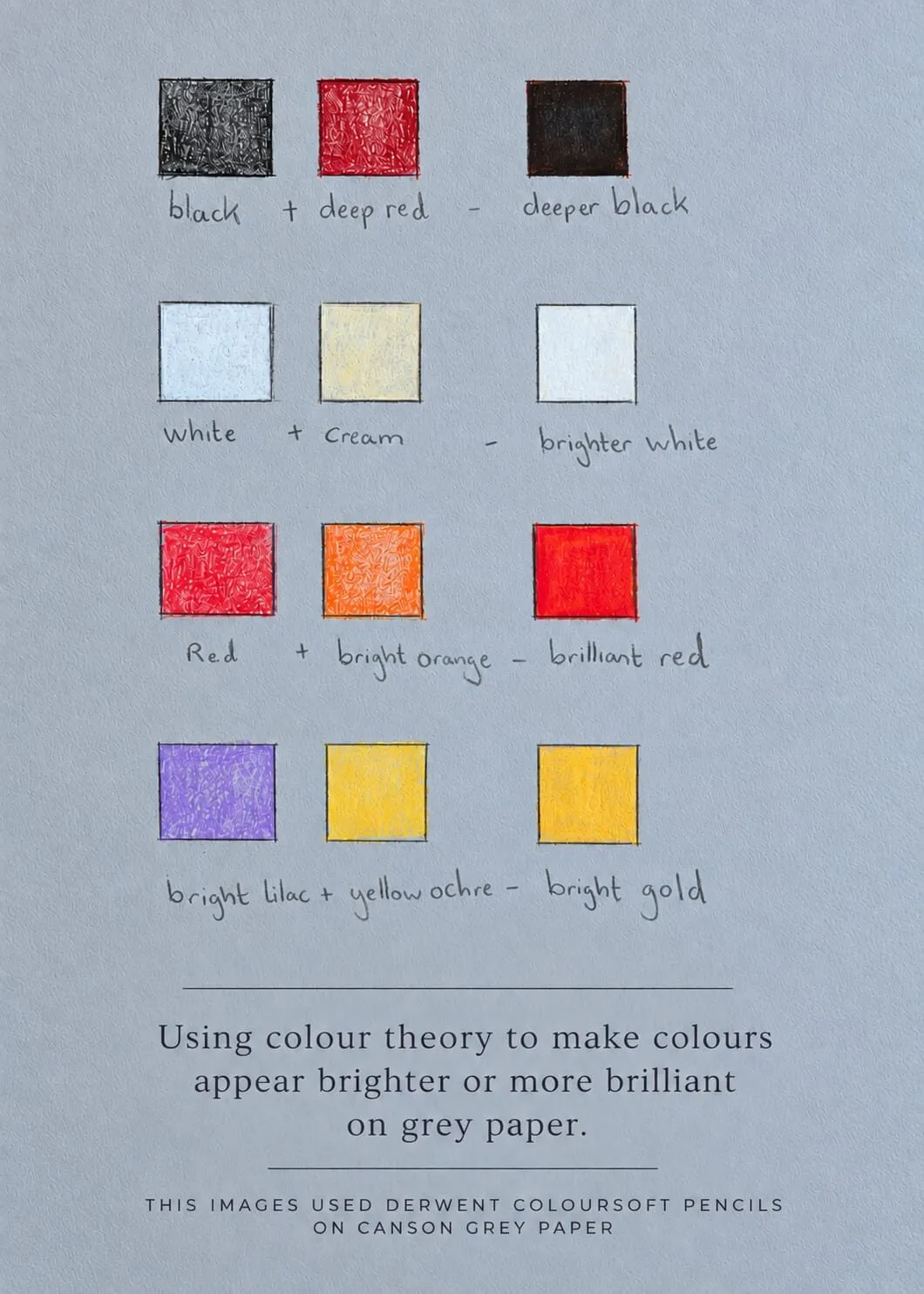
Key takeaways
- ◆A good white for grey paper is opaque, creamy and able to burnish, because it has to cover the mid-tone and still read as a true highlight.
- ◆Wax whites are softer and cover quickly; oil whites are firmer and give finer control, and many artists carry one of each.
- ◆Layering a cream over or under a white gives a brighter, warmer white on grey paper than white alone, as Michael's swatch card shows.
- ◆Build the base tones first and add white last, using few, deliberate highlights rather than covering everything.
- ◆Luminance, Polychromos and Coloursoft whites each trade softness against control, so choose by subject.
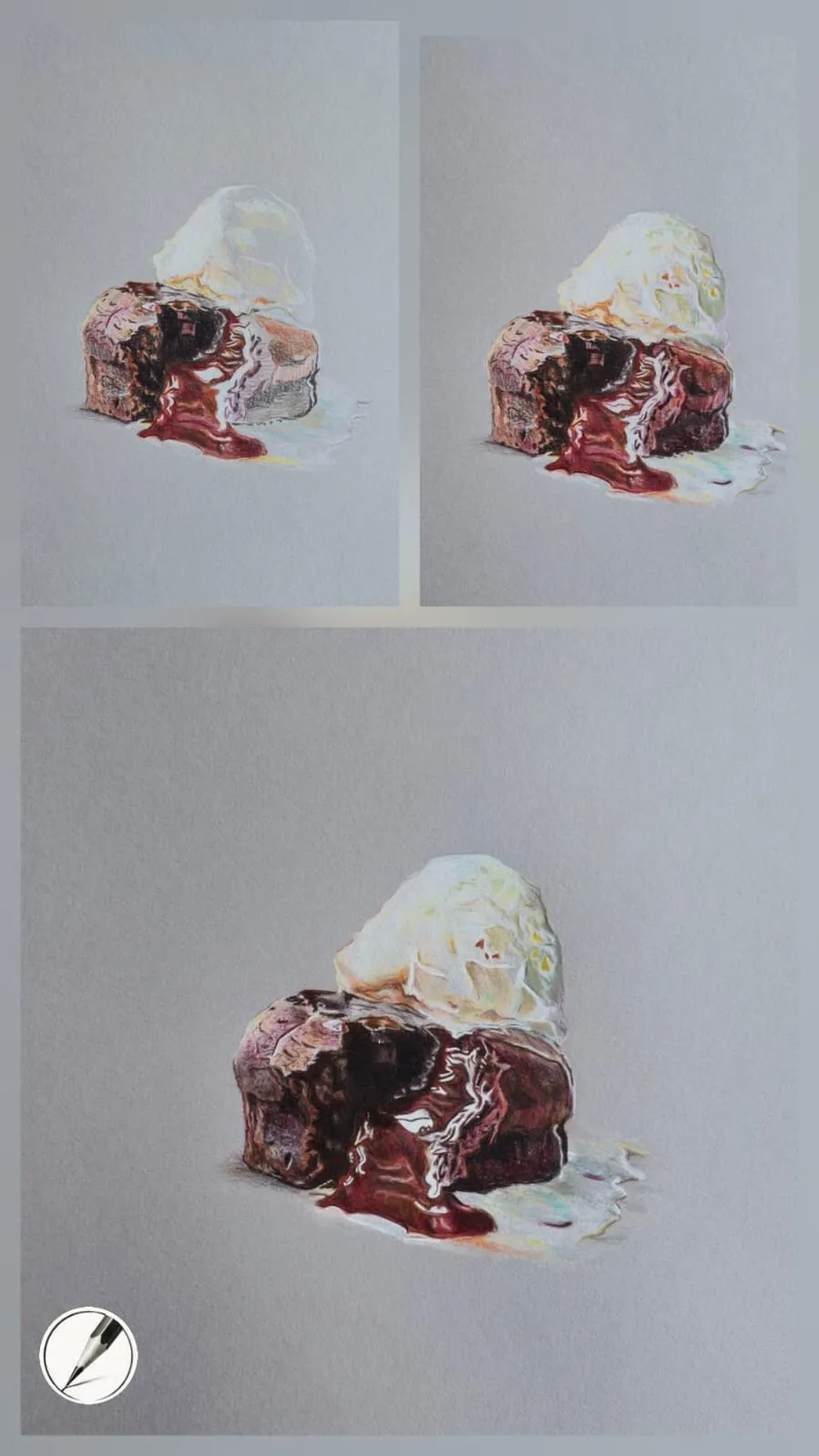
On grey paper, the white pencil is the most important pencil in the tin. It draws every highlight, every spark of light on metal and every wet glint on icing. A weak, chalky white gives dull highlights no matter how well the rest of the drawing is built, and a good one makes an ordinary drawing look three-dimensional.
This guide explains what to look for in a white coloured pencil (colored pencil, in the US), how wax and oil whites differ, why a cream is a useful partner, and how to use the pencil on grey or toned paper. It builds on why use grey paper for coloured pencil, and if you are still choosing a set, the which pencil set quiz will point you toward one.
The short answer
Choose a white that is opaque and creamy, keep a cream beside it, and test it on your actual paper before you commit. Softer wax whites are quick and forgiving; firmer oil-based whites offer crisper control. We would start with the white from the line you already use, then compare a second line if you find it lacking.
| Line | White character | Best for |
|---|---|---|
| Caran d’Ache Luminance | Creamy and opaque; described in the source as unmatched for soft realism | Soft gradients, portraits, gentle highlights |
| Faber-Castell Polychromos | Firm, oil-based, precise | Sharp, controlled highlights and fine detail |
| Derwent Coloursoft | Velvety, rich and soft | Painterly highlights and soft blending |
Lines change over time, and colour numbers and names vary, so check each manufacturer’s current range for the exact white and cream you want.
Sharpened coloured pencils lined up on cream paper.
What makes a good white for grey paper
Opacity
A white pencil has to lie on top of a mid-tone without the grey showing through it. Opaque, pigment-rich pencils cover better. If you have to press very hard to see the white at all, it is either too hard for the paper or not opaque enough for the job.
Creaminess
Creamy pencils deposit more pigment per stroke and fill the tooth of the paper quickly. That gives clean, bright highlights with less effort. Firm, dry whites can skate over the paper and leave a broken, streaky mark, especially over layers of colour.
Burnishing ability
Burnishing means pressing firmly, or using a light colour, to flatten the pigment into a smooth, glossy layer. A white that burnishes well gives a satin, glassy finish that suits shiny subjects. See how to burnish coloured pencils for the method.
Point retention
Highlights are often small and sharp: a glint on a rim, a spark on a cherry. A white that keeps a point, or that you can sharpen easily, gives more accurate marks. Softer pencils wear down quickly, so keep a sharpener nearby; our sharpener guide helps you choose.
Wax versus oil whites
The binder changes how a white behaves.
- Wax-based whites are soft and creamy, cover well and burnish easily. They can build wax bloom, a cloudy film, under heavy layering, and they may smear over other layers.
- Oil-based whites are firmer, hold a point and layer cleanly with less bloom. They give more control but can look less bright unless you press or layer them.
Many artists carry both: a soft wax white for large soft highlights and a firm oil white for fine, crisp accents. The wax versus oil-based guide explains the trade-offs, and the Polychromos versus Luminance versus Lightfast comparison looks at three premium lines side by side.
Cream versus pure white
A pure white pencil on grey paper can look slightly cold or flat. Adding a cream, a pale, warm yellow-white, brings warmth and depth. Michael’s swatch card, drawn with Derwent Coloursoft on Canson grey, shows the effect: white plus cream gives a brighter white than white on its own.
The swatch card at the top of this page shows the effect: white plus cream gives a brighter white, red plus bright orange gives a brilliant red, and black plus deep red gives a deeper black.
Why it works: white pigment alone is neutral, so on a cool grey it can read as flat. A cream, placed under the white or worked into the highlight, gives the eye a warm-to-cool shift, which makes the highlight feel brighter. The same principle explains the other pairings on the card, and colour theory on grey paper covers them in detail.
How to use white on grey or toned paper
- Build the base first. Lay in the darks and midtones of your colours before adding highlights. Highlights only look bright when everything around them is darker.
- Plan a few highlights. A convincing shine comes from a few sharp, high-contrast highlights on smooth midtones, not from adding more and more white. Too many highlights makes the surface look busy or plasticky rather than wet.
- Use cream first, then white. Lay a light cream over the highlight area, then place white on top for the brightest point.
- Match the edge to the surface. Hard, crisp highlights suit glassy or metallic surfaces; softer transitions suit icing, glaze and skin.
- Tint the highlight. Highlights pick up the colour around them. A warm glaze often has a hint of orange or pink in its highlight, not pure white.
- Keep the pencil clean. White picks up coloured pigment from the paper. Wipe it on scrap paper before touching a highlight.
- Press firmly late. Use firm pressure only in the final stage, because heavy white early flattens the tooth and blocks later layers.
The how to draw glossy surfaces and shiny metal and reflections guides apply this to specific subjects.
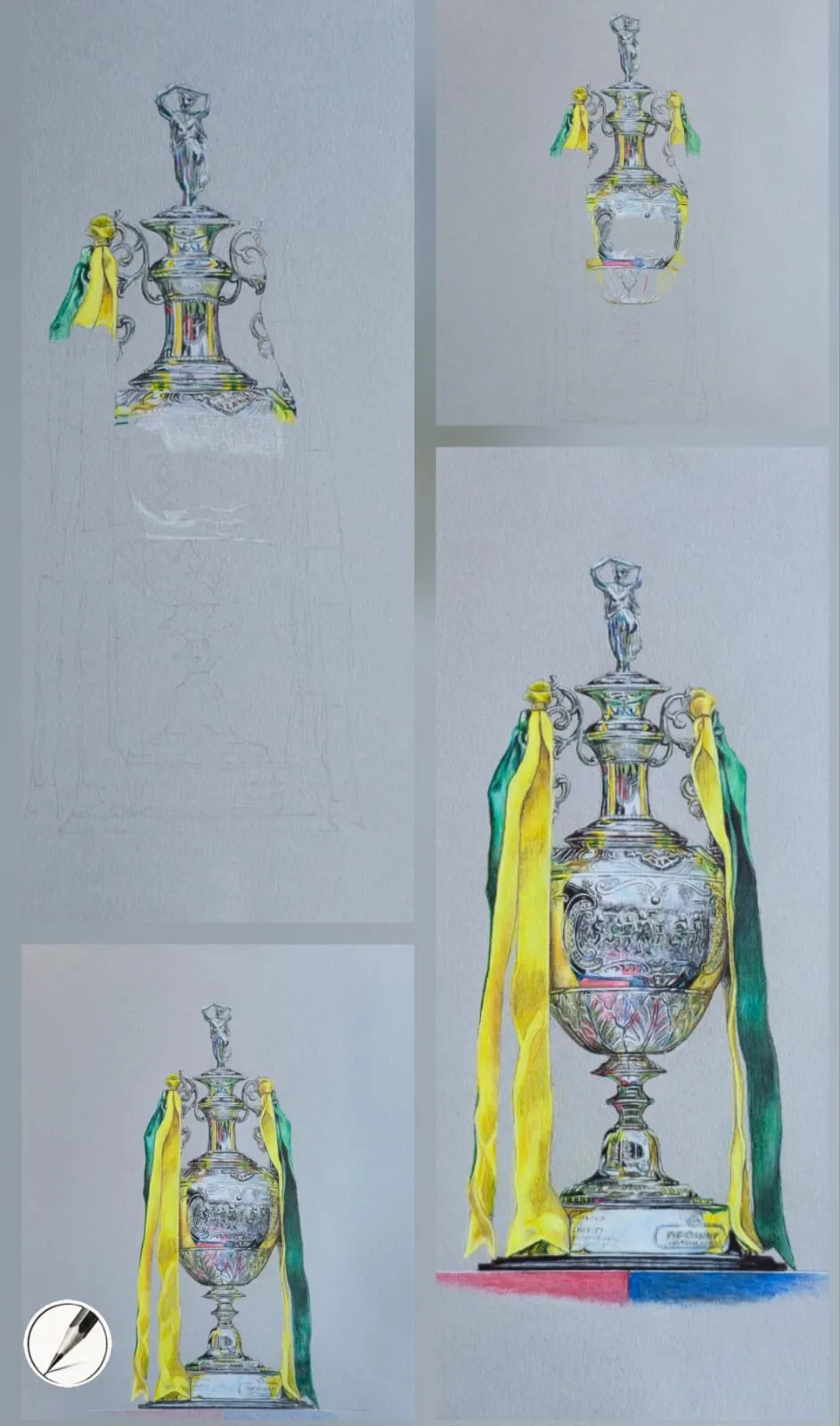
A silver trophy in stages on grey paper: the base tones are layered first, and the brightest highlights arrive at the end.
Our picks in more detail
Caran d’Ache Luminance
Creamy and opaque, Luminance is described in the source as unmatched for soft gradients and delicate transitions, which suits portraits. Its white gives soft, luminous highlights. It is a premium, expensive line, so it is aimed at artists who are committed to the medium.
Faber-Castell Polychromos
Polychromos are firm, oil-based and precise, so the white keeps a point and layers cleanly, which is good for crisp highlights and fine detail. The trade-off is that a firmer white can look less bright than a soft, creamy one unless you build it up on a toothy paper.
Derwent Coloursoft
Coloursoft is velvety, rich and soft, which suits painterly highlights and easy blending. Michael’s swatch card is drawn in this line on Canson grey. Softer pencils wear quickly and can be fragile, so sharpen gently.
Compare these lines further in best coloured pencils and Derwent coloured pencils reviewed.
Choosing the right paper for white pencil
The paper and the white work together. A toothy mixed media grey, such as Canson Mixed Media in grey, grips pigment firmly, which helps white sit on top of layers and survive lifting and reworking. A smoother paper gives finer highlights but accepts fewer layers. The best paper for coloured pencils guide compares options.
Common mistakes
- Adding white too early. It clogs the tooth and stops further layers. Save it for the end.
- Using white for everything light. Pale tints of the local colour often look more natural than pure white.
- Overusing highlights. A restrained few look wet; many look pasted on.
- Pressing hard with a hard pencil. It burnishes the paper and shines badly. Choose a softer white for large areas.
- Skipping cream. A single white can look cold on grey.
The short version
Choose an opaque, creamy white that burnishes; use wax for soft coverage and oil for crisp control; pair it with a cream for a brighter white on grey paper; and add highlights last, sparingly. Try Luminance for softness, Polychromos for precision and Coloursoft for a velvety feel, and test on your own paper. If you want a shortlist to match your subject and budget, use the which pencil set quiz.
Where to buy
Recommended products
Affiliate links. We may earn a small commission if you buy, at no extra cost to you. Why?
Pencils · Derwent
Derwent Coloursoft Pencils
Soft, velvety and richly pigmented - excellent for painterly blending and bold colour.
Pencils · Faber-Castell
Faber-Castell Polychromos
Firm, oil-based artist pencils that hold a point - a benchmark for detail and clean layering.
Paper · Canson
Canson Mixed Media Grey Paper
A toothy mid-tone grey paper that grips pigment and makes highlights glow.
Pencils · Caran d'Ache
Caran d'Ache Pencils
Premium artist pencils - Luminance is creamy and opaque for portraits, Pablo is firmer for detail.
Quick answers
Frequently asked questions
What is the best white pencil for grey paper?+
There is no single best. Look for an opaque, creamy white that covers the paper without a chalky finish. Softer wax whites cover fast; firmer oil whites give finer control. Try a cream alongside your white to get a brighter, warmer highlight.
Why does my white pencil look dull or chalky on grey paper?+
Usually the pencil is too hard, too little pigment is being deposited or the surface tooth is filled. Use a softer, creamier white, lay it down with firmer pressure late in the drawing, and burnish lightly for a smoother, brighter finish.
Can I use a white gel pen or paint instead?+
Yes, for the very brightest accents some artists add a white gel pen or paint, but pencil highlights blend with the drawing. It is best to learn to build highlights with pencil first, so the finish looks consistent.
Do I need a white pencil for colored pencil drawing on white paper?+
Less often. On white paper, the paper itself is your lightest tone, so you keep highlights by leaving them unmarked. A white pencil still helps to soften edges, lighten an area or blend, but it is essential on grey or toned paper.