Paper & Surfaces
Stonehenge Paper Review for Coloured Pencil
A Stonehenge paper review for coloured pencil (colored pencil): soft tooth, deep velvety layering, gentle lifting and the best subjects, plus who should skip it.
This guide contains affiliate links. If you buy through them we may earn a small commission at no cost to you. How this works.
Jump to recommended products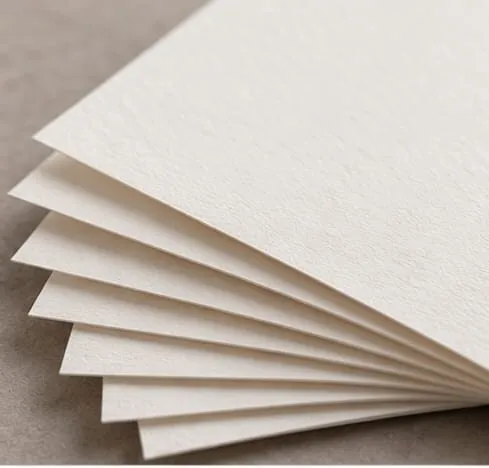
Key takeaways
- ◆Stonehenge is the soft, velvety, forgiving option: a gentle tooth that allows deep layering without a scratchy feel.
- ◆Michael's notes put Stonehenge White at around 250 gsm, but it is sold in several weights, so check the maker's current spec.
- ◆It is fully archival, acid-free and museum-grade, and it lifts gently without damaging the fibres.
- ◆It suits skin, fur, feathers and botanical work best; very glossy, high-contrast subjects are better on a toothier grey paper.
- ◆Its softer feel means gentle layering and light erasing work better than heavy pressure.
Stonehenge is the paper you choose when you want colour to settle into the sheet rather than sit on top of it. It is soft, forgiving and pleasant to draw on, and it has a reputation among coloured pencil realists for allowing deep, velvety layering. It is not the answer to every subject, and this review explains where it fits.
We cover how it feels, how it layers, lifts and burnishes, what it is best for and who should look elsewhere. Coloured pencils, called colored pencils in the US, behave the same on it whichever spelling you prefer. For the full field, see the paper guide and the Canson vs Arches vs Stonehenge vs Clairefontaine comparison.
What Stonehenge is
Stonehenge is a white, cotton-fibre printmaking and drawing paper that is also popular with coloured pencil artists. Michael’s shorthand for it is the soft one of the four papers he compares: velvety, gentle and forgiving. It is perfect for realism, he says, because it allows deep layering without feeling scratchy, and colours sink into the fibres in a way that creates a natural, painterly softness.
It is white, so you start at the lightest point and build both lights and darks. If you are deciding between white and grey, why use grey paper for coloured pencil explains the other side.
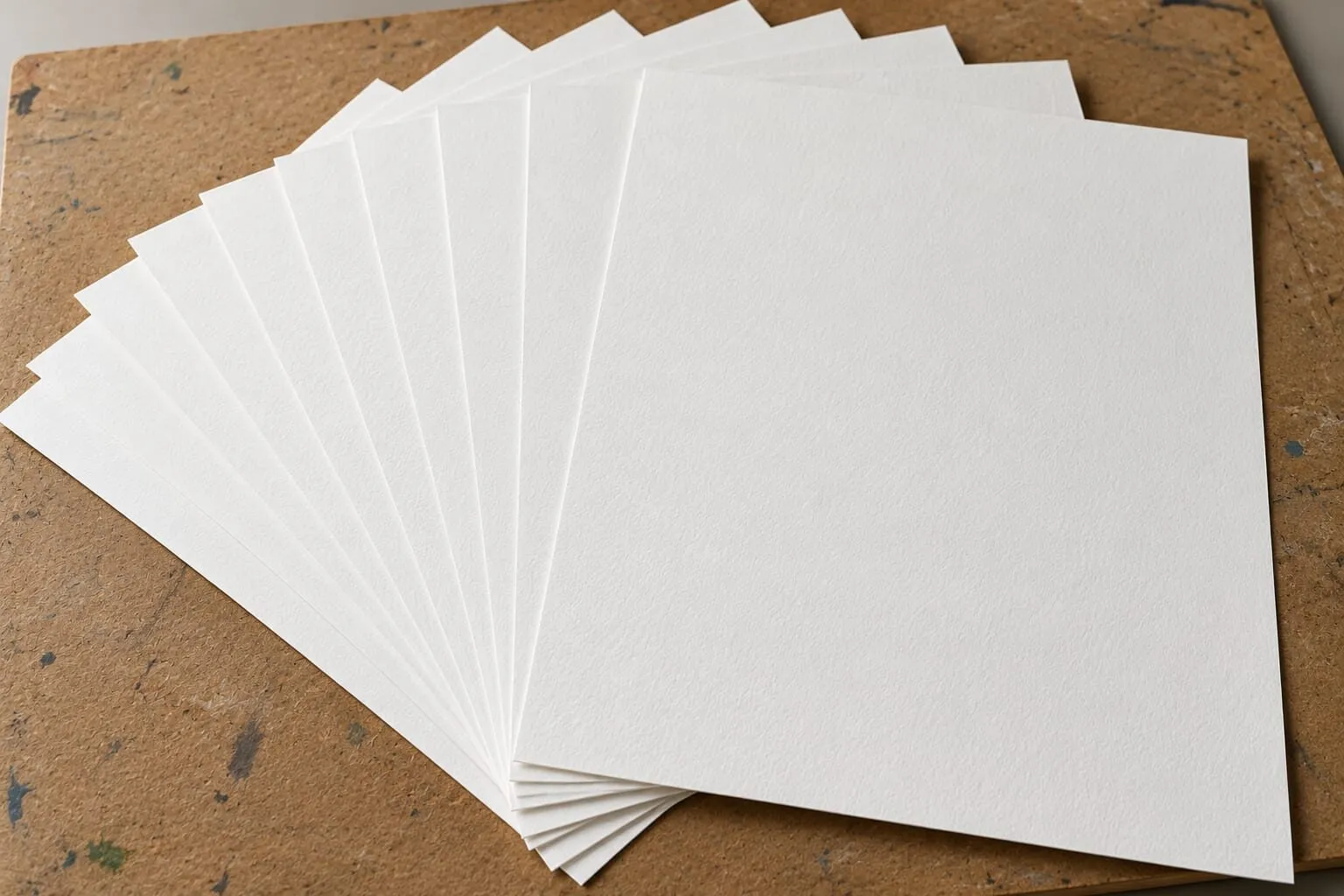
A stack of white drawing paper sheets on a wooden board.
Feel and tooth
Stonehenge has soft tooth. It grips pigment gently, allowing velvety layering without the harsh texture of a grainy sheet. The surface is softly textured rather than smooth or aggressively toothy, which sits between Arches Hot Press and Canson Mixed Media grey.
Practically, that means the pencil feels pleasant and gives a little under your hand. Colour goes on smoothly, and you can keep adding thin layers for a long time. The paper tooth guide explains how tooth changes control and finish.
Weight
Michael’s notes put Stonehenge White at around 250 gsm, slightly lighter than Canson or Arches but still robust. Stonehenge is sold in several weights, so treat 250 gsm as a guide rather than a guarantee and check the maker’s current spec. Because the feel is soft, gentle layering works best and heavy erasing is not advised. For background on weights, see paper weight explained.
Drawing materials on a table: sheets of paper, pencils, a wooden mannequin, an eraser and a sharpener.
Layering
Deep, velvety layering is the headline. Colours blend into the surface and transitions stay soft. To get the best from it:
- Keep pressure light. The soft surface takes colour readily, so heavy pressure early closes the tooth sooner than you want.
- Build slowly with sharp points and changing stroke direction. The approach in how to layer coloured pencils fits it perfectly.
- Work general to specific. Bring the whole drawing up together, then refine.
- Stop when the surface stops taking colour. Switching to a different technique beats pushing harder.
Lifting and corrections
Stonehenge lifts gently without damaging the fibres. That is ideal for subtle highlights in portraits and realism, such as a soft edge of light on skin. It does not lift as dramatically as a heavily toothed paper, so it suits gradual corrections more than sparkling highlights. The softer feel still means you should be gentle. Read lifting and erasing coloured pencil for tools and methods.
Burnishing
Michael notes that Stonehenge burnishes smoothly without streaking. Burnishing is the final polish: pressing hard with a light pencil to create a smooth, glossy finish that flattens the tooth and locks in the pigment. It works well on this paper for a soft, creamy sheen, but only do it when your layers are complete, since little colour can be added afterwards. See how to burnish coloured pencils.
Archival quality
Michael’s source describes Stonehenge as fully archival, acid-free and museum-grade, designed to last decades without yellowing. That matters if you sell or exhibit work. Our guide to archival paper for selling your drawings covers the wider picture, and you should confirm the maker’s current specification for the exact product.
Best subjects
- Skin and portraits. Soft blends and gentle highlight lifting suit skin tones. Michael lists Stonehenge among his portrait recommendations for soft realism and gentle transitions. See how to draw portraits in coloured pencil.
- Fur. Layered, directional strokes sink in softly. The animal fur guide shows the method.
- Feathers and other delicate textures.
- Botanical work, where subtle colour shifts and fine detail matter.
How it compares
| Quality | Stonehenge White | Arches Hot Press | Canson Mixed Media grey |
|---|---|---|---|
| Character | Soft, velvety | Smooth, refined | Bold, grainy |
| Tooth | Soft | Minimal | Heavy |
| Lifting | Gentle | Hardest | Excellent |
| Archival | Fully archival | Fully archival | Durable, not always fully archival |
| Best for | Fur, feathers, botanical, skin | Portraits, fine detail | Glossy still life |
The closest alternative is Arches Hot Press, which is smoother but harder to lift from. For glossy subjects, see the Canson Mixed Media grey review. The best paper for realistic drawing article lists further options.
Pencil pairings
Stonehenge is soft enough to work with both soft and firm pencils. Soft, wax-based pencils blend easily and fill the tooth quickly, so keep pressure light. Firm, oil-based pencils such as Polychromos build clean layers for a long time and suit the fine detail of feathers and botanical work. Michael’s notes describe firm pencils as blending cleanly and soft pencils as blending easily, so either can work; it depends on the finish you want. The wax versus oil-based coloured pencils guide explains the differences.
Common problems and fixes
- Colour goes on too dark too quickly. The soft surface takes pigment readily. Use the side of a sharp point, lighter pressure and more layers.
- Surface looks flat or waxy. The tooth has filled. Stop adding colour in that area and finish with a light glaze or a burnish, rather than pressing harder.
- Erasing leaves a mark. The softer sheet is less tolerant of heavy erasing. Use gentle lifting with a putty rubber and plan your lights.
- Highlights lack sparkle. Soft tooth holds detail gently rather than dramatically. Save a few crisp highlights for the very end and keep them small.
Who should skip it
If your subjects are mostly metal, glass or wet icing, where hard highlights against rich darks are the point, a textured grey paper will usually be easier. If you need aggressive lifting and heavy corrections, choose a heavier, toothier paper. And if you want a mid-tone ground, Stonehenge White will not give you one, since you start at the lightest value.
Buying advice
- Start with a small pack and test your own pencils before a large piece.
- Check the current range. Weights and sizes vary, and the label is authoritative.
- Plan your size with the paper size converter or see A3 dimensions.
- Pair it with firm or soft pencils depending on your style; the pencil set quiz can help.
A quick test before a big drawing
Cut an offcut and run a five-minute test: swatch your main pencils at light, medium and firm pressure, layer one patch six or seven times, lift a small highlight with a putty rubber, and burnish one corner. Note when the surface stops accepting colour and how much the lift leaves behind. That small record tells you how much pressure the sheet tolerates and whether the soft feel suits your hand, which matters more than any description of the paper, including this one.
The short version
Stonehenge is a soft, velvety, fully archival paper that rewards patient layering. It is at its best for skin, fur, feathers and botanical work, and it lifts gently rather than dramatically. If you want deep realism with a forgiving feel, it is a strong choice. If your subjects are shiny and high contrast, reach for grey paper with stronger tooth instead.
Where to buy
Recommended products
Affiliate links. We may earn a small commission if you buy, at no extra cost to you. Why?
Paper · Stonehenge
Stonehenge Paper
Soft, velvety, forgiving paper loved for realism and deep layering.
Quick answers
Frequently asked questions
Is Stonehenge paper good for coloured pencil?+
Yes. It is soft, velvety and forgiving, with a gentle tooth that allows deep layering without feeling scratchy. Colours sink into the fibres for a natural, painterly softness, which makes it a strong choice for realism, especially skin, fur, feathers and botanical subjects.
What weight is Stonehenge paper?+
Michael's notes describe Stonehenge White as around 250 gsm, slightly lighter than Canson or Arches but still robust. The paper is available in several weights, and products change, so check the maker's current specification on the pad or label before you buy.
Is Stonehenge paper archival?+
Michael's source describes Stonehenge as fully archival, acid-free and museum-grade, designed to last decades without yellowing. That makes it suitable for work you plan to sell or exhibit, but confirm the maker's current specification for the exact product.
Stonehenge or Arches Hot Press for coloured pencil?+
Both are fully archival and white. Arches Hot Press is smoother and suits portraits and fine detail, but it is harder to lift from. Stonehenge is softer and velvety, lifts gently, and suits fur, feathers and botanical work. Swatch both with your pencils to decide.
Are colored pencils and coloured pencils the same?+
Yes. Coloured pencils is the UK spelling and colored pencils is the US spelling. They are the same pencils, and this review applies whichever name you use.