
Books & Courses
How Long Does It Take to Learn to Draw?
An honest answer to how long it takes to learn to draw: milestones from first recognisable drawings to realism, what speeds progress and what slows it down.
Key takeaways
- ◆There is no single number. How long it takes depends on what you mean by drawing well, how often you practise and how deliberately you do it.
- ◆Most beginners can make recognisable, pleasing drawings within weeks of regular practice; consistent proportion and confident shading usually take months; realism takes years.
- ◆Deliberate practice, meaning targeted exercises with feedback, improves skill faster than simply drawing more of what you already do.
- ◆Progress is lumpy and hard to see day to day. Keep dated work and compare it every few months.
- ◆Drawing is a learnable skill, not a talent you either have or lack. Beginners who keep practising almost always improve.
Everyone who starts drawing asks the same question, and the honest answer is that it depends. It depends on what you want to draw, how often you practise, what you practise and how closely you look at your own work. Anyone who promises a precise timeline, such as “draw like a pro in 30 days”, is selling something. This applies whether you draw in graphite or in coloured pencils, which US readers call colored pencils.
What can be said with confidence is that drawing is a learnable skill with recognisable stages, and that the stages arrive faster with regular, focused practice. This guide describes those stages, what tends to speed progress up and what slows it down. It avoids made-up figures because there are none worth trusting: people differ too much. If you want a practical plan to begin with, see drawing for beginners: where to start.
The short answer
You can make drawings you are pleased with within weeks. You can draw simple objects with believable proportion and shading within a few months of regular practice. Confident, flexible realism with subjects such as portraits, animals and glossy objects typically takes years, and it keeps developing for as long as you draw. The clock matters less than the method.
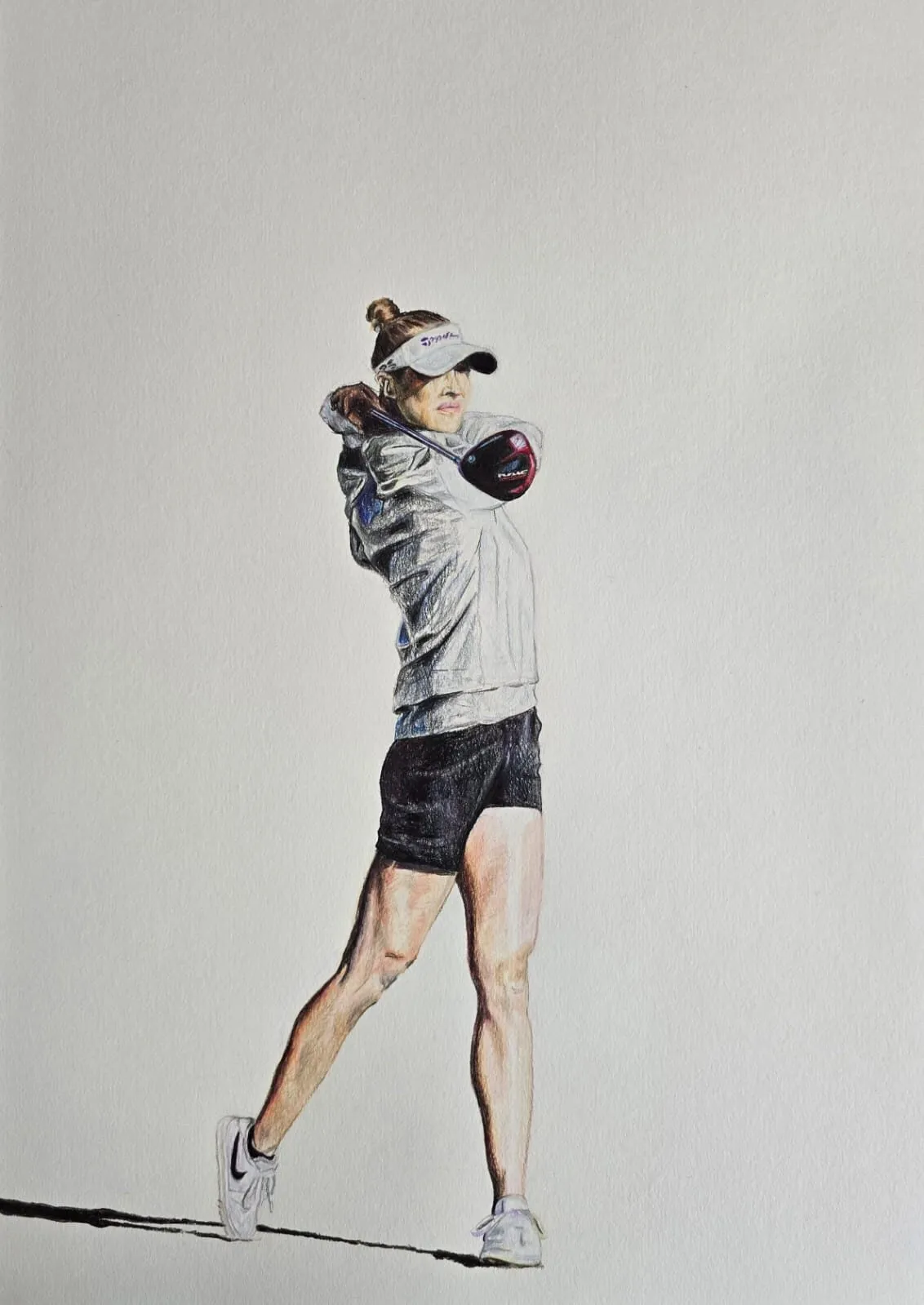
A golfer mid-swing drawn in coloured pencil. Drawing by Michael Brace.
It depends on your goal
“Learn to draw” covers very different targets.
| Goal | What it involves | Rough feel |
|---|---|---|
| Doodling and sketching for enjoyment | Loose lines, basic shapes, relaxed observation | Quick to start; enjoyable almost at once |
| Drawing recognisable everyday objects | Basic forms, simple shading, measured proportion | Weeks to a few months |
| Reliable likenesses of people and animals | Proportion, structure, edges, values | Many months to years |
| Photorealism or gallery-level work | Precise value, colour layering, patience, design | Years, and a lifelong refinement |
Decide what you want before you judge how long you have taken. A person who wants to keep a relaxing sketchbook has very different needs from someone aiming to enter competitions.
The milestones on the way
Progress is not one smooth slope. It usually arrives as a series of moments when something clicks. These are common stages, not a schedule.
1. First recognisable drawings
Early on, the aim is to draw what is in front of you well enough that other people know what it is. This stage comes quickly once you learn to observe instead of drawing symbols. Exercises such as contour drawing and upside-down copying help, and the drawing exercises for beginners list is a good source. Most people notice a real step forward within the first few weeks of regular practice.
2. Consistent proportion
Next comes getting sizes and angles right without constant correction. You learn to measure with your pencil, compare shapes and check your work against the reference. Gridding and measuring tools feel essential at first and gradually become habits of the eye. The grid drawing tool is a useful scaffold while you build this. Reliable proportion often takes several months of regular practice.
3. Confident shading
Here you learn to see light: to shade a sphere convincingly, to make smooth gradients, to match tones and to place cast shadows. A value scale and lessons in how to shade with pencil accelerate this stage. When your drawings start to look solid rather than flat, this is the stage you have reached.
4. Realism and refinement
The final stage combines everything: accurate structure, nuanced values, controlled edges and, in colour work, layering and colour harmony. This is the long phase. It is also the one where the work becomes most satisfying, because you are refining an eye and a hand you already trust. Artists continue to improve at this level for decades.
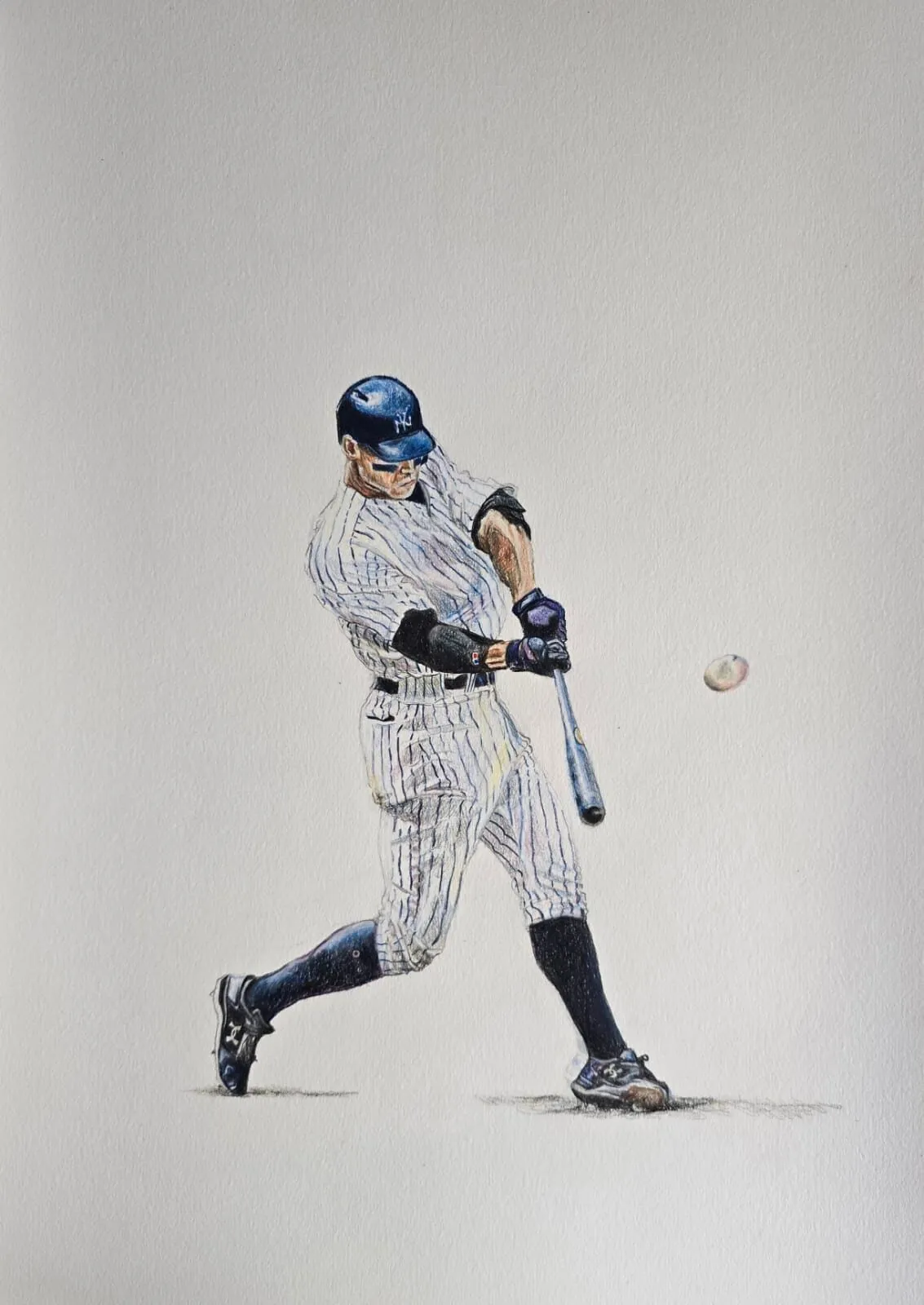
A baseball batter mid-swing drawn in coloured pencil. Drawing by Michael Brace.
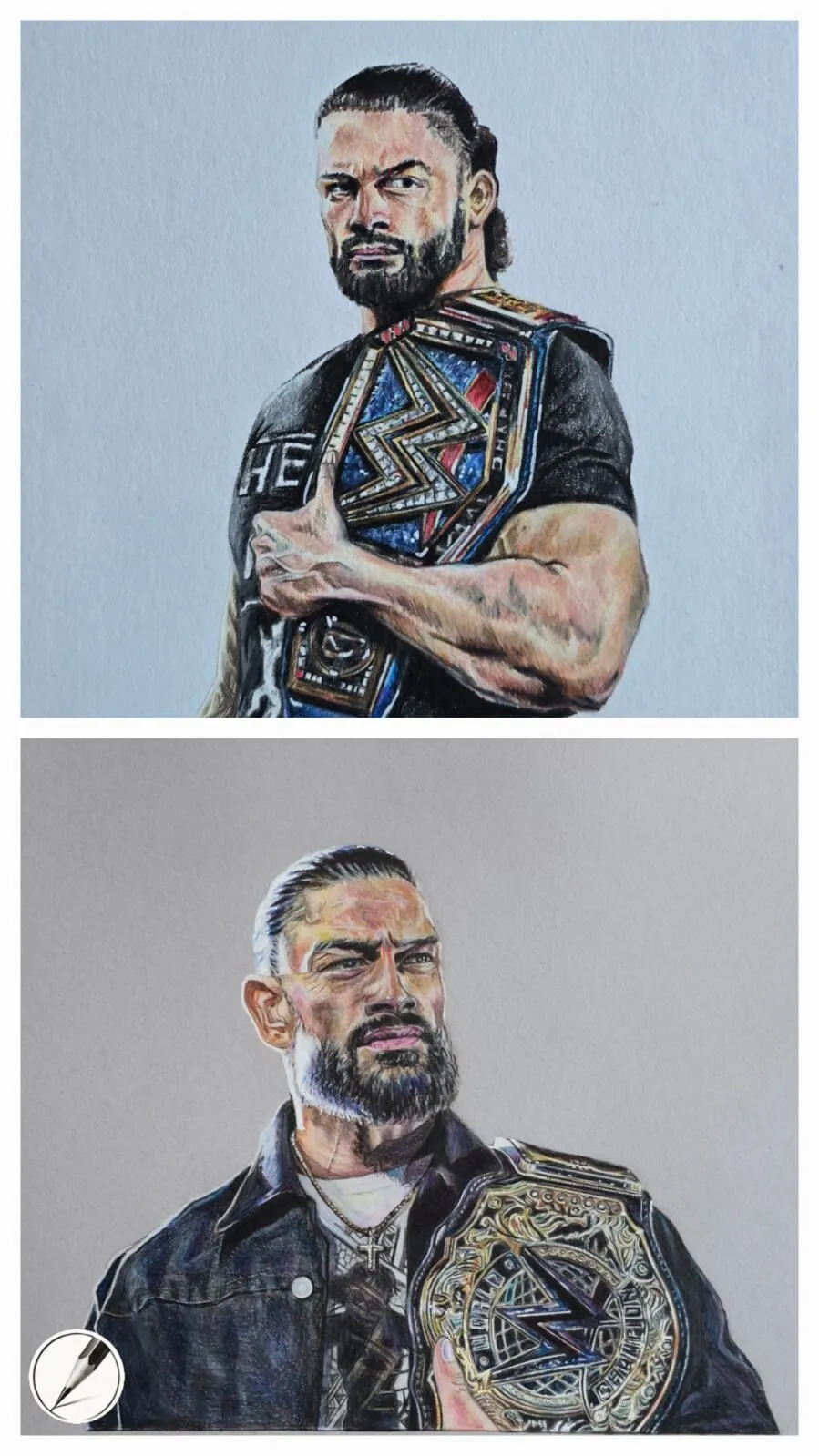
What Michael’s progress figure shows
One of Michael’s figures places two drawings of the same subject side by side, made at different times. The difference in accuracy, tone and confidence is obvious when they sit together, yet changes like this are easy to miss from one week to the next. That is the nature of progress in drawing: slow enough to feel invisible, large enough to be striking in hindsight. It is also why keeping dated work matters so much, which the section below returns to.
What speeds progress up
- Deliberate practice. Choose a specific weakness, design a short exercise for it, and check the result. This beats undirected drawing. See how to practise drawing daily for a structure.
- Regularity. Short sessions on most days consolidate skills better than rare long ones.
- Drawing from observation. Real objects and good references teach you to see. Read how to draw what you see.
- Feedback. A tutor, a class or an honest peer group points out things you cannot see yourself.
- Learning from skilled artists. Studying and copying good drawings teaches efficient ways of seeing. See master draughtsmen to study.
- Structured learning. A book or a course gives you an order to learn things in. Our best books to improve your drawing and best drawing courses lists are a starting point.
- Decent materials. You do not need expensive kit, but paper that holds graphite or pigment and pencils that behave predictably remove avoidable frustration.
What slows progress down
- Only drawing what you already do well. Comfort feels good and teaches little.
- Copying only from photos. Photos flatten depth and edges. Mix in objects from life.
- Comparing your work with professionals who have years more practice. Compare it with your own work from three months ago.
- Erasing everything. Constant erasing slows your eye. Accept mistakes and correct them in later passes.
- Jumping between materials and styles before any of them becomes familiar.
- Long gaps. Skills fade when you stop for months, although they return faster than you might expect.
How to see your own progress
Because improvement is slow, you need evidence.
- Date everything. Put the month and year on each page.
- Repeat a benchmark. Draw the same simple subject, such as a cup or a face from a photo, every two or three months. File the results together.
- Compare like with like. Judge a hard subject against an earlier hard subject.
- Write one line per session about what you practised and what you would fix.
- Review every few months. Lay out old pages beside new ones. This is the single most motivating habit a beginner can have.
A realistic way to start
If you have a month, try the 30-day drawing challenge, which gives you one achievable task per day. If you already draw a little, add a rotation of gesture, contour, value, timed and copy exercises from the practice routine. Use the value study tool now and then to check whether your tonal range is wide enough.
Age, talent and starting late
Adults often worry they have missed the window. They have not. Adults bring patience, focus and the ability to plan practice, all of which help. Children may pick up drawing with less self-criticism, but the underlying skills of observation, proportion and value are learnable at any age. What matters is consistency and a willingness to be a beginner at the start.
“Talent” is also overrated as an explanation. Early enthusiasm leads to early practice, which looks like talent years later. Interest, curiosity and steady effort carry almost everyone further than they expect.
Keep it enjoyable
The people who draw for decades are rarely the most disciplined. They are the ones who enjoy it enough to come back. Mix exercises with subjects you love, keep a low-pressure sketchbook and treat each drawing as information. If motivation dips, drawing ideas for beginners can give you a fresh prompt.
The short version
There is no fixed timeline. Expect recognisable drawings within weeks, reliable proportion and shading within months, and refined realism over years. Practise most days in short, deliberate sessions, draw from observation, get feedback, keep dated work and compare it every few months. The fastest route is the one you can keep up.
Quick answers
Frequently asked questions
How long does it take to learn to draw realistically?+
Realism is a long-term goal. Many people can produce a convincing simple still life within a few months of regular, focused practice, but polished realistic portraits, animals and complex scenes usually take years of building skills in proportion, value, edges and colour. The path is gradual, and there is no fixed timetable.
Can I learn to draw in 30 days?+
In 30 days you can learn the basics: how to hold a pencil, draw simple forms, shade a sphere and make measured drawings of everyday objects. You will see real improvement, but you will not be a finished realist. A structured month, such as the 30-day challenge, is an excellent start rather than an endpoint.
Is drawing a talent you are born with?+
Drawing is mostly a set of learnable skills: seeing accurately, judging proportion and tone, and controlling a pencil. Some people start with more interest or early practice, which can look like talent, but people who practise deliberately improve regardless of where they start. Patience and consistency matter more than any head start.
How many hours a day should I practise drawing?+
Twenty to thirty focused minutes on most days is enough to make steady progress and is easier to keep up than occasional long sessions. More time helps if it is spent deliberately. The quality of your practice, including targeted exercises and reviewing your work, matters as much as the number of hours.