Graphite & Charcoal
Best Graphite Pencils for Drawing
How to choose graphite drawing pencils: wooden, mechanical, woodless and sticks compared, what makes a good core, and recommended kits by subject.
This guide contains affiliate links. If you buy through them we may earn a small commission at no cost to you. How this works.
Jump to recommended products
Key takeaways
- ◆Judge a graphite pencil by consistency, a grit-free core, a usable grade range and how well it holds its point.
- ◆Wooden pencils are the best all-round choice; mechanical pencils suit fine detail; woodless and sticks suit broad tone.
- ◆Buy a small spread of grades from one reputable maker rather than a huge mixed set.
- ◆A sketching set from an established art brand is a sensible first purchase for most beginners.
- ◆Match the kit to the subject: portraits need a fine soft-to-hard range, animals need softer grades and broader tools.
Search for graphite pencils and you are met with hundreds of options: tins of 12, 24 or 40, wooden and mechanical, woodless, sticks, and packs with names that promise professional results. Most of them will draw a mark. The difference between a good pencil and a frustrating one shows up only after an hour of shading, when a gritty core has scratched the paper or one grade refuses to match its neighbour.
This guide explains what to look for, compares the main types and suggests which to buy for which kind of drawing. It deliberately avoids ranking specific models, because manufacturers change ranges, and you should check current specifications before buying. Instead you will get criteria you can apply to any pencil, plus sensible kit suggestions.
What makes a good graphite pencil
Four qualities matter more than price or packaging.
Consistency
Each grade in a range should behave predictably: the same darkness from the tip to the end of the pencil, and a sensible step between grades. Cheap pencils often vary within a single grade, which shows up as patchy tone in even shading. A good pencil lays down an even mark under even pressure.
A smooth, grit-free core
Small hard particles in the core scratch the paper, leaving bright white lines through your shading. These scratches are hard to fix. Good drawing pencils use finely milled, evenly mixed graphite, which glides across the paper. If a pencil feels gritty on the first stroke, do not persevere; it will not improve.
A usable range
You need a spread of grades that step evenly from hard to soft. A tin with grades that all look similar defeats the purpose of buying several. Our guide to graphite pencil grades explained shows what to expect at each point of the scale, and the pencil grade chart tool lets you compare tones.
Point retention
A hard pencil holds a point longer; a soft one dulls rapidly. Within a grade, a good core keeps its point without crumbling, so you sharpen less often and keep fine detail crisp. A core that snaps inside the wood is a sign of poor gluing or cheap manufacturing, and it wastes the pencil.
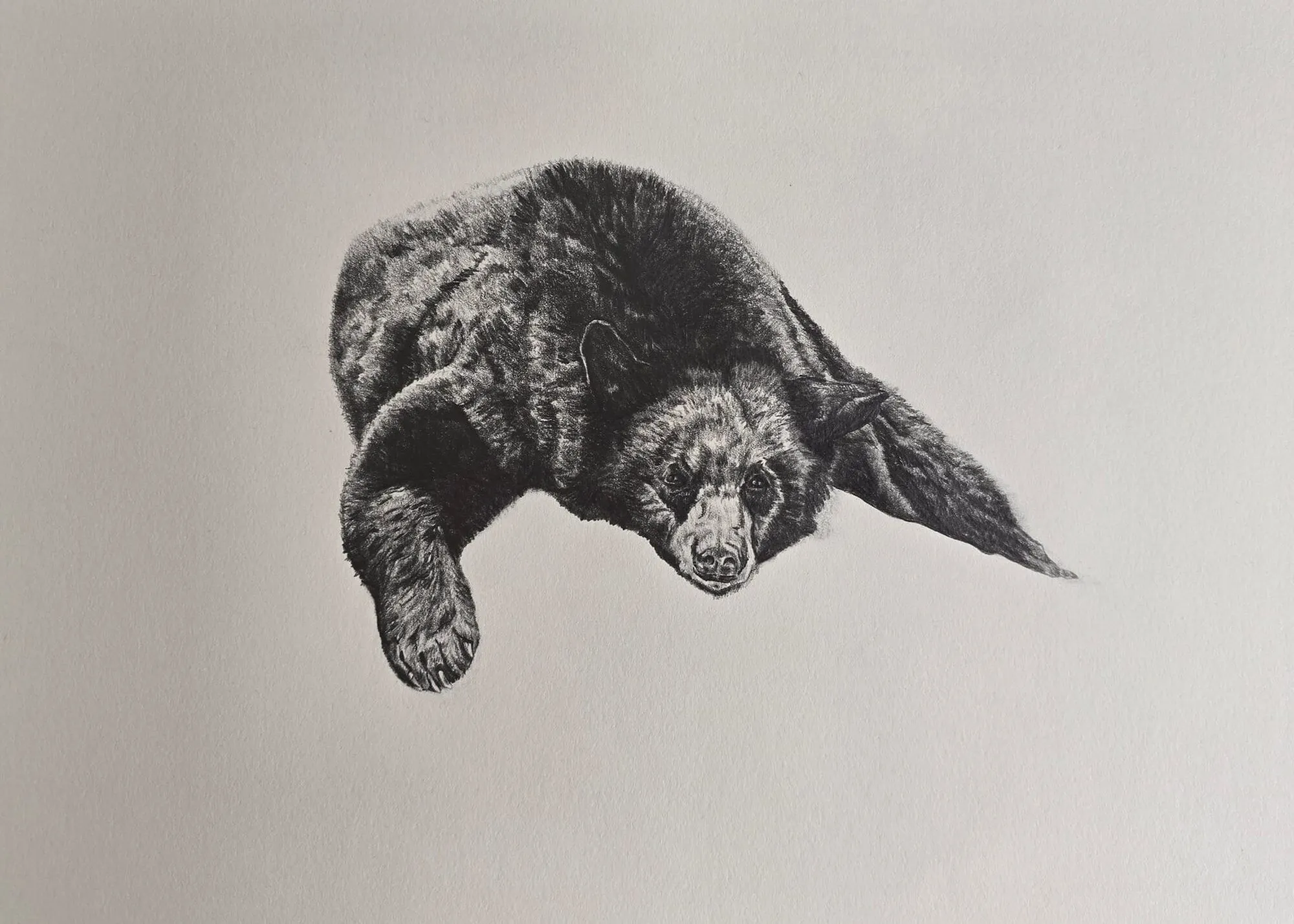
A bear lying down drawn in graphite pencil. Drawing by Michael Brace.
The main types
Wooden pencils
The standard choice. They are cheap, familiar and offered in the widest range of grades. You can shape the point exactly as you need: long and needle-like for fine detail, or shorter and blunt for broad shading. They can be sharpened with a knife, a sharpener or sandpaper.
Best for: almost everyone. If you buy only one type, buy wooden.
Mechanical pencils and clutch pencils
A mechanical pencil holds a thin lead that advances as you use it; a clutch pencil, or lead holder, grips a thicker lead and needs a separate sharpener. Both give a constant line and no wood to shave.
Best for: fine detail, technical work, small drawings and steady hatching lines. Less good for: broad shading and very soft grades, where thin leads can snap.
Woodless graphite pencils
These are solid graphite sticks in a lacquer coating. With no wood, the whole core can be used on its side, giving very broad coverage in a single pass.
Best for: large tonal areas, bold sketching and quick studies. Less good for: precise, small marks, and they can be heavier and more brittle.
Graphite sticks and powder
Sticks are thicker and more rectangular than woodless pencils and suit gestural work. Powder is finely ground graphite that you apply with a brush, tissue or stump for smooth, even tone.
Best for: underlying tone, large soft shadows and atmospheric backgrounds. Less good for: detail, and the dust needs care.
| Type | Point control | Broad tone | Best use |
|---|---|---|---|
| Wooden | Excellent | Good | General drawing |
| Mechanical or clutch | Excellent, constant line | Limited | Detail and technical |
| Woodless | Fair | Excellent | Big shadows, sketches |
| Sticks and powder | Poor | Excellent | Backgrounds, tonal base |
Which brands to consider
There are several long-established art pencil makers whose ranges are widely used by artists, including Derwent, Faber-Castell, Staedtler, Caran d’Ache and Mitsubishi. All of them have reputations for consistent art-grade pencils. We do not rank them because ranges, grade spreads and price change, and the difference between reputable makers is smaller than the difference between an art pencil and a stationery one.
Derwent’s Sketching pencils are one range Michael lists among his recommended tools, and they are a reasonable first set for someone who wants a spread of grades in one purchase. Check the maker for the exact grades in the set you choose.
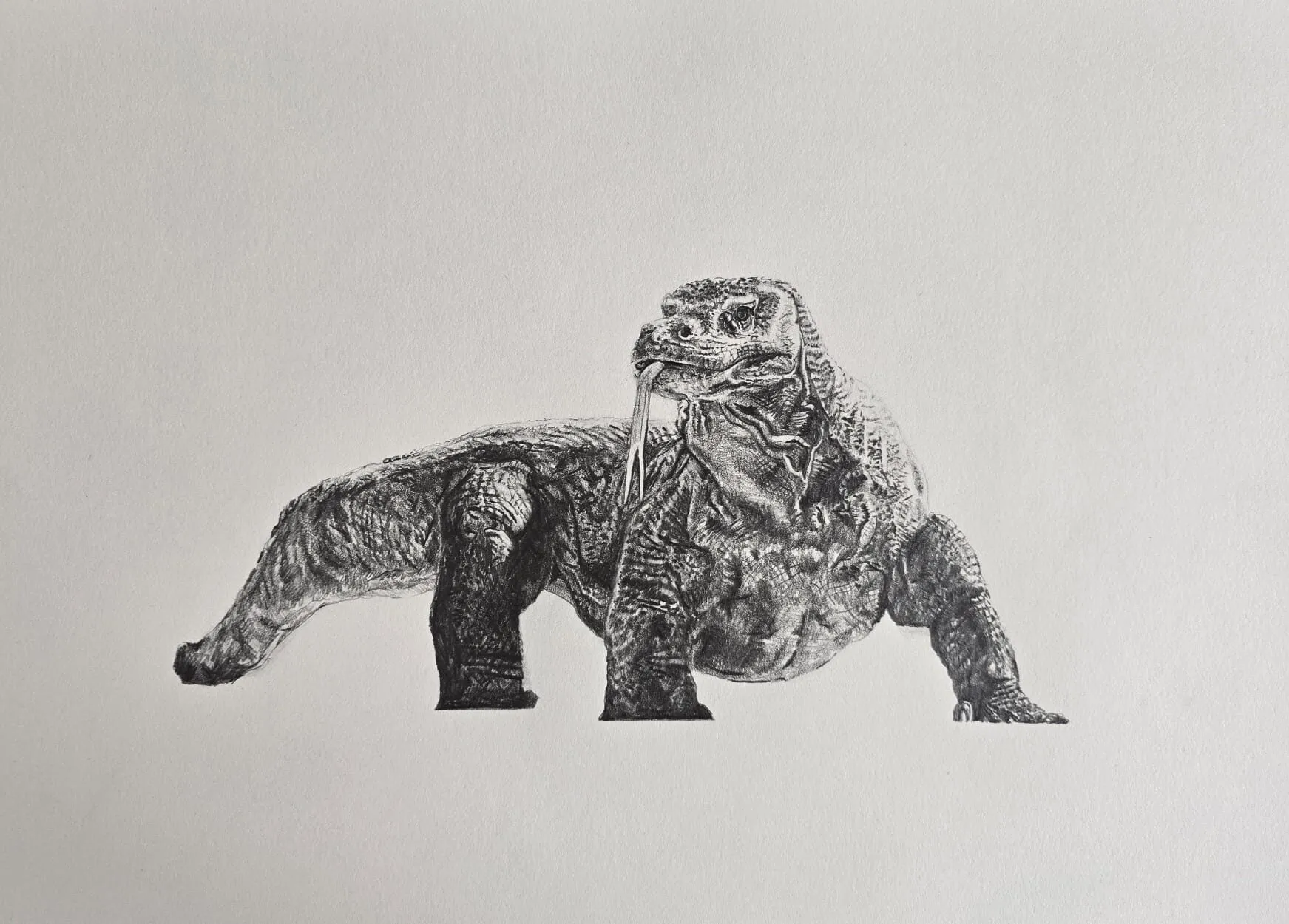
A lizard drawn in graphite pencil. Drawing by Michael Brace.
Recommended kits by subject
Portraits
Portraits need a smooth, controllable range with subtle changes in tone. A good spread is 2H for layout, HB and 2B for mid-tones, 4B for shadows and 6B for the darkest accents such as pupils and nostrils. A mechanical pencil helps with fine details such as eyelashes and hair edges.
Animals and textured subjects
Animals benefit from softer pencils and broader tools. Try HB, 2B, 4B, 6B and 8B for dense tone in fur or wrinkled skin, plus a woodless pencil for large shadow shapes. Add a hard pencil such as 2H if you need pale layout lines. For texture-specific guidance, see how to draw realistic textures in graphite.
Landscapes and atmospheric work
Broad tonal control matters most. Use graphite powder or a woodless stick for skies and soft distances, with 2B and 4B wooden pencils for foreground detail. Blending tools become important, so read how to blend graphite.
Technical, architectural and fine detail
A hard range from 4H to HB, with a mechanical pencil, is best. Precision matters more than depth of tone, so consistent, smooth cores and a stable point are the priority.
Beginners and general practice
A single sketching set covering roughly 2H to 6B, a kneaded eraser and a pad of decent cartridge paper is all that is needed. Practise with our sequence in how to shade with pencil.
What to test when you buy
If you can, try before you buy, or at least test as soon as the pencils arrive:
- Draw a swatch strip of each grade with light, medium and firm pressure.
- Check the range. Do the steps between grades look even? Are two neighbours nearly identical?
- Feel for grit. Draw a firm, slow stroke on the paper you plan to use. Bright white scratches in the line indicate grit.
- Try the point. Sharpen the pencil and draw a fine line. Does the point survive a few strokes?
- Erase the swatch. A good graphite should lift cleanly with a kneaded eraser. Our guide to the best erasers for graphite explains which erasers suit which pencils.
Paper affects the result as much as the pencil, so test on the sheet you will use. Our guide to the best paper for graphite drawing covers what to choose.
Sharpening and care
Sharpen with a sharp knife or a good sharpener, and keep a fine sandpaper block or sanding stick for reshaping the tip without wasting the core. Keep pencils in a case or tin. Dropped pencils can crack inside the wood, and the damage does not show until the point breaks repeatedly. If a pencil keeps breaking, retire it.
A note on charcoal pencils
Charcoal pencils are not graphite, but they often sit in the same drawer. They give a much darker, matte black and are covered in our guide to the best charcoal for drawing. For a comparison of the two media, see graphite versus charcoal. To see how the pieces fit together, return to the graphite and charcoal guide.
Beginners can also see the best drawing pencils for beginners or take the which pencil set quiz to narrow the choice.
The short version
Choose wooden graphite pencils from an established art brand, bought as a small spread from about 2H to 6B. Add a mechanical pencil for fine detail and a woodless pencil or powder for broad tone if your subject needs them. Check consistency, feel for grit and swatch each grade on your own paper. Buy fewer, better pencils, and put the money you save into decent paper and a good eraser.
Where to buy
Recommended products
Affiliate links. We may earn a small commission if you buy, at no extra cost to you. Why?
Pencils · Derwent
Derwent Sketching Pencils
A graphite sketching range for tonal studies and everyday drawing.
Buy on AmazonAffiliate link · opens Amazon
Quick answers
Frequently asked questions
What is the best graphite pencil for a beginner?+
A wooden pencil from an established art brand, bought as a small set spanning roughly 2H to 6B, is the best start. It teaches you how grades differ without overwhelming you. Choose a well-known drawing range rather than a stationery pencil, because consistency and smooth cores matter.
Are mechanical pencils good for drawing?+
Yes, for fine detail. A mechanical pencil keeps a constant line width and never needs sharpening, which suits small precise marks. It is less suited to broad shading, and very soft leads can snap. Many artists use one alongside wooden pencils rather than instead of them.
Do expensive graphite pencils make a difference?+
Up to a point. Quality art pencils have smoother, more consistent cores that do not scratch the paper and match their grades reliably. Beyond a good mid-range brand the gains shrink. Spend on paper and a decent eraser before chasing the most expensive pencil.
How many graphite pencils do I need?+
Five or six are enough for most drawings, for example 2H, HB, 2B, 4B and 6B. Add a very soft 8B or a hard 4H only if your subject demands it. Learning to use a few grades well beats owning a full 20 pencil set.