Graphite & Charcoal
Best Mechanical Pencils for Drawing: What to Look For
Lead sizes, grades, weight and balance, mechanical pencils versus lead holders, and what to check when choosing one for detail and technical drawing.
Key takeaways
- ◆Mechanical pencils never need sharpening, which makes them ideal for fine detail, technical work and consistent line width.
- ◆Lead diameter sets line width: 0.3 and 0.5 mm suit fine detail, 0.7 mm is a general all-rounder and 2 mm lead holders give shading power.
- ◆Choose lead grade as you would a wooden pencil: harder for pale layout, softer for shading, and check the grade range the maker offers.
- ◆Weight, balance and a steady lead-sleeve matter more than a long feature list, so test or read specifications carefully.
- ◆They complement, rather than replace, wooden pencils, since large areas of soft tone are faster with a sharpened wooden pencil or a lead holder.
A mechanical pencil is the practical cousin of the wooden drawing pencil. It never needs sharpening, it gives a constant line width and its fine lead reaches places a wooden point cannot. That makes it a favourite for small detail, architectural and technical drawing and for quick sketching. It also has limits: it is slower for shading and less expressive than a soft, sharpened pencil.
This guide explains lead sizes and grades in general terms, how weight and balance affect drawing, how mechanical pencils compare with refillable lead holders, what they are best used for and what to check before buying. It names no models, because specifications change, but it tells you what to look for. To place these pencils in the wider range, see graphite pencil grades explained and the best drawing pencils for beginners.
Mechanical pencils in drawing
A mechanical pencil holds a thin stick of graphite and advances it through a metal tip, usually with a click or a twist. Because the lead is narrow and held at a fixed length, the line width stays constant until the lead wears, and you do not stop to sharpen.
For drawing, this gives three advantages:
- Consistent line width for outlines, technical drawing and hatching.
- Fine detail, especially for small features, eyelashes, hair strands, architecture and texture.
- Convenience, for sketching on location or in a sketchbook.
The disadvantages are equally clear:
- Slower coverage for large tonal areas, since thin lead makes thin marks.
- Less tonal range, because very soft grades are fragile in thin diameters.
- Stiffer marks, since the point never tapers or varies, so lines look uniform.
A sensible approach is to combine tools: a wooden pencil or a lead holder for shading and mechanical pencils for detail.
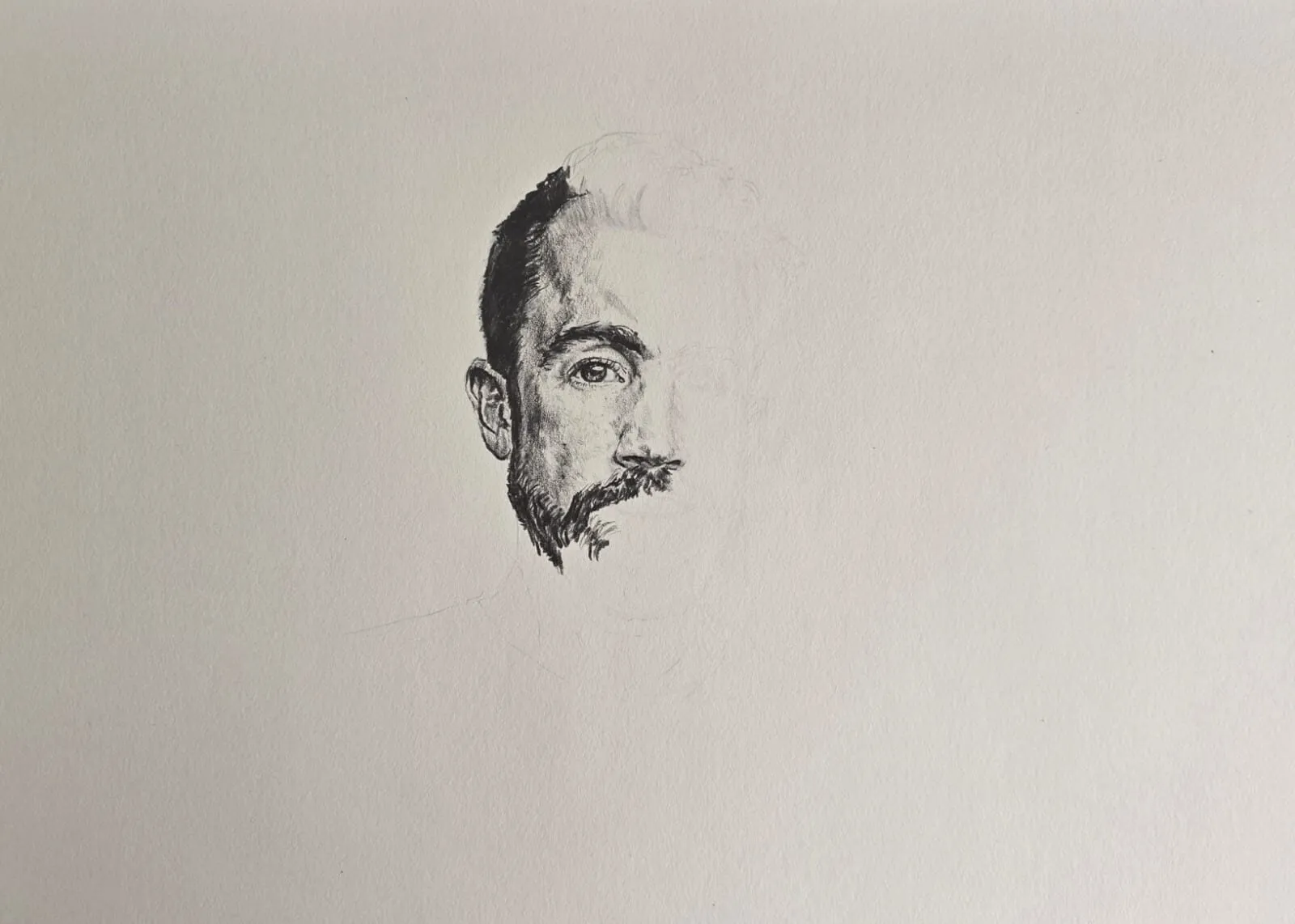
A half-finished graphite portrait study of a man’s face. Drawing by Michael Brace.
Lead sizes
Lead diameter sets line width and the kind of work the pencil suits. Common sizes are:
| Lead diameter | Character | Good for |
|---|---|---|
| 0.3 mm | Very fine, fragile | Tiny detail, technical drawing |
| 0.5 mm | Fine, versatile | Detail, outlines, general use |
| 0.7 mm | Medium, sturdier | General drawing, light shading |
| 0.9 mm | Bolder | Sketching, broader lines |
| 2 mm | Thick, sharpenable | Shading, expressive work (lead holders) |
For most artists, a 0.5 mm pencil is the best starting size. A 0.3 mm is worth adding for very fine work, and 0.7 mm is a comfortable choice for sketching and light shading. Check that any refill leads match the diameter your pencil takes, because the wrong size can jam or break.
Lead grades
Mechanical pencil leads are graded on the same H, B and HB scale as wooden pencils. The same logic applies:
- Harder leads (H, 2H) give pale, crisp lines and hold their shape. They suit layout, technical work and very fine detail. Very hard leads can dent the paper.
- HB and F are the general-purpose middle.
- Softer leads (B, 2B) give darker marks and smoother tone but wear faster and smudge more.
The range of grades on offer varies by maker, and thin soft leads are more fragile than thick ones. As a rule, use H to HB for layout and fine lines, and B to 2B for richer detail and light shading. The pencil grade chart gives an overview of what each grade looks like. Grades also differ between brands, so test a few leads on your own paper.
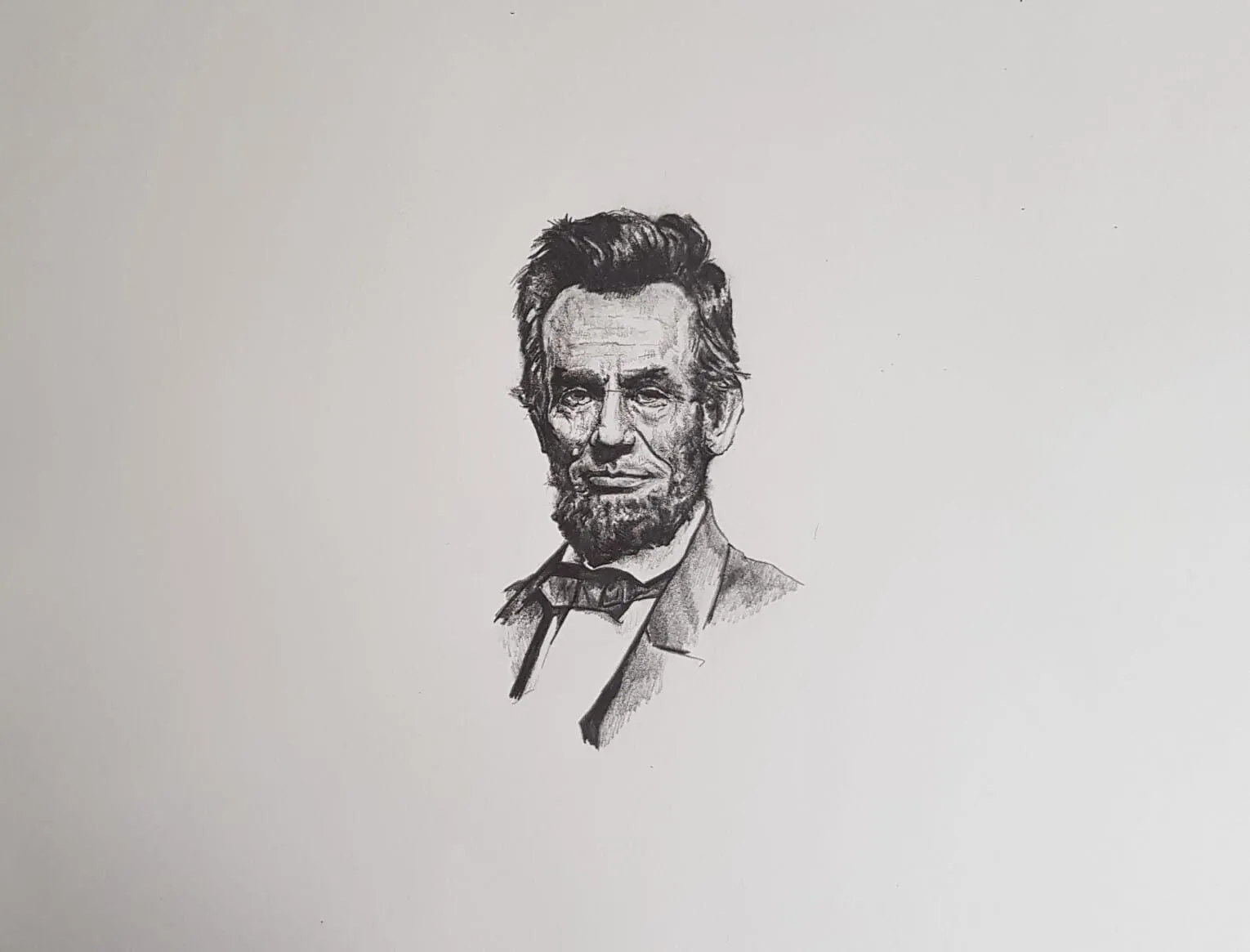
A graphite portrait of Abraham Lincoln. Drawing by Michael Brace.
Mechanical pencils versus lead holders
The two are often confused, but they behave quite differently.
| Feature | Mechanical pencil | Lead holder (clutch) |
|---|---|---|
| Lead diameter | Thin, about 0.3 to 0.9 mm | Thick, often 2 mm |
| Advancing | Click or twist, automatic | Press a button to release, set by hand |
| Sharpening | Not needed | Sharpen with a lead pointer or sandpaper |
| Line | Constant and fine | Variable, from fine to broad |
| Shading | Slow on large areas | Comfortable for broad, expressive tone |
| Grades | Wide but fragile when soft | Wide, with very soft grades available |
| Best for | Detail, technical drawing | Sketching, shading, drawing with a varying line |
A lead holder gives the feel of a wooden pencil with the convenience of a refillable body, and it suits artists who shade a lot. A mechanical pencil is cleaner and more consistent for detail. Many artists own both.
Weight and balance
The feel of a pencil affects how long you can draw comfortably and how controlled your marks are.
- Weight: a slightly heavier pencil, often metal, rests in the hand and reduces the urge to press. A very light pencil can feel insubstantial, though some people prefer it.
- Balance: a pencil that balances near the grip stays steady. Top-heavy or tip-heavy designs tire the hand.
- Grip section: a textured or contoured grip helps control, but a grip that is too thick or too thin will cramp the fingers.
- Barrel shape: round, hexagonal or triangular barrels all exist. Choose by comfort.
- Sleeve: a fixed lead-sleeve or a retractable one affects how close you can see the lead tip and how far it extends.
If you can, hold a pencil before buying, or read descriptions carefully. Comfort matters more than a long list of features.
What to look for when buying
Check these rather than relying on brand reputation.
- Lead size: match it to your work; 0.5 mm is the safest general choice.
- Grade range: confirm the leads you need are available for the diameter.
- Mechanism: a smooth, reliable advance without rattle or sticking.
- Lead support: a sturdy tip with a sleeve that steadies the lead reduces breakage. Some pencils have a sliding sleeve that retracts as you write; some people dislike it for drawing.
- Lead cushion: a mechanism that absorbs pressure can reduce snapping, though it can also feel spongy.
- Build quality: a metal or solid-feeling body often lasts longer, although good plastic ones exist.
- Eraser: small built-in erasers are convenient but limited; use a separate eraser for real corrections. See the best erasers for graphite.
- Refills and spare parts: ensure leads and erasers are easy to buy.
- Comfort: hold it, or check that it has a return policy.
Do not judge by the features listed; a simple pencil with a good balance often draws better than a complicated one.
Uses in drawing
Detail and finishing
Fine leads are excellent for final details: hair strands, eyelashes, tiny scales, fine textures and crisp edges. A 0.3 or 0.5 mm pencil can add sharp accents over soft tone without the point blunting.
Technical and architectural drawing
Constant line width and no sharpening make them standard for technical work, measured drawings and perspective studies. The how to draw in perspective lesson is a natural place to use one.
Layout and underdrawing
A hard, fine lead is good for light construction lines that you will later erase or cover. Use very light pressure to avoid grooves.
Hatching and cross-hatching
Fine, even lines make neat hatching. See hatching and cross-hatching. Build tone with several light layers, not pressure.
Sketching on the go
With no sharpener needed, a mechanical pencil fits in a pocket or sketchbook, making it handy for location sketching.
Using a mechanical pencil well
- Rotate the pencil as you draw to keep the tip evenly worn and the line consistent.
- Keep the lead short to reduce snapping, extending only what you need.
- Use light pressure and build tone in layers rather than pressing a thin lead hard.
- Do not rely on it for large shading. Use a wooden pencil or a thicker lead for tone, and finish with the mechanical pencil for detail.
- Protect the paper. A very hard lead at high pressure can groove the surface. Use a slip sheet to avoid smudges.
Suggested set-ups
Keep these general, since ranges differ.
| Artist | Suggested combination |
|---|---|
| Beginner | A 0.5 mm mechanical pencil with HB and 2B leads, plus a few wooden pencils from the beginners kit |
| Detail and botanical work | 0.3 and 0.5 mm pencils with H, HB and B leads |
| Portrait and realism | A 0.5 mm pencil for detail, wooden pencils or a lead holder for tone |
| Technical and architecture | 0.3, 0.5 and 0.7 mm pencils with H to HB leads |
| Sketchbook and travel | One 0.7 mm pencil with a B or 2B lead |
If you are still deciding on a wider kit, the which pencil set quiz helps match a set to your style, and the best graphite pencils for drawing guide covers wooden options. For serious work, best drawing pencils for artists compares categories in detail.
The short version
Mechanical pencils are best for fine detail, technical drawing and consistent lines, not for broad shading. Start with a 0.5 mm pencil and HB and 2B leads, add 0.3 mm for very fine work and use a lead holder or wooden pencils for tone. Check balance, mechanism and lead availability rather than model names, and test the grade on your own paper.
Quick answers
Frequently asked questions
What lead size is best for drawing?+
A 0.5 mm lead is a good all-round choice for detail and outlines, while 0.3 mm gives very fine lines and 0.7 mm or thicker is better for bolder lines and light shading. For broader shading, a 2 mm lead holder is more comfortable. Many artists keep two sizes for different jobs.
What is the difference between a mechanical pencil and a lead holder?+
A mechanical pencil advances thin lead, usually 0.3 to 0.9 mm, in small steps with a click. A lead holder, or clutch pencil, grips a thicker lead, often 2 mm, which you release and sharpen separately. Lead holders give more shading power and softer grades, and mechanical pencils give consistent fine lines without sharpening.
Can I shade with a mechanical pencil?+
Yes, for small areas, hatching and fine tone. Thin leads cover ground slowly, and soft leads can snap under pressure. For large areas, use a sharpened wooden pencil or a thick lead holder and save the mechanical pencil for detail. Hatching and cross-hatching work especially well with fine, consistent lines.
Do drawing mechanical pencils use different lead?+
They use graphite lead in a range of diameters and grades, similar to wooden pencils, from hard to soft. Drawing leads are commonly sold in grades such as H, HB and B, with a wider range from some makers. Colour leads and other types also exist. Check that the lead diameter matches your pencil before buying refills.